Article Surah 83 · Ayah 1
The Prophet’s Guidance in Buying, Selling and Dealings
The Prophet’s Guidance in Buying, Selling and Dealings
1. The Prophet (صلی اللہ علیہ وآلہ وسلم) bought and sold, but he bought more than he sold after he was entrusted with [Allah's] message. He also leased and rented, appointed agents and was appointed as such, but he appointed more than he was appointed.
2. He purchased on cash and credit, he intercede and others interceded for him, and he borrowed with mortgage or without it.
3.He gave donations and accepted them, and he gave gifts and accepted them. If he did not want the gift he apologized to the giver. He accepted gifts offered by kings and distributed them among his companions.
4.He was the best of people in his dealings. If he borrowed something from someone, he returned something better and supplicated Allah to bless him, his family and his wealth.
Once he borrowed a camel, and its owner came to collect it being harsh with the Prophet . When his companions wanted to show aggression to the man, he said: “Leave him, for he who has a right is entitled to demand it.His reaction to severe abuse towards him was additional forbearance. He told someone who became furious to extinguish his anger with wudhu', and to sit down if he was standing, and to seek refuge in Allah from Satan.
5.He was never arrogant with anyone; on the contrary, he behaved humbly and modestly with his companions, greeting the young and the old. xHe would joke at times, but even then, always spoke truth. And he told amusing But never stated except the truth.
6.He raced on foot, repaired his shoes and stitched his clothes by his own hand. He patched his leather bucket, milked his goat, cleaned his garment, served his family and himself and with his companions carried bricks for building the mosque.
7.He was the most tolerant and kind person. He was never required to choose between two things but that he opted for the easier one, as long as it was not sinful. 8.He never avenged an injustice committed against himself, but when one of Allah’s prohibitions had been violated his anger was overwhelming.
9.He used to give and seek counsel, visit the sick, attend funerals, accept invitations and strive to meet the needs of widows, the poor and the weak.
10.He used to supplicate Allah for anyone who did him a favour. He said: "When a favour is done for someone and he says to him who did it, 'Jazak-Allahu khayran' (May Allah reward you well), he has conveyed the utmost praise.”At-Tirmidhi.
https://islamhouse.com/en/books/90730/
THE PROPHET’S ﷺ GUIDANCE IN TRADING AND BUSINESS:
The life of the prophetsﷺ, were complete and combined the human aspects and characteristics of the Divine Message. Like all other prophets and messengers, the human nature of the Prophet ﷺ, was mentioned in his biography and anyone who reads it can easily recognize it. Like all people, he ate food, walked in the markets and endeavored to earn his living.
One of the human aspects of the life of the Prophetﷺ , that is, the way in which he traded and earned his living. This relation started at a very early stage of his life and passed through different phases. As a young boy while living in Banu Sa‘d, the Prophet, joined his foster brothers as a shepherd in return for a small amount of money.

Allah Says (what means): And they say: ‘What is this messenger that eats food and walks in the markets?’ Quran Surah Furqan 25:7 O you who have believed, do not consume one another's wealth unjustly but only [in lawful] business by mutual consent.Quran Surah Nisa 4:29
Trading
As days passed, the Prophetﷺ , benefited from his close relationship with his uncle, Abu Taalib, and learned from his expertise the methods and skills of trading. When he became a youth, the Prophet, became famous in Makkah and the neighboring areas until Khadeejah heard about him and hired him to trade with her money. In response to her request, he went to Ash-Shaam (greater Syria) with her slave, Maysarah, to trade there, and he returned with great profits. Soon, this relationship concerning trade between Muhammad ﷺ, and Khadeejah(R) became stronger until it was crowned with their marriage. Things did not change until Allah The Almighty honored His Prophet, with the Message.
Helping others in Manumission through sale:
After receiving the revelation, the Prophetﷺ , was buying more than selling, given the responsibilities of the Divine Message, which required follow-up and devotion to the affairs of Da‘wah (propagating), guiding and teaching people, judging between them and other important dealings. Jaabir ibn ‘Abdullah mentioned one of the situations where the Prophetﷺ, was selling. He narrated that a man wanted to free his slave after his death, but then he became in need of money. When the Prophet, heard about this, he tried to help this man and offered this slave for sale.
Narrated by Amr(R) : An Ansari man made his slave a Mudabbar and he had no other property than him. When the Prophet (ﷺ) heard of that, he said (to his companions), "Who wants to buy him (i.e., the slave) for me?" Nu‘aym ibn ‘Abdullaah bought him for eight hundred Dirhams. The Messenger of Allah, took these Dirhams and sent them to the owner of the slave. Sahih al-Bukhari 6716(Vol.8: 707) and Sahih Muslim 997 and Sunan Abi Dawud 3957
Mortgaging There are many situations indicating that the Prophet, would undertake buying personally or assign one of his Companions to buy for him. ‘Aa’ishah mentioned that the Prophet, purchased some food from a Jew on credit and mortgaged a suit of iron armor to him.Sahih al-Bukhari 2251 (Vol.3:453)
Sometimes, when the Prophet, was in need of money, he would borrow or mortgage a weapon or something similar. It was narrated that he died while his armor was mortgaged to a Jew for thirty Saa‘s (handfuls) of barley. Sahih al-Bukhari 2916, 4467(Vol.4:165 and Vol.5: 743)
Bussiness

On his way back from a battle, the Prophet, purchased a camel from Jaabir ibn ‘Abdullah that Jabir was riding. When they reached Madeenah, the Prophet, gave him more than the price he had paid for the camel and also returned his camel. Sahih al-Bukhari 2604 (Vol.3:775) and Sahih Muslim 715
The Prophet, gave ‘Urwah ibn Abu Al-Ja‘d Al-Baariqi a Dinaar (unit of currency) to buy a sacrificial animal for him. He bought two sheep with that Dinaar, sold one of them for a Dinaar, and returned to the Messenger of Allaah, with a sheep and a Dinaar. Thereupon, the Prophet, invoked a blessing on him for his business dealings. Classed as sahih by Sunan Abi Dawud 3384
Also, the Prophet, made a deal with the people of Khaybar that they would take half the fruit and vegetation of the land that they cultivate for the Muslims. Sahih al-Bukhari 2329 (Vol.3: 522)
Prohibition of Riba
In addition, the Prophet, established an integrated system for people to follow in their dealings. He forbade a group of dealings that were harmful or unjust in evaluating the object such as dealing in Riba (interest or usury), the sale that implies Gharar (uncertainty and deception out of ignorance about the sold item), Al-'Eenah (buy-back sale) and trading in prohibited things. The Prophet, stressed the importance of immediate delivery of both the price and the sold item. He also specified the kinds of options if either party wanted to cancel the deal, in addition to other principles and regulations that are clearly stated in the Sunnah.
Trade and Riba(Usury or Interest) are not same
Those who eat Riba will not stand (on the Day of Resurrection) except like the standing of a person beaten by Shaytan leading him to insanity. That is because they say: “Trading is only like Riba,” whereas Allah سبحانه و تعالىhas permitted trading and forbidden Riba. So whosoever receives an admonition from his Lord and stops eating Riba, shall not be punished for the past; his case is for Allah سبحانه و تعالى(to judge); but whoever returns (to Riba), such are the dwellers of the Fire ـthey will Abide therein. Qur’an.Surah Baqrah 2:275
This is clear evidence that Allah سبحانه و تعالىmade it clear that “trade” and “Riba” are not same, and that He forbade “Riba” and allowed “trade”.
Prohibited transactions and sales
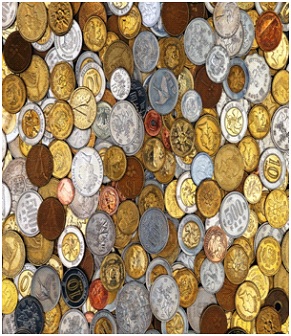
Abu Huraira رضي الله عنه reported Allah’s Messenger ﷺas saying: Gold is to be paid for by gold with equal weight, like for like, and silver is to be paid for by silver with equal weight, like for like. He who made an addition to it or demanded an addition dealt in usury. Sahih Muslim 3857
Narrated Abu Sa`id al-Khudri رضي الله عنه: Once Bilal رضي الله عنه brought Barni (i.e. a kind of dates) to the Prophet ﷺand the Prophet ﷺasked him, “From where have you brought these?” Bilal رضي الله عنه replied, “I had some inferior type of dates and exchanged two Sas of it for one Sa of Barni dates in order to give it to the Prophet ﷺ; to eat.” Thereupon the Prophet ﷺsaid, “Beware! Beware! This is definitely Riba (usury)! This is definitely Riba (Usury)! Don’t do so, but if you want to buy (a superior kind of dates) sell the inferior dates for money and then buy the superior kind of dates with that money.” Sahih Al Bukhari Vol 3 H:506
Abu Sa’id al-Khudri رضي الله عنه reported Allah’s Messenger ﷺas saying: Gold is to be paid for by gold, silver by silver, wheat by wheat, barley by barley, dates by dates, salt by salt, like by like, payment being made hand to hand. He who made an addition to it, or asked for an addition, in fact dealt in usury. The receiver and the giver are equally guilty. Sahih Al Muslim 3854
Narrated Abu Sa`id رضي الله عنه: We used to be given mixed dates (from the booty) and used to sell (barter) two Sas of those dates) for one Sa (of good dates). The Prophet ﷺsaid (to us), “No (bartering of) two Sas for one Sa nor two Dirhams for one Dirham is permissible”, (as that is a kind of usury). Sahih Al Bukhari Vol 3 H:294
More teachings on it
Avoid unclear transactions
"The lawful is clear and the unlawful is clear, and between that are matters that are doubtful (not clear); many of the people do not know whether it is lawful or unlawful. So whoever leaves it to protect his religion and his honor, then he will be safe, and whoever falls into something from them, then he soon will have fallen into the unlawful. Sahih al-Bukhari 2051 and Jami` at-Tirmidhi Vol3: 1205
Be careful while earning
Narrated Abu Huraira(R): The Prophet (ﷺ) said, "A time will come when one will not care how one gains one's money, legally or illegally." Sahih al-Bukhari 2059 (Vol. 3, Book 34, Hadith 275)
Money Exchange
Narrated Abu Al-Minhal: I used to practice money exchange, and I asked Zaid bin 'Arqam about it, and he narrated what the Prophet said in the following: Abu Al-Minhal said, "I asked Al-Bara' bin `Azib and Zaid bin Arqam about practicing money exchange. They replied, 'We were traders in the time of Allah's Messenger (ﷺ) and I asked Allah's Messenger (ﷺ) about money exchange. He replied, 'If it is from hand to hand, there is no harm in it; otherwise it is not permissible." Sahih al-Bukhari 2060, 2061
Expansion in sustenance (Rizq)
Narrated Anas bin Malik(R): I heard Allah's Messenger (ﷺ) saying, "whoever desires an expansion in his sustenance and age, should keep good relations with his Kith and kin." Sahih al-Bukhari 2067
Better meal
Narrated Al-Miqdam(R): The Prophet (ﷺ) said, "Nobody has ever eaten a better meal than that which one has earned by working with one's own hands. The Prophet (ﷺ) of Allah, David used to eat from the earnings of his manual labor." Sahih al-Bukhari 2072
Narrated Abu Huraira(R): Allah's Messenger (ﷺ) said, "No doubt, it is better for any one of you to cut a bundle of wood and carry it over his back rather than to ask someone who may or may not give him." Sahih al-Bukhari 2074
Be lenient and generous in bargaining
Narrated Jabir bin `Abdullah(R): Allah's Messenger (ﷺ) said, "May Allah's mercy be on him who is lenient in his buying, selling, and in demanding back his money." Sahih al-Bukhari 2076
The defects and qualities of product to be discussed before separation
Narrated Hakim bin Hizam: Allah's Messenger (ﷺ) said, "The seller and the buyer have the right to keep or return goods as long as they have not parted or till they part; and if both the parties spoke the truth and described the defects and qualities (of the goods), then they would be blessed in their transaction, and if they told lies or hid something, then the blessings of their transaction would be lost." Sahih al-Bukhari 2079 and Sahih al-Bukhari 2082
Conclusion
Generally, all that is mentioned stresses one single fact, that is, the Prophet, wanted to teach his Ummah (nation) that trying to earn a living does not contradict doing good deeds for the Hereafter. On the contrary, this is one of its requirements in addition to being a reason for achieving the progress and development of our Ummah, so that it occupies its proper status among other nations.
References
http://www.islamweb.net/emainpage/index.php?page=articles&id=15735
Decent person never cheats:
Cheating and deception are despicable characteristics that are beneath a decent person. Intentionally distorting the truth in order to mislead others contradicts the values of honesty, which requires an attitude of sincerity, straightforwardness, and fairness that leaves no room for cheating, lying, trickery, or deceit. There are many texts from the Quran and the Sunnah conveying the meaning that cheating, whether the target be Muslims or non-Muslims, is forbidden.
Accepting the guidance of Islam leads a person to truthfulness, which means a person completely avoids cheating, cheating, and back-stabbing. The Prophet of Islam said:
“Whoever bears arms against us is not one of us, and whoever
cheats us is not one of us.” (saheeh muslim)
According to another report, the Prophet passed by a pile of
food in the market.
He put his
hand inside it and felt dampness,
although the surface was dry.
He said:“O owner of the food, what is this?’
The man said, ‘It was damaged by rain, O Messenger of God.’
He said, ‘Why did you not put the rain damaged food on top so that people could see it!
Whoever cheats us is not one of us.”
(Saheeh Muslim)
Muslim society is based on purity of feeling, love, sincerity towards every Muslim, and fulfillment of promises to every member of society. Its members are endowed with piety, truthfulness, and faithfulness. Cheating and deception are alien characters in contrast to the noble character of a true Muslim. There is no room in it for swindlers, double crossers, tricksters, or traitors. Islam views cheating and deception as heinous sins, a source of shame to the one guilty of committing them, both in this world and the next. The Prophet, may the mercy and blessings of God be upon him, did not merely denounce them by excluding them from the Muslim community in this world, he also announced that on the Day of Judgment every traitor would be raised carrying the flag of his betrayal. A caller will cry out from the vast arena of judgment, pointing to him, drawing attention to him: “Every traitor will have a banner on the Day of Resurrection and it will be said: This is the betrayer of so-and-so.” (Saheeh AlBukhari) The shame of traitors – men and women - will be immense. Those who thought that their betrayal had been forgotten will find it right there, exposed for the whole world to see on banners raised high held by their own hands! Their shame will increase even more when they meet with the Prophet of Mercy, the advocate of the sinners on that terrifying and horrible Day. Their crime is of such enormity that it will deprive them of divine mercy and the Prophet’s intercession.The
Prophet of Islam said:
“God said: There are three whom I will oppose on the Day of
Resurrection: a man who gave his word and then betrayed it; a
man who sold a free man into slavery and kept the money; and a
man who hired someone
, benefited from his labor, then did not pay
his wages.” (
Saheeh Al
-
Bukhari
)
One should steer clear of all the various forms of deceit and deception present in today’s society. Cheating is common in examinations, business transactions, and even between spouses and loved ones. Placing a label on domestically-made products to make it seem that it is imported is a kind of fraud. Some people give wrong advice when their council is sought and thus deceive the person who believes he is getting good advice. An employee should do the job for what he is paid for without any deception or cheating. Rulers rig the ballot to win elections and cheat the whole nation. Cheating between spouses and having extra-marital affairs is widespread in modern society. A Muslim should value himself too highly to be among those who cheat or deceive perchance one might fall in the category of hypocrites about whom the Prophet said: “
“There are four characteristics, whoever has all of them is a true hypocrite, and whoever has one of them has one of the qualities of a hypocrite until he gives it up: when he is trusted, he betrays; when he speaks, he lies; when he makes a promise, he breaks it; and when he disputes, he resorts to slander.” (Saheeh AlBukhari, Saheeh Muslim)
Therefore, a Muslim who has true Islamic sensitivities avoids deceit, cheating, treachery, and lying no matter what benefits or profits such activities might bring him, because Islam considers those guilty of such deeds to be hypocrites.