Historical Data Surah 95 · Ayah 3
BOUNDARIES OF MAKKAH:
BOUNDARIES OF MAKKAH:
Makkah refers to Bakka (previous name of Makkah), in Saudi Arabia where the first house of worship on earth was appointed by Allah (Glory be to him) for human beings. This house is the Kabah towards which all Muslims face while praying and go for Hajj (Pilgrimage). Makkah is a city of western Saudi Arabia near the coast of the Red Sea. The birthplace of Prophet Muhammad (May Allah honour Him and grant Him peace), it is the sacred city in Islam and a pilgrimage site for all devout believers of the faith.
The following ayath are from the Qur’an:
"Verily, the first house (of worship) appointed for mankind was that in Bakka (Makkah), full of blessing, and guidance for all people." Quran.Surah 3:96. The word ‘Makkah’ is also mentioned in the Quran in Quran.Surah Fatah 48:24.
⦁ Introduction
The City of Makkah, which lies inland 73 kilometers east of Jeddah, is the place where the Prophet Muhammad (May Allah honour Him and grant Him peace) was born - the place where God's message was first revealed to him and the city to which he returned after the migration to Madinah in 622 CE. Makkah is the holiest city on earth to Muslims. It is variously known as Makkah Al-Mukarramah, Umm Al-Qura (the origin of the Cities), Al Balad Al-Ameen (the Secure City), and Al-Balad Al-Haram (the Sacred City). Five times each day, the world's more than one billion Muslims, wherever they may be, turn to the Holy City of Makkah to pray. And at least once in their lives, all Muslims who are not prevented by personal circumstance perform the Hajj, the pilgrimage to Makkah. Thus each year the sacred City of Makkah is host to some two million hajjis (pilgrims) from all over the world. The sacred masjid in Makkah houses the Kaaba, in the corner of which is set the Black Stone which marks the starting point for the seven circumambulations of the sacred masjid which every hajji must complete. The sacred City is served by the seaport and international airport of Jeddah.
Location
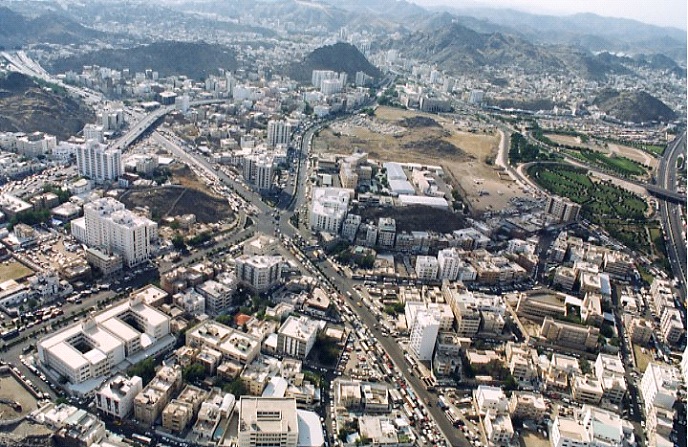
Makkah is located in a valley some 277 meters (909 feet) above sea level, surrounded by the barren, arid hills of the Sirat mountains which range from 375 to 766 meters (1,000 to 2,490 feet) in height. There are four gaps in the mountains which give access to the Holy City of Makkah. The north provides access to Makkah from Mina, Muzdalifah, Arafat and Ta'if. The north west gap provides access from Madinah. The western gap gives access from Jeddah. And the southern gap opens the way into Makkah from Yemen.
⦁ History
In its long history Makkah has also been known as Bakkah. In ancient times, Makkah was chiefly notable as a staging post on the trade route linking the spice producers of the east with Mesopotamia and the Mediterranean. Makkah lay about midway between Marib, one of the main cities, perhaps the capital, of the of kingdom Sheba (Yemen) and Petra (in Jordan), a city founded by Nabataean Arabs around the 6th century CE and which became a thriving center with commercial interests spreading into Syria. The religious significance of Makkah was established long before Islamic times.
It was in Makkah that Allah (Glory be to him) commanded Ibrahim to leave Haajar and his young son Ishmael; it was in Makkah thatAllah (Glory be to him) brought forth water from the Well of Zamzam which saved the life of Ishmael and his mother and then allowed Makkah to develop as a habitable place; it was in Makkah that Allah (Glory be to him)instructed Ibrahim to build "the House of Allah" (the Holy Kaba). As a result, from earliest times, Makkah became a place of pilgrimage and, although as centuries passed the pure faith of the Prophet Ibrahim (Peace be upon Him) became corrupted by idolatry and paganism, Makkah retained its hold on the minds of men as a place where men should worship. When Makkah came under the control of the Quraysh tribe, it was a noted trading center, a place for pilgrimage and the site of festivals chiefly remarkable for intensely fought poetry competitions and the excessive behavior of the idolaters
The Prophet Muhammad (May Allah honour Him and grant Him peace) was born in Makkah in 570 CE. When, following revelations, Prophet Muhammad (May Allah honour Him and grant Him peace) opposed the paganism of the Makkan establishment and began to spread the word of Islam, he was forced by the Makkans to leave the city. He went to Madinah which proved more receptive to his understanding of the will of Allah (Glory be to him). In 630 CE, the Prophet Muhammad (May Allah honour Him and grant Him peace) returned to Makkah, taking the city without resistance and purging it of all elements of idolatry. He cleared the Kaaba of the 360 "gods" within, dedicating the Kaaba once more to the pure worship of the one and only God ie, Allah and establishing Makkah as a place of pilgrimage for all Muslims. From that time(Glory be to Him), the Holy City of Makkah has been the heart of the Muslim world. It grew in importance as Islam spread and, for the most part, retained a large degree of independence. When the seat of Muslim power moved to Damascus and then later to Iraq under the Abassid Caliphate, Makkah acknowledged each in turn.
In 1269 CE, the Mamluk Sultans from Egypt asserted their power over Makkah. And in 1517 CE, the Turks under the Ottomans in Constantinople held sway over the Holy City. Nevertheless, throughout these great shifts in power in the region, the descendants of the Prophet Muhammad (May Allah honour Him and grant Him peace)remained the local rulers of Makkah. When the Ottoman Empire collapsed at the end of the First World War, Abdul Aziz Al Saud (Ibn Saud) came out of central Arabia, the Najd, and, armed with a deep commitment to the pure form of Islam, took control of Makkah, accepting guardianship of the Holy Sites as a prime responsibility of the Kingdom he founded, the modern state of Saudi Arabia.
Climates
Temperatures are high throughout the year and can reach the mid 40 degrees Celsius in the summer. Although sited well above sea level, Makkah is set low in relation to the surrounding hills and mountains. As a result, it is susceptible to flash floods at certain times of the year, mainly in winter when most of the limited rainfall
⦁ City layout today
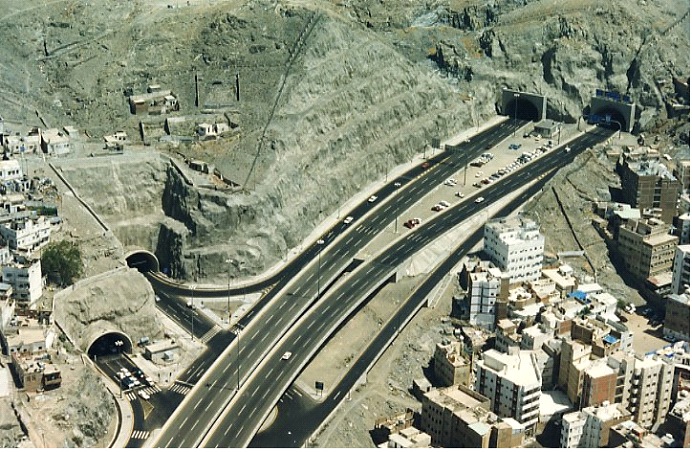
At the heart of the sacred City of Makkah is the al Masjid al Haram (the Holy Mosque) which contains the sacred Kaaba (the House of God) and the Well of Zamzam. The expansion of the city has been constrained by its location between mountains to the east and west. The old city lies to the north and the southwest. In the last fifty years, there has been further enlargement by extending the city along the roads to Mina, Jeddah and Madinah. The city has also been modernized with new road networks At the same time, parts of the old city have been demolished to allow for further expansion of the Holy Mosque. It now occupies 1.7 million square meters and can accommodate 300,000 people at one time.
Historical Sites of Makkah
Al Taneem (Masjid-e-Ayesha)
It is located in “Al Hil about four miles away from the sacred Kabba between Makkah and Medina.
Arafat
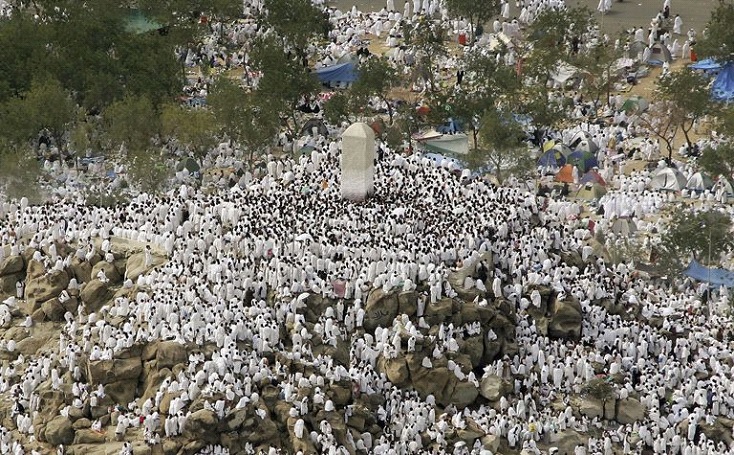
It is located about 25 kilometers away from Makkah. Pilgrims go to it on the 9th day of Zil-Hijjah until the sunset, and then they go to Muzdalifah.
Mina
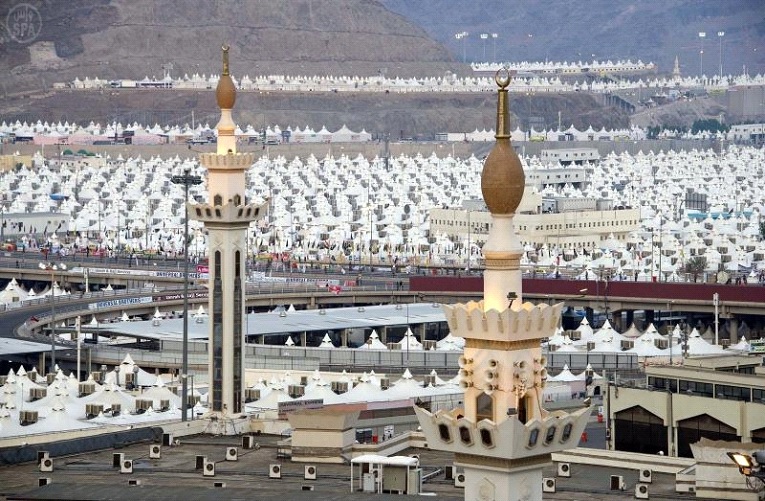
It is a valley situated between two mountains east of Makkah, about five kilometers away from Al Haram masjid.
Muzdalefah
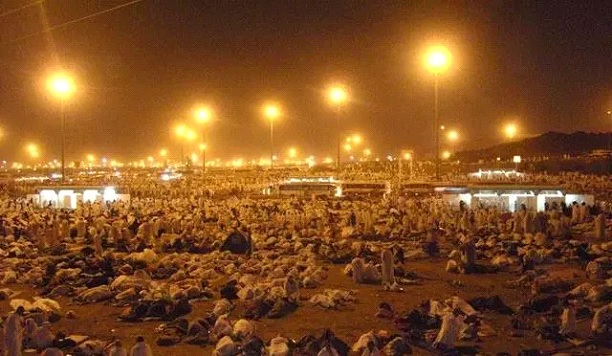
It is a place between Mina and Arafat where people go, after standing in Arafat.
Masjid-e-Masha’r Al Haram
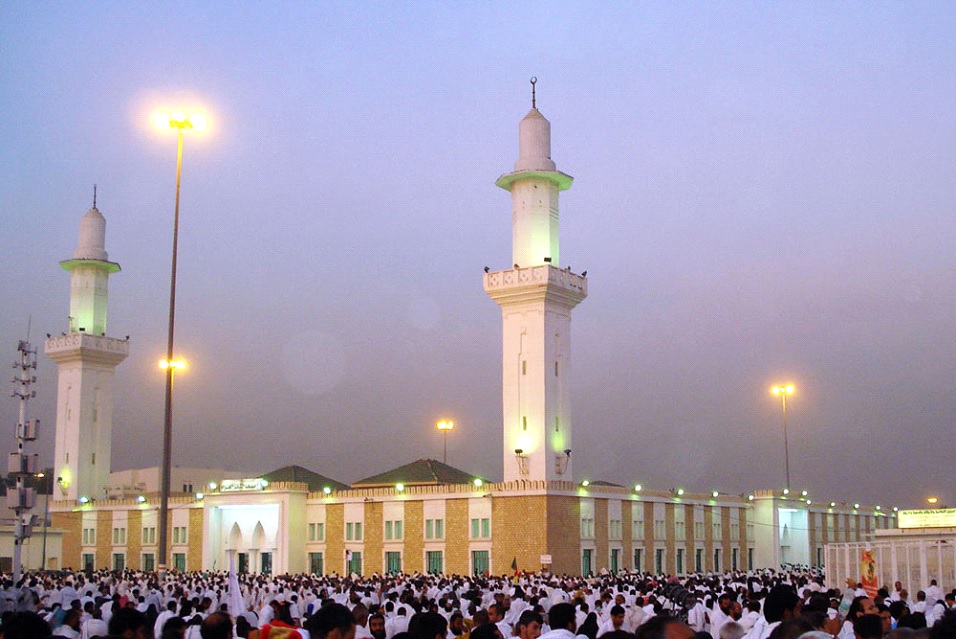
It is called Qazeh too , and it is the place where Muhammad (Peace and Blessings of Allah be Upon Him), gave his sermon, which became an obligation to be followed .
⦁ Birthplace of Muhammad (Peace and Blessings of Allah be Upon Him)
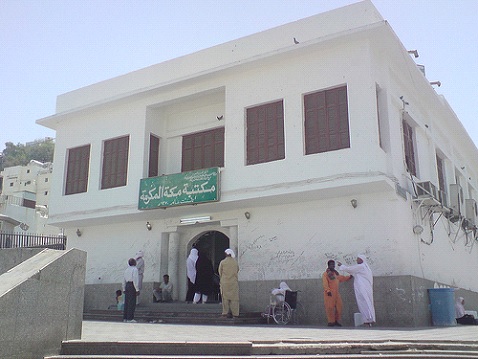
The house in where Allah’s apostle was born is located close to the Al Haram Mosque. It is at a walking distance of 5 to 6 minutes away from the main mosque
⦁ Al Mua’lla
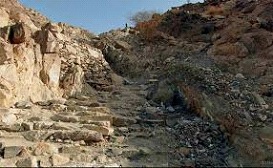
It is the cemetery of the people of Makkah. It is located on the way to Mina. The grave of Ummul Momeneen Bibi Khadija (the first wife of Prophet) and that of, Prophets’s son Qasim, Asma Bint Abu Baker, Abdullah Bin Zubair (may Allah be pleased with them all) and other members of the Prophet’s family like Abu Talib, Abd Manaf, Abdul Mutalib etc are in this cemetery. Al Mua’lla is situated near the Al Haram masjid.
⦁ Thour Mountain
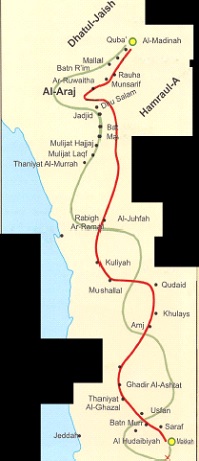
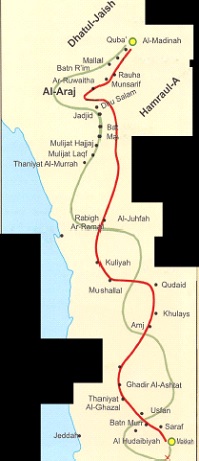
The mountain is one of the most significant historic sites in Makkah. It contains Thour cave where Allah's apostle and his companion, Al Sideeq, spent three days before fleeing persecution in Makkah for Medina. The mountain is at the southern end of Mecca and rises about 760 meters above sea level.
⦁ Al Nour Mountain
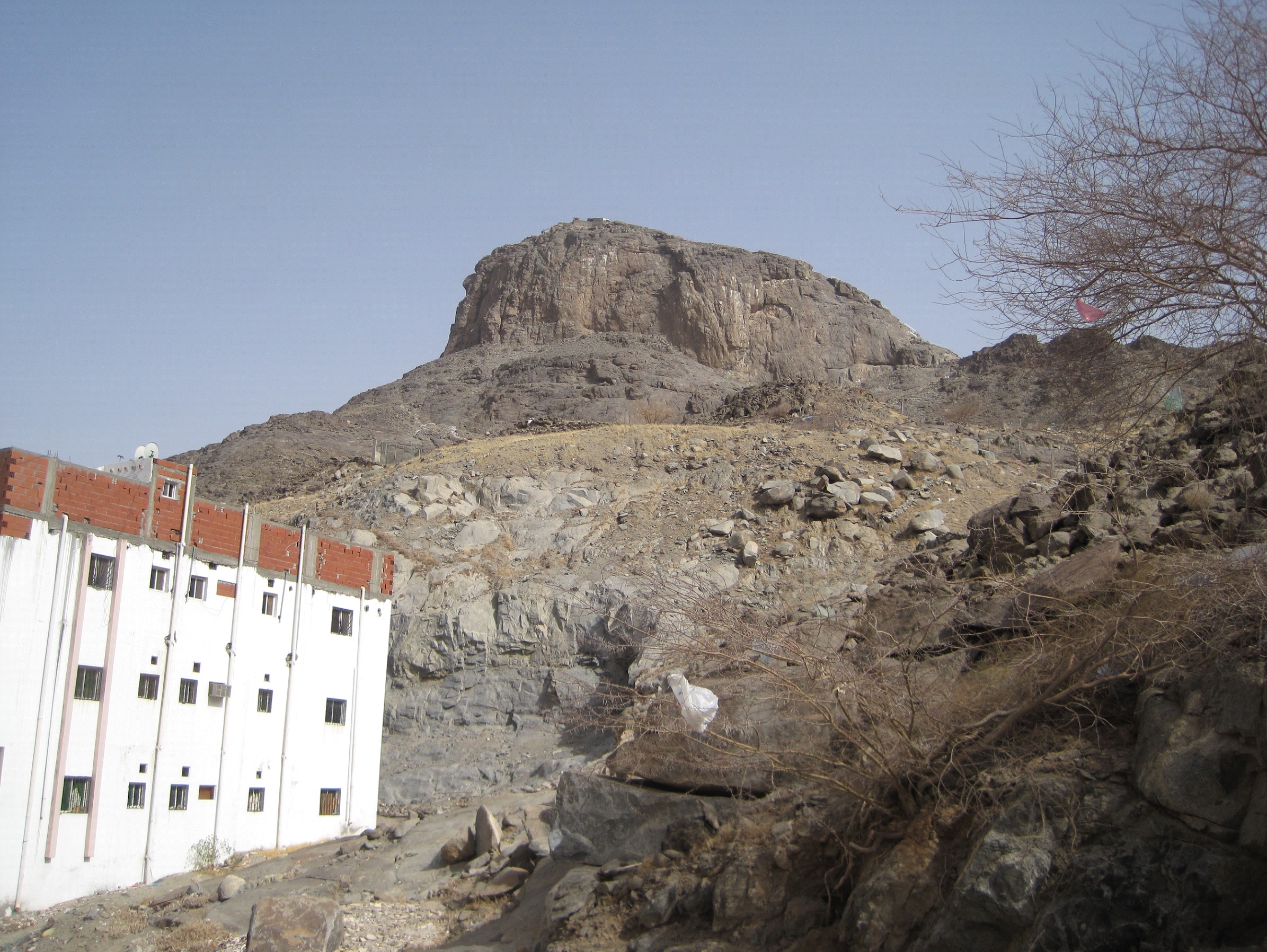
It is located at the eastern edge of Mecca, northeast of Thour Mountain. At Al Nour, or "The Light," lies the Hira'a cave, where Allah's apostle reflected and prayed before he became a messenger of Allah. The Hira'a cave is also the site where Muhammad received his first revelations from Allah (Glory be to him) through the angel Gabriel.
⦁ Al Jaáranah Masjid
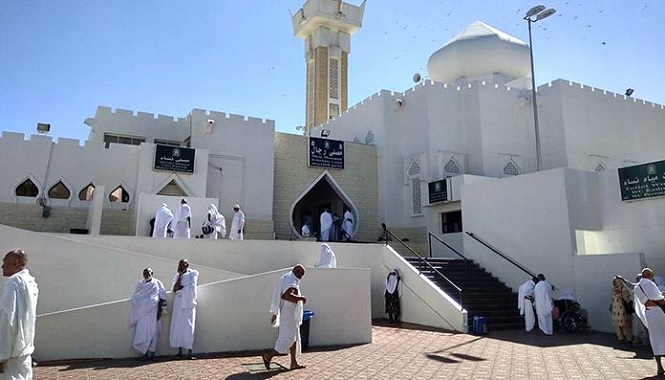
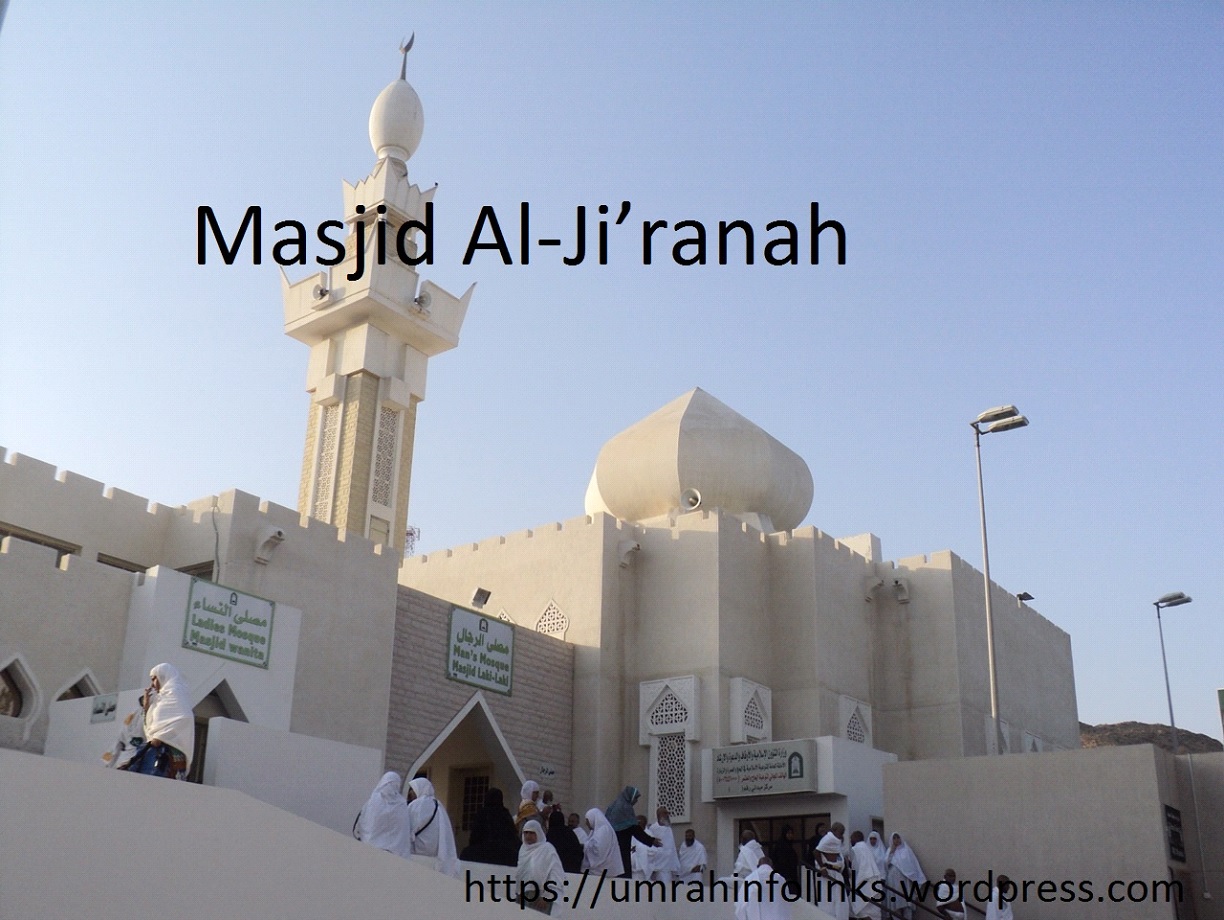
It is located just north of the city is the site where Allah's apostle clothed himself in pilgrim's garb before traveling into Mecca to perform Hajj. Two drinking water wells, one called the Prophet's well, are at the site and are about 10 meters apart. Numerous date trees are at the site and the nearby mountain overlooking Al Jaáranah Mosque is the site where the Prophet's companion, Bilal bin Rabah, called for prayer. [4]
⦁ Places attached to Masjid Al-Haraam
⦁ Ka'bah (Baitullah)
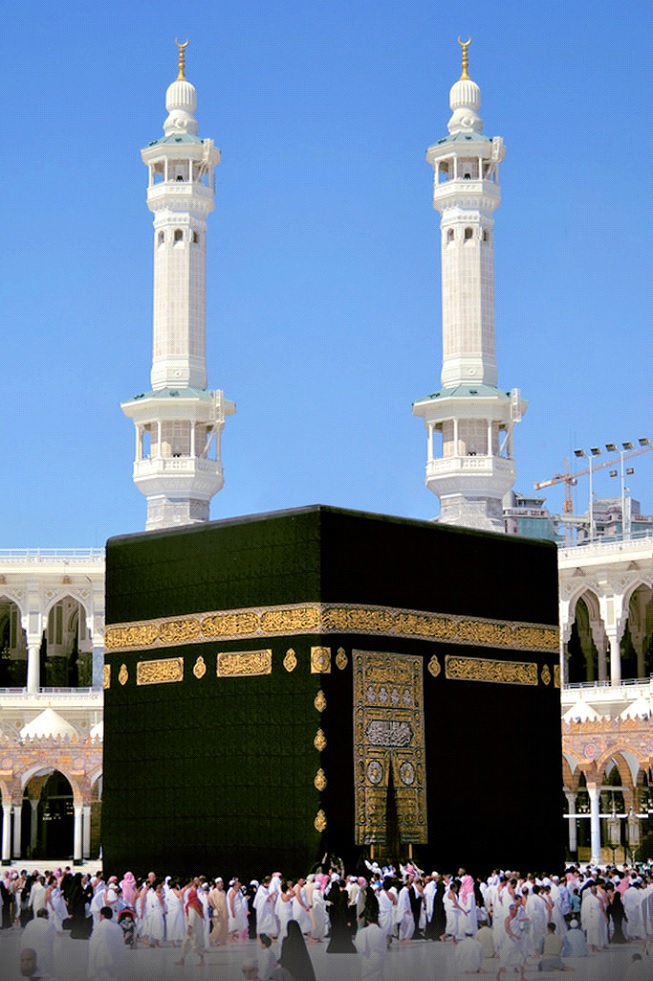
This is a somewhat cubic structure, which was built by Prophet Abrahim and Ismael by Divine Command. Since then it has become the source of peace and blessings and guidance for all mankind and the pilgrims circle around it with utmost enthusiasm and devotion. The mosque in which Ka’bah is situated is called Masjid al-Haraam.
⦁ Different corners of the Ka'bah
Rukn Yamaani is the south west corner towards the direction of Yaman and is highly sacred. The Holy Prophet (peace be upon him) has said:
"The one who touches Rukn Yamaani and Hajar-e-Aswad, has his sins anderrors removed." (Al-Targhib)
Rukn Iraqi is the corner towards the direction of Iraq.
Rukn Shami is the corner towards the direction of Syria
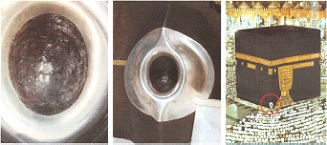
Hajar-e-Aswad: The sacred Black Stone fixed about breast high in the eastern corner of the Ka’bah was originally placed there by Prophet Abraham. Tawaf is started by kissing or touching or pointing towards the Black Stone and brought to completion at it, after seven circuits.
⦁ Mataf
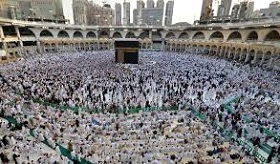
This is the wide, open pavement, oval in shape, around Ka’bah and Hatim, where pilgrims perform Tawaf with utmost devotion and enthusiasm day and night except prayer time.
⦁ Maqam Ibrahim (Station of Abraham)
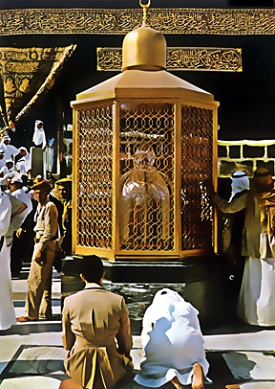
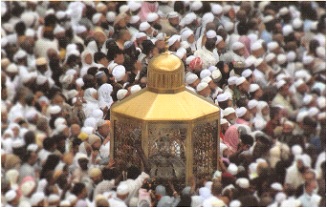
To the north-east of the Ka’bah, a little away from its door, stands a glass and metal structure which contains a sacred stone bearing the impressions of the foot-marks of Prophet Abraham who stood here during the construction of the Ka’bah.
⦁ Zamzam
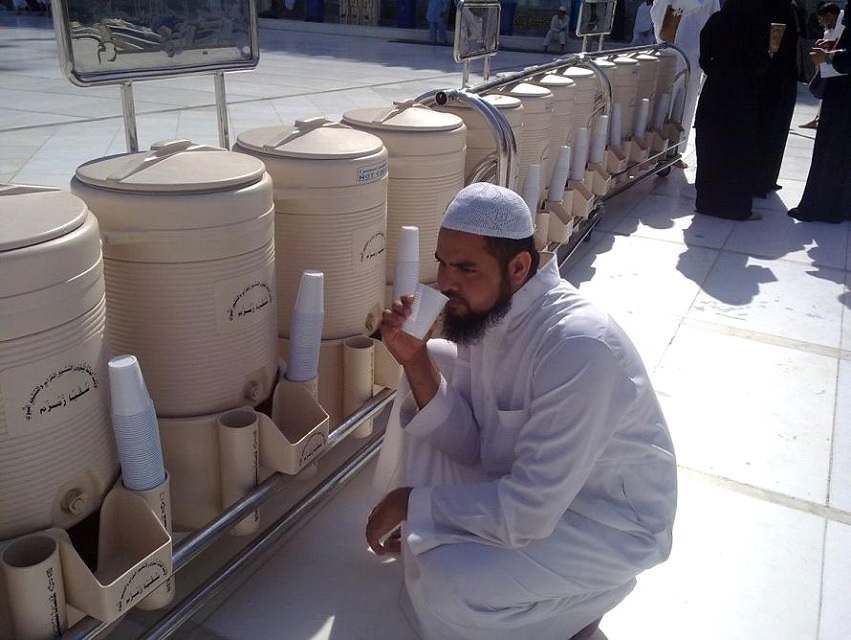
Zamzam is the historical well located to the east of the Ka’bah, which was provided by Allah for the sustenance of Prophet Ishmael and his mother in the wilderness of Mecca. Zamzam water possesses great merits and benefits, and the pilgrims have been urged to drink Zamzam water to fill, because it is food for the hungry and cure for the sick.
⦁ Safa and Marwah
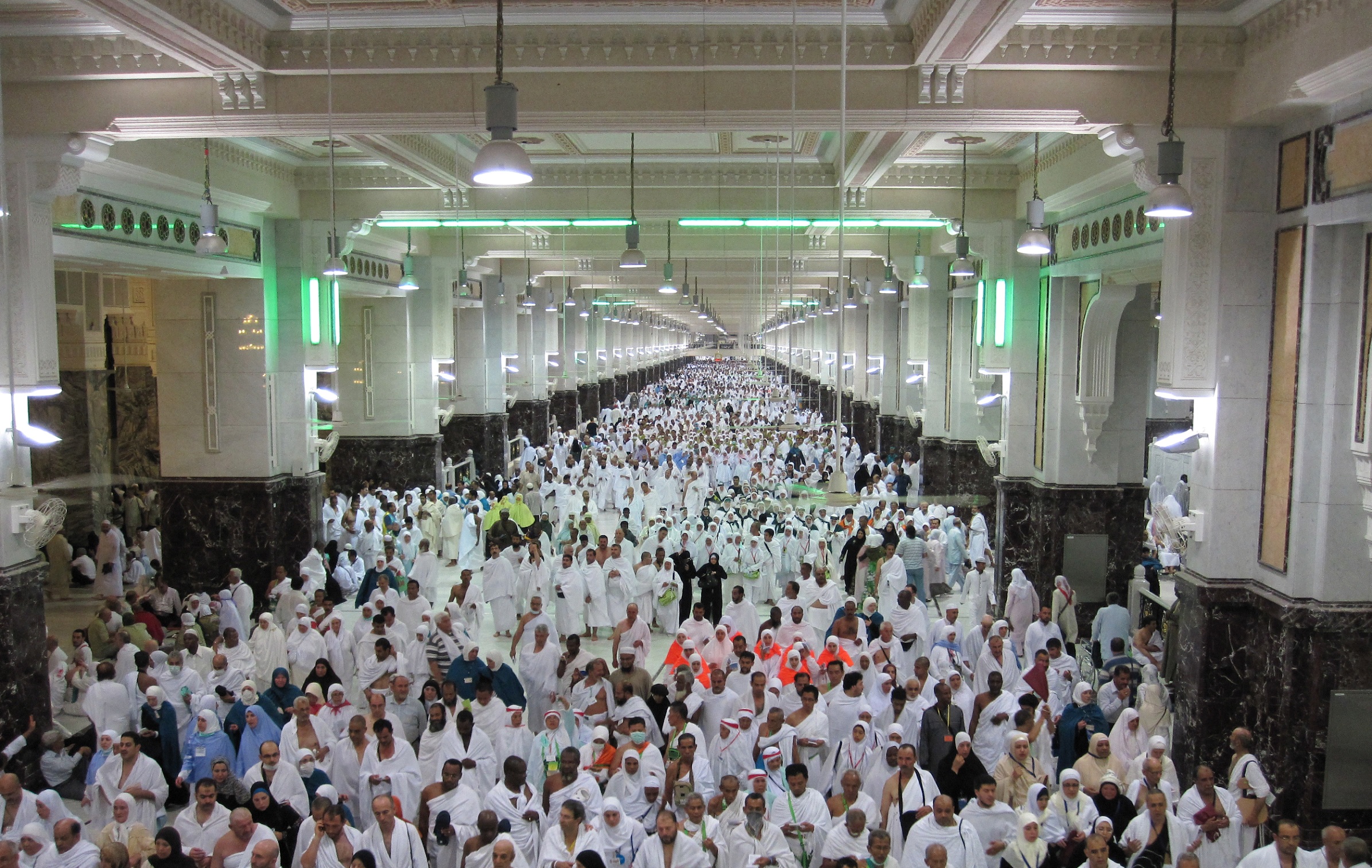
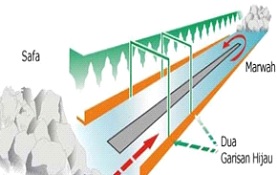
Safa is a hill to the south of the Ka’bah, which has now been leveled down and remains only as a symbol. Opposite to it, to the north of the Ka’bah, there is the hill of Marwah. Performing Sa’ey between these two spots is an important Hajjand Umrah rite.
⦁ BAITULLAH
Baitullah is an Arabic word meaning ‘HOUSE OF Allah’. In particular Al- Masjid E Haraam or Kaba is referred as Baitullah but in general any Masjid can be referred as Baitullah. Hajj is the pillar of Islam which means repairing or fixing to Bait-Allah (the House of Allah, one of the names of al-Kaba) to observe the necessary devotions.
A Masjid or Mosque is the building in which Muslims worship Allah سبحانه و تعالى. Throughout Islamic history, the mosque was the centre of the community and towns formed around this pivotal building. Nowadays, especially in Muslim countries mosques are found on nearly every street corner, making it a simple matter for Muslims to attend the five daily prayers.
Al-Masjid al- haraam is superior to any other mosques in the world. The best of all mosques is al-Masjid al-Haraam (The Sacred Mosque in Makkah), then al-Masjid al-Nabawi (the Prophet’sﷺMosque in Madeenah), then al-Masjid al-Aqsa (Bait ul Maqdis, Palestine).
These three mosques are the three for which it is prescribed to travel for the purpose of worship. The Prophet ﷺ said: “Do not travel or set out on journey(specifically) to any mosque except three: al-Masjid al-Haraam, Masjid al-Aqsa, and this mosque of mine.” Sahih al-Bukhaari, Vol.2: 1189, Vol.3: 1996 and Sahih Muslim 1397 [1]
History
Al-Masjid al-Haraam (the Sacred Mosque) is situated in Makkah, a city in the Arabian Peninsula 330 meters above sea-level. The history of the mosque goes back to its founding at the time of Ibraaheem (Abraham) and his son Ismaa’eel (Ishmael), peace be upon them both. Makkah is the place where the Prophet of Islam, Muhammad (peace and blessings of Allaah be upon him) was born and where the Revelation began, and from which the light of Islam spread. Al-Masjid al-Haraam is located in the city of Makkah, Saudi Arabia.
⦁ Its Construction
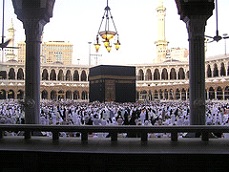
Allah also says (interpretation of the meaning): “And (remember) when Ibraaheem and (his son) Ismaa’eel were raising the foundations of the House (the Ka’bah at Makkah)…” Quran Surah al-Baqarah 2:127
Wahb ibn Munbih said: “… It was built by Ibraaheem, then [rebuilt] by the Amalekites, then by Jurham, then by Qusayy ibn Kilaab. Its rebuilding by Quraysh is well known… They began to rebuild it with the stones of the valley, which Quraysh carried on their shoulders, and they built it up, 20 cubits high… Between the rebuilding of the Ka’bah and the beginning of the Revelation there were five years, and between the rebuilding and the Hijrah there were fifteen years. ‘Abd al-Razzaaq reported from Mu’ammar from ‘Abd-Allaah ibn ‘Uthmaan from Abu’l-Tufayl, and from Mu’ammar from al-Zuhri: ‘They were building it and when they reached al-Rukn, Quraysh argued about which tribe should lift it up. Then they said, “Let us ask the first person who comes from this direction to judge between us.” They agreed on that, then the Messenger of Allah (peace and blessings of Allaah be upon him) came to them, and he was a young man wearing a spotted sash. They asked him to judge between them, and he told them to place al-Rukn on a piece of cloth, then he told the chief of every tribe to hold the edge of the cloth, then he climbed up and they lifted al-Rukn up to him, and he himself (peace and blessings of Allaah be upon him) put it into its place.” Tareekh Makkah by al-Azraqi, 1/161-164
There was no fence or wall around the Ka’bah until it became necessary. Yaaqoot al-Hamawi said in Mu’jam al-Buldaan (5/146): “The first one to build a wall around the Ka’bah was ‘Umar ibn al-Khattaab (may Allah be pleased with him); there was no wall around it during the time of the Prophet (peace and blessings of Allaah be upon him) or Abu Bakr. [The wall was built] because people were building their houses too close to the Ka’bah and making the space around it too small for people. ‘Umar said: ‘The Ka’bah is the House of Allah, and a house needs a courtyard. You have encroached on its space, it has not encroached on yours.’ So he bought those houses, demolished them and added that space to the space around the Ka’bah. He also destroyed the houses of people in the vicinity of the Ka’bah who had refused to sell, and kept the money aside for them until they came and took it later on. He built a wall around the mosque, lower than the height of a man, and lamps were placed on it. When ‘Uthman was khaleefah, he bought more houses that were more expensive… It was said that ‘Uthman was the first one to build porticos around it … When Ibn al-Zubayr was in power, he improved its appearance, although he did not increase its size, by adding marble pillars, extra doors and other improvements. When ‘Abd al-Malik ibn Marwan was khaleefah, he added to the wall of the mosque, and brought columns from Egypt by sea to Jeddah, which were carried from Jeddah to Makkah on wheels. Al-Hajjaj ibn Yoosuf commanded that the Ka’bah should be covered in drapes (al-kiswah) and when al-Waleed ibn ‘Abd al-Malik was khaleefah, he added to the adornment of the kiswah and spent money on improvements to the drainage spout and roof… When al-Mansoor and his son al-Mahdi were khalIfahs, they added more adornments to the mosque and improved its appearance.”
⦁ Before Prophet Muhammad
Before Prophet Muhammad (in the year in which the Prophetﷺwas born), the Ka’bah was subjected to an attack by the Ethiopian Abrahah, who had built al-Qulays, a church to which he wanted the Arabs to make their pilgrimage. He set out with his army, with whom was the elephant, and when they reached Makkah, Allah sent flocks of birds against them; each bird was carrying three stones like chickpeas or lentils, one in its beak and two in its claws. Every man who was struck by a stone was killed, so the army was destroyed, by the command of Allah.
Allah has mentioned this incident in His Book, where He says (interpretation of the meaning): “Have you not seen how your Lord dealt with the Owners of the Elephant? Did He not make their plot go astray? And sent against them birds, in flocks, Striking them with stones of Sijjeel,
And made them like an empty field of slacks (in which the corn has been eaten up by cattle).” Quran Surah al-Feel 105:1-5
(See al-Seerah al-Nabawiyyah by Ibn Hishaam, 1/44-58). [2]
Current Situation
⦁ A vast expansion project for the mataf, (the circumambulation space around the Kaaba), is currently under way. The new mataf when completed, after three years, will accommodate 130,000 pilgrims in an hour, while the current mataf capacity withstands 52,000 pilgrims.
⦁ Current Imam
The Grand Mosque’s Imam and Khatib, Sheikh Abdul Rahman Al-Sudais, who is also president of the Two sacred Mosques Affairs, said in a recent statement that Haj and Umrah pilgrims will not face any difficulties due to lack of space, after the completion of the expansion work. He also added they would have direct access to the mataf from the outer squares, without crossing the ground floor of the mosque.
⦁ The first Mosque on Earth
This is the first mosque that was built for people on earth, as Allah says in the Quran (interpretation of the meaning): “Verily, the first House (of worship) appointed for mankind was that at Bakkah (Makkah), full of blessing, and a guidance for al-‘aalameen (mankind and jinns).” Quran Surah Al’e ‘Imraan 3:96
It was reported by Abu Dharr(R) said: “I asked the Messenger of Allahﷺ about the first mosque to be built for people on earth. He said, ‘Al-Masjid al-Haram.’ I asked, ‘Then which?’ He said, ‘Al-Masjid al-Aqsaa [The Furthest Mosque, in Jerusalem].’ I asked, ‘How long between them?’ He said, ‘Forty years.’” Sahih al-Bukhari Vol.4: 3366, Sahih Muslim 520 and Sunan Ibn Majah 753
⦁ Religious Significance
Qiblah or The direction for Salah
The Ka’bah – which is the direction of prayer for all Muslims throughout the world – is situated roughly in the middle of al-Masjid al-Haraam. It is a 15-meter high stone structure more or less in the shape of a cube. It was built by Ibraaheem (peace be upon him) on the command of Allaah. Allaah says (interpretation of the meaning): “And (remember) when We showed Ibraaheem the site of the (Sacred) House (the Ka’bah at Makkah) (saying): ‘Associate not anything (in worship) with Me, and sanctify My House for those who circumambulate it, and those who bow and make prostration.” Quran Surah al-Hajj 22:26
⦁ Pilgrimage
Muslims make major Pilgrimage or the specific journey to Makkah during the designated month of Dhul-Hijjah called as Hajj. Hajj is one of the five pillars of Islam and it is a religious obligation on every Muslim once in their life time for those who can afford it.
Allah said: Indeed, the first House [of worship] established for mankind was that at Makkah - blessed and a guidance for the worlds. In it are clear signs [such as] the standing place of Abraham. And whoever enters it shall be safe. And Hajj to the House is a duty that mankind owes to Allah, those who can afford the expenses (for one’s conveyance, provision and residence); and whoever disbelieves [i.e., denies Hajj, then he is a disbeliever of Allah]- then indeed, Allah is free from need of the worlds.Quran Surah Al’e Imran 3:96, 97
And proclaim to the people the Hajj [pilgrimage]; they will come to you on foot and on every lean camel; they will come from every distant pass. Quran Surah Hajj 22:27
⦁ Religious structures in and around Kaba
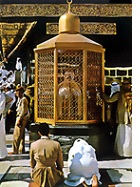
Maqam E Ibraheem There are also other religious monuments in the Mosque, such as Maqam Ibrahim (the Station of Ibraaheem), which is the rock on which Ibraaheem (peace be upon him) stood whilst he was building the Ka’bah
⦁ Well of Zamzam

There is also the Well of Zamzam, which is a spring of water brought forth by Allaah for Haajar and her child Ismaa’eel (peace be upon him) when he got thirsty.
⦁ Black Stone
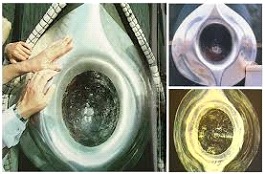
The Black Stone and al-Rukn al-Yamaani, which are two of the precious stones of Paradise.
Al-Tirmidhi and Ahmad reported that ‘Abd-Allaah ibn ‘Amr said: “I heard the Messenger of Allaahﷺsaying that the Rukn and the Maqaam are two of the precious stones of Paradise, whose light has been extinguished by Allaah. If He had not extinguished their light, it would illuminate everything between the East and the West.” Sunan al-Tirmidhi, 878
⦁ Safa and Marwa
Near the Mosque are the two hills of al-Safa and al-Marwah. One of the unique features of the Mosque is that it is the only mosque in the world to which people come on pilgrimage (Hajj). Allaah says (interpretation of the meaning): “Verily! Al-Safa and al-Marwah are of the Symbols of Allaah. So it is not a sin on him who performs Hajj or ‘Umrah (pilgrimage) of the House to perform the going (tawaaf) between them. And whoever does good voluntarily, then verily, Allah is All-Recognizer, All-Knower.” Quran Surah al-Baqarah 2:158
source:Reference Link
Description of the Holy Ka'bah and the History of its Construction and Maintenance
Allah says:"Allah has made the Ka 'bah, the Sacred House, an asylum of security and benefits (e.g., Hajj and 'Umrah) for mankind. "(5:97)
The Ka 'bah is the Sacred House of Allah in the middle of the Mosque. The reason why it is called the Ka'bah is that which was repo1ted by AIAzraqi from Abu Nujaih, who said: it is called the Ka'bah because it is cubiform (Muka 'ab), i.e., in the shape of a cube (Ka 'b). It is so called because it is square (Murabba), 'Ikrimah and Mujahid said likewise.
And it was said that it is called Ka'bah because of its elevation above ground level.
It is also called Al- Bait Al- 'Atfq (the Emancipated House) because Allah freed it (A 'taqahu) from coming under the control of tyrants, as 'Abdullah binAz-Zubair narrated that the Prophet said:
"It is called Al-Bait Al-'Atiq (the Ancient House) because Allah freed it (A 'tagahu) from coming under the control of tyrants, and no tyrant ever prevailed over it."
⦁ The Construction of the Ka' bah
The Ka 'bah has been built more than once; the most famous occasions on which it was rebuilt are five:
The first time it was built by the angels;
the second time it was rebuilt by Adam.
The third time it was rebuilt by Ibrahim.
The forth time it was rebuilt by Quraysh during the Jahiliyyah,
and this was witnessed by
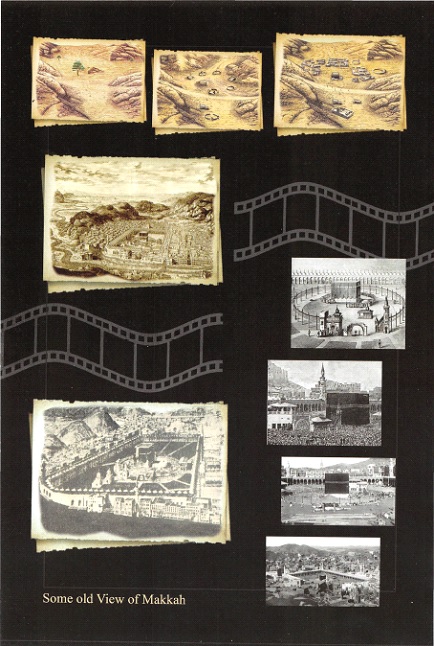
the Prophet when he was twenty-five years old. The fifth time it was rebuilt was by Ibn Az-Zubair.
How Ibrahim and Ismail built the Ka' bah When Isma'il was born to Hajrah (may peace be upon her), Sarah became intensely jealous of her and asked Ibrahim to take her away from her. Allah revealed to Ibrahim that he should take Hajrah and her son to Makkah, so Ibrahim took her and her child, and travelled until he left them in the place where Makkah stands today.
After leaving Hajrah and her son there, he used to visit them and keep a check on them. On one of his visits he found Ismail sharpening an arrow beneath a tree, close to Zamzam. When Isma 'il saw him, he stood up, and they greeted one another as fathers and sons do, then Ibrahim said, "O Isma'il, Allah has commanded me to do something." Isma'il said, "Do what your Lord has commanded you to do." Ibrahim said, "Will you help me?" He said, "I will help you." He said, "Allah has commanded me to build a house here," - and he pointed to a small rise in the land that was higher than the land around it. So, they laid the foundations of the House, then lsma'il started to bring the stones and Ibrahim started to build. Then when the structure got higher, he brought this stone (Al-Maqam) and put it down for him. Ibrahim stood on the stone and carried on the building work with lsma 'il handing the stones up to him, and they were both saying while they were going around the House:
“Our Lord Accept (this service) from us. Verily, You are the All Hearer, the All-Knower." (2: 127)
⦁ How Quraysh rebuilt the Ka' bah
Shortly before the Prophet's mission began, the Ka'bah was a structure of stones, built without mortar, the height of which was a little greater than the height of a man. Some people had come and stolen the treasure of the Ka'bah, which was in a well inside the building. Quraysh wanted to rebuild it and put a roof on it. A ship belonging to a Roman merchant had been wrecked off the coast of Jeddah and had been smashed to pieces, so they took its wood and prepared it to make a roof. But then the people were scared to knock the Ka'bah down. Then Al-Walid bin Al Mughirah started to knock it down, and when nothing happened to him, the people joined him in knocking it down.
⦁ Kiswah-The Cover of the Ka 'bah
The history of Kiswah, or the cover of the Ka'bah is inseparable from the history of the Ka 'bah itself. The level of concern with the cover of the Ka'bah is a reflection of the Muslims' concern with the Ka'bah and its sanctity and honour, and shows what a high status it holds in their hearts.
The Kiswah before Islam
-Muhammad bin Ishaq said: I have heard from more than one scholars that the first one who covered the Ka'bah completely was Tubba' - who is As' ad Al-Himyari - who was shown in a dream that he should cover it, so he covered it with leather. Then he was shown that he should cover it with red-striped Yemeni cloth.
After Tubba', it was covered by many people during the Jahiliyyah. That was regarded as a religious duty. Anybody who wanted to cover the Ka'bah was allowed to do so whenever he wanted, with any kind of fabric. So, the Ka'bah was covered with different kinds of covers, including thick cloth, thin cloth from the city of Ma'afir, fine cloth and cloth interwoven with gold thread.
The covers would be placed one on top of the other, until they became too heavy or worn out, then they would be removed and shared out or buried.
During the Jahiliyyah, Quraysh used to cooperate in covering the Ka'bah. They would impose this duty upon the tribes as much as they could, from the time of Qusai bin Kilab until there came Abu Rabi'ah bin Al-Mughirah bin 'Abdullah bin 'Umar bin Makhzum. He used to travel to Yemen for the purpose of trade, and had become rich. He said to Quraysh: "I will cover the Ka'bah by myself one year, and all of Quraysh will do it one year." So, he continued to do that until he died; he would bring high quality striped cloth from Yemen and cover the Ka 'bah with it. Quraysh called him Al- 'Ad! (the equal or counterpart) because what he
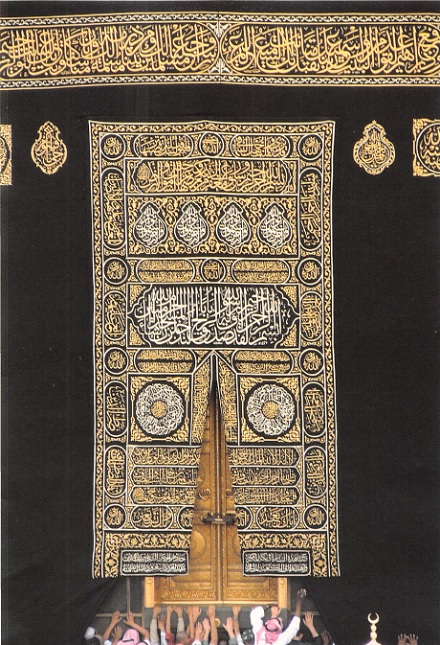
would do was equal to what all of Quraysh did. So, they called him Al'Adl and they called his sonsBanuAl-'Ad!.
The first Arab woman to cover the Ka'bah with silk and brocade was Nubailah bint Ji nab, the mother of Al-' Abbas bin ' Abdul-Muttalib.
The Covering of the Ka'bah in Islamic Times
Allah's Messenger and his Sahabah (Companions) did not cover the Ka 'bah before the Conquest of Makkah, because the Kuffar (disbelievers) did not let them do that. When Makkah was conquered, Allah's Messenger did not change the cover of the Ka'bah until it was burnt by a woman who wanted to perfume it with incense. Then he covered it with Yemeni cloth, and Abu Bakr, 'Umar and 'Uthman ,,.S;,, .covered it with qibati (thin white cloth from Egypt).
It was reported that Mu'awiyah binAbi Sufyan used to cover the Ka'bah twice a year, with brocade on the day of ' Ashura', and with qibati at the end of Ramadan. Then Yazid bin Mu'awiyah, IbnAz-Zubair and 'Abdul Malik bin Marwan covered it with brocade. The Ka'bah used to be covered twice every year, once with brocade and once with qibti.
It was covered with brocade on the day of At-Tarwiyah (the eighth of Dhul-Hijjah), when the upper part of the cover would be hung. The lower part of the cover, which was also made of brocade, would be hung on the day of '.Ashura', after the pilgrims had left, so that they would not damage it. The brocade cover would remain until the twenty-seventh day of Ramadan, when it would be covered with qibti for 'Eidul-Fitr.
At the time of Al-Ma'mun, the Ka'bah would be covered with three different covers: with red brocade on the day of At-Tarwiyah, with qibti on the day when the new moon of Rajab was sighted, and with white brocade on the twenty-seventh day of Ramadan.
When Al-Ma'mun found out that the white brocade was being damaged during the days of Hajj, he had a fourth white Kiswah to be covered on the day of At-Tarwiyah. Then An-Nasir Al- 'Abbasi covered it with green cloth, then with a black cloth. From that day it has always been covered with a black cloth.
⦁ Maqam Ibrahim (the Station of Ibrahim) and its Virtues
This is the stone on which Ibrahim I stood when he built the Ka'bah. Because that was one of the most beloved actions to Allah, He caused the trace of his footprints to remain as a reminder to the believers among his descendants and others, for them and for others. It was reported in a Sahfh narration from Sa' eed bin Jubair that the Prophet said:
"The stone is the Station of lbrahim. Allah made it soft and made it a mercy. Ibraham would stand on it and Isma 'il would hand the stones up to him."
'Anas 4¼, narrated that 'Umar bin Al-Khattab 4¼, said: My opinion was supported by my Lord in three cases. I said, "O Messenger of Allah, why do we not take the Station of Ibrahim as a place of prayer?" Then this Verse was revealed:"
"And take you (people) the Maqlim (place) of ibraheem (or the stone on which ibraheem stood while he was building the Ka 'bah) as a place of prayer (for some of your prayers, e.g., two Rak'at after the Tawaf of the Ka'bah). "(2: 125) 2
At-Tabari reported in his Tafsfr from Sa'eed bin Abi 'Urubah that Qatadah said concerning this Verse: "They were commanded to offer prayer there, but they were not commanded to touch it. We have been told about it by those who have seen the marks of his heels and toes there, but the people kept touching it until they were worn away and vanished."
At the time of ibrahim 1, the Maqam was attached to the Ka'bah, until it was moved back by 'Umar 4¼, to the place where it is now. This was
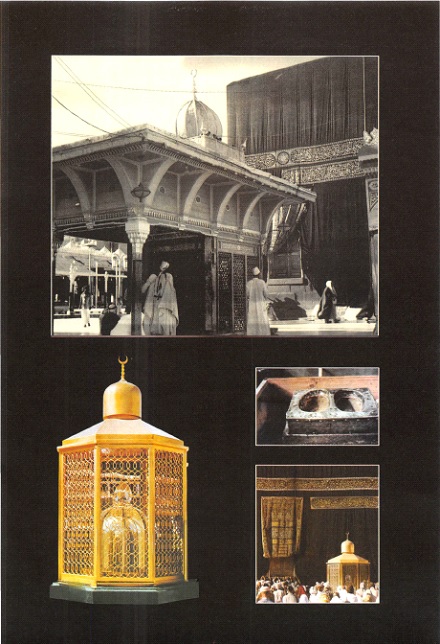
reported by 'Abdur-Razzaq in his Musannaf with Sahfh Isnad from 'Ata· and others, and also from Mujahid. Al-Baihaqi reported a similar narration from 'Aishah with a Jaiyid Isnad (good chain of narrators), which says:
"During the time of the Prophet and Abu Bakr, the Maqam was attached to the Ka 'bah, then 'Umar moved it back."
Neither the Companions nor those who came after them denounced 'Umar's action, so there was consensus on this matter.
'Umar thought that leaving it where it was, would make the space too crowded for Tawaf or for prayers, so he put it in a place that would make things easier for the people. He was guided in that, for he was the one who suggested that it should be taken as a place of prayer.
The Virtues of Hajr Al-Aswad
(The Black Stone)
There are many Ahadfth that affirm the virtues of Hajr Al-Aswad or the Black Stone and urge us to touch it or kiss it when doing TawafTo know of its virtue, it is sufficient for us to know that it was touched by the hand of the Prophet and kissed by his noble mouth.
As reported inAs-Sahihain (the Two Sahihs, meaning SahihAl-Bukhari and Sahih Muslim), 'Umar binAl-Khattab kissed the Black Stone and said: "I know that you are only a stone and can neither do harm nor bring benefit. Had I not seen Allah's Messenger kissing you, I would not have kissed you."
Ibn 'Abbas narrated that Allah's Messenger said:
"The Black Stone came down from Paradise and it was whiter than milk, but the sins of the sons of Adam turned it black." 2
Ibn 'Abbas narrated that Allah's Messenger said concerning the Stone:
"By Allah, Allah will resurrect it on the Day of Resurrection with two eyes with which it will see and a tongue with which it will speak, and it will bear witness concerning those who touched it recognizing its Virtue:3
Al-Musafi' bin Shaibah said that he heard 'Abdullah bin 'Aim bin Al' Aas saying: "As Allah is my witness," three times - placing his fingers in his ears - then he told that he heard Allah's Messenger saying:
"The Black Stone and the Maqam are two of the precious stones of Paradise. Allah extinguished their light, and if He had not extinguished their light, they would have illuminated everything between the east and the west."
When Ibrahim I was building the Ka 'bah, one more stone was needed. Isma'Il I wanted to go and get something, but Ibrahim I said, "Help me to find a stone as I told you to do." So, Isma 'il I set out, looking for a stone, then he brought it to him and found that he had set the Black Stone in place. He said, "O my father, who brought you this stone?" He said, "It was brought to me by one who is not relying on you to build it. It was brought to me by Jibrail from heaven." 2
It was reported that 'Abdullah bin 'Umar touched the Stone, then he kissed his hand and said: "I have never failed to do that since I saw Allah's Messenger kiss it." 3
The Well of Zamzam
The story of how it was dug and began to flow as a blessing for mankind is well known.
Ibrahim I brought the nursing infant Isma 'il and his mother, and left them by a big tree above Zamzam. There were no plants in Makkah and no water. He left with her a bag containing dates and an old water-skin filled with water, then he turned to leave. The mother of lsma' al followed him, and said, "Where are you going and leaving us in this valley where there is nobody and nothing?" She said that to him several times, and he did not turn towards her. Then she said, "Has Allah commanded you to do this?" He said, "Yes." She said, "Then Allah will not forsake us."
Then she went back, and Ibrahim I left. When he reached AthThaniyah (mountain path), where they could not see him, he turned to face the House and prayed in the following words, raising his hands:
"O our Lord! I have made some of my offspring to dwell in an
uncultivable valley by Your Sacred House (the Ka'bah at Makkah)
in order, 0 our Lord, that they may perform As-Salah (Iqamat-asSalah). So fill some hearts among men with love towards them, and
(0 Allah) provide them with fruits so that they may give thanks. "
( 14:37)
The mother of lsma'il started to breastfeed the infant and drink from that water, until it ran out and her son became thirsty. She started to watch him writhing or rolling in the dust and writhing then she went away, unable to look at him. She found As-Safa which was the closest mountain of the land nearby. She stood on top of the mountain and turned when she reached the valley, she lifted the hem of her skirt and started running like one who is exhausted, until she crossed the valley, then she came to AlMarwah and stood on top of it, and looked to see whether she could see anyone, but she did not see anyone. She did that seven times.
Ibn 'Abbas ti'. narrated that the Prophet said:
"This why the people run between them in As-Say."
When she stood upon Al-Marwah (for the last time), she heard a voice and she said, "Shh!" telling herself to be quiet. Then she listened, and she heard it again. She said, "I can hear you, can you help us?" Then she saw an angel standing on the site of Zamzam. He started to scrape the ground with his heels - or with his wings - until water started to appear. She started to heap the earth up around it,
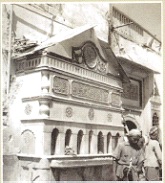
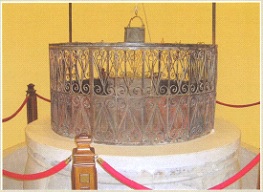
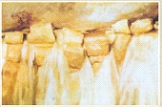
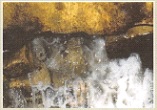
doing like this with her hands, and she started to scoop some water into her water-skin. The water decreased after she had scooped some up.
Ibn 'Abbas narrated that the Prophet said:
"If she had left Zamzam alone or if she had not scooped up some of the water Zamzam would have been a plentiful spring."
So, she drank and nursed her baby. The angel said to her: "Do not be afraid of being forsaken, for here will be the House of Allah, which this boy and his father will build, and Allah does not forsake His people."
The Disappearance of Zamzam
Then Zamzam disappeared and all traces of it vanished with the passing of time.
Yaqut Al-Hamawi said in Mu 'jamul-Buldan: "As the days passed, that flow ceased and no known trace of Zamzam remained. One opinion is that Jurhum are the ones who buried it when they left Makkah and went away.
MAKKAH :HARAM SHAREEF
Reference LinkThe City of Makkah
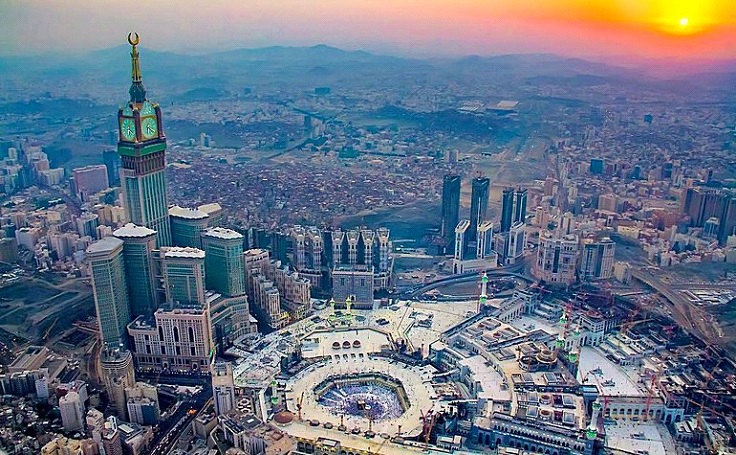
Makkah is the blessed city which is the most beloved land in the sight of Allah (ﷻ) and the chosen location of His House. It was here that the final prophet and guide of the whole of mankind, Muhammad (ﷺ), was born and commenced his Prophethood.
⦁ Allah (ﷻ) has called Makkah by five names in the Quran:
Makkah, Bakkah, Al-Balad, Al-Qaryah and Ummul-Qura.
⦁ In Surah Al-Imran, Allah (ﷻ) states: “Verily, the first House (of worship) appointed for mankind was that at Bakkah (Makkah), full of blessing, and a guidance for Al-Alamin (mankind and jinn).” [3:96]
⦁ When the Muslims conquered Makkah. The Prophet (ﷺ) said,“Allah had made this city sacred the day He created the heavens and the earth and it’s sanctity shall remain until the Day of Qiyamah (Day of Judgement). Its thorns cannot be broken, its animals cannot be harmed and things fallen on its ground cannot be picked up unless with the intention of returning it to its owner or making public announcements (to locate the owner). It is also forbidden to cut the grass that (naturally) grows here.” [Muslim]
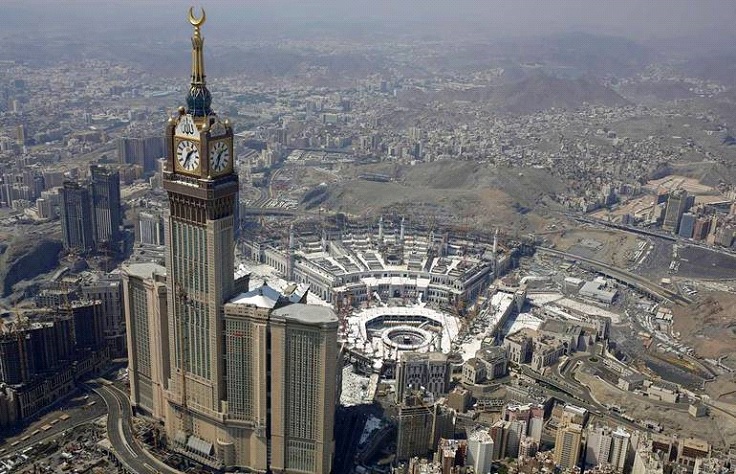
⦁ The reward of prayer offered in Masjid al-Haram is multiplied many times. Jabir bin Abdullah (may Allah be pleased with him) narrates that the Prophet (ﷺ) said:“A prayer in this mosque of mine is better than one thousand prayers anywhere else, except for al-Masjid al-Haram. A prayer in al-Masjid al-Haram is better than one hundred thousand prayers (anywhere else).” [Ahmad]
⦁ The Prophet (ﷺ), sitting on his camel in the Al-Hazwarah market, addressed Makkah saying, “By Allah, you are the best land of Allah, the most beloved land of Allah to Allah. Had I not been driven out of you, I would not have left you.” [Zaadul Ma’aad]
⦁ The Prophet (ﷺ) once remarked: “There is no city in which Dajjal will be unable to enter besides Makkah and Madinah. Every street will be lined with angels standing in rows to protect them.” [Bukhari]
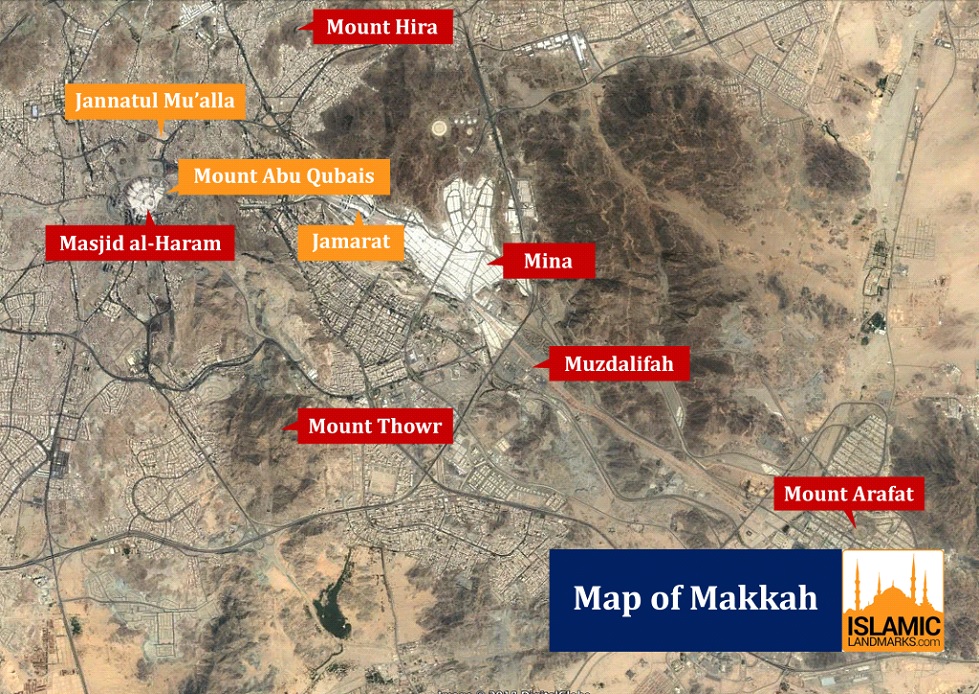
Map of Makkah with the location of major landmarks
⦁ In the time of the Prophet (ﷺ), camel caravans were a major part of Makkah’s bustling economy. Alliances were struck between the merchants in Makkah and the local nomadic tribes, who would bring goods – leather, livestock, and metals mined in the local mountains – to Makkah to be loaded on the caravans and carried to cities in Syria and Iraq. Historical accounts also provide some indication that goods from other continents may also have flowed through Makkah.
⦁ Muslim scientists have provided evidence to show that Makkah is the true centre of the Earth, one argument being that unlike other longitudes, Makkah’s is in perfect alignment to magnetic north.