Scientific Data Surah 83 · Ayah 9
Who Inspires Our Body to work like this
Who Inspires Our Body to work like this
(Data is taken as per the hadeeth mentioned below)
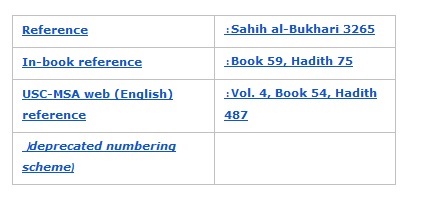
Allah's Messenger (ﷺ) said, "Your (ordinary) fire is one of 70 parts of the (Hell) Fire." Someone asked, "O Allah's Messenger (ﷺ) This (ordinary) fire would have been sufficient (to torture the unbelievers)," Allah's Apostle said, "The (Hell) Fire has 69 parts more than the ordinary (worldly) fire, each part is as hot as this (worldly) fire." حَدَّثَنَا إِسْمَاعِيلُ بْنُ أَبِي أُوَيْسٍ، قَالَ حَدَّثَنِي مَالِكٌ، عَنْ أَبِي الزِّنَادِ، عَنِ الأَعْرَجِ، عَنْ أَبِي هُرَيْرَةَ ـ رضى الله عنه ـ أَنَّ رَسُولَ اللَّهِ صلى الله عليه وسلم قَالَ " نَارُكُمْ جُزْءٌ مِنْ سَبْعِينَ جُزْءًا مِنْ نَارِ جَهَنَّمَ ". قِيلَ يَا رَسُولَ اللَّهِ، إِنْ كَانَتْ لَكَافِيَةً. قَالَ " فُضِّلَتْ عَلَيْهِنَّ بِتِسْعَةٍ وَسِتِّينَ جُزْءًا، كُلُّهُنَّ مِثْلُ حَرِّهَا ".
Fire intensity and severity:
Reference Link
Why Is Fire Hot? How Hot Is It?
#2
Why Is Fire Hot? How Hot Is It?
Understanding the Temperature of a Flame
• Share
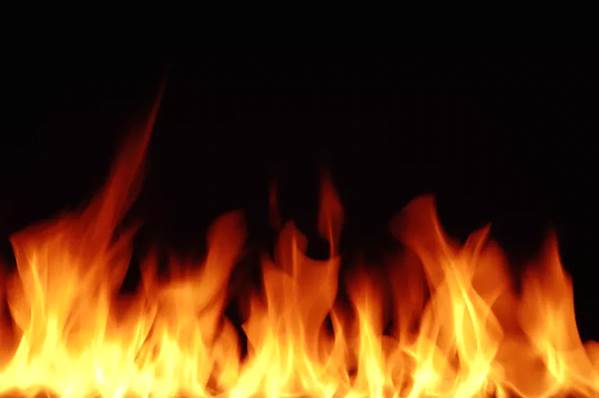
Fire is visible evidence of combustion, but the reaction emits heat even without the flames!. Jeremy Walker / Getty Images
byAnne Marie Helmenstine, Ph.D.
Updated November 05, 2018
Fire is hot because thermal energy (heat) is released when chemical bonds are broken and formed during a combustion reaction. Combustion turns fuel and oxygen into carbon dioxide and water. Energy is required to start the reaction, breaking bonds in the fuel and between oxygen atoms, but much more energy is released when atoms bonds together into carbon dioxide and water.
Fuel + Oxygen + Energy → Carbon Dioxide + Water + More Energy
Both light and heat are released as energy. Flames are visible evidence of this energy. Flames consist mostly of hot gases. Embers glow because the matter is hot enough to emit incandescent light (much like a stove burner), while flames emit light from ionized gases (like a fluorescent bulb). Firelight is a visible indication of the combustion reaction, but thermal energy (heat) may be invisible, too.
Why Fire Is Hot
In a nutshell: Fire is hot because the energy stored in fuel is released suddenly. The energy required to start the chemical reaction is much less than the energy released.
Key Takeaways: Why Is Fire Hot?
• Fire is always hot, regardless of the fuel that is used.
• Although combustion requires an activation energy (ignition), the net heat released exceeds the energy required.
• Breaking the chemical bond between oxygen molecules absorbs energy, but forming the chemical bonds for the products (carbon dioxide and water) releases much more energy.
How Hot Is Fire?
There is no single temperature for fire because the amount of thermal energy that is released depends on several factors, including the chemical composition of the fuel, the availability of oxygen, and the portion of the flame being measured. A wood fire may exceed 1100 degrees Celsius (2012 degrees Fahrenheit), but different types of wood burn at different temperatures. For example, pine produces more than twice as much heat as fir or willow. Dry wood burns hotter than green wood. Propane in air burns at a comparable temperature (1980 degrees Celsius), yet much hotter in oxygen (2820 degrees Celsius). Other fuels, such acetylene in oxygen (3100 degrees Celsius), burn hotter than any wood.
The color of a fire is a rough gauge of how hot it is. Deep red fire is about 600-800 degrees Celsius (1112-1800 degrees Fahrenheit), orange-yellow is around 1100 degrees Celsius (2012 degrees Fahrenheit), and a white flame is hotter still, ranging from 1300-1500 Celsius (2400-2700 degrees Fahrenheit). A blue flame is the hottest one of all, ranging from 1400-1650 degrees Celsius (2600-3000 degrees Fahrenheit). The blue gas flame of a Bunsen burner is much hotter than the yellow flame from a wax candle!
Hottest Part of a Flame
The hottest part of a flame is the point of maximum combustion, which is the blue portion of a flame (if the flame burns that hot). However, most students performing science experiments are told to use the top of the flame. Why? This is because heat rises, so the top of the flame's cone is a good collection point for the energy. Also, the cone of the flame has a fairly consistent temperature. Another way to gauge the region of most heat is to look for the brightest portion of a flame.
Fun Fact: Hottest and Coolest Flames
The hottest flame ever produced was at 4990 degrees Celsius. This fire was formed using dicyanoacetylene as a fuel and ozone as the oxidizer. Cool fire may also be made. For example, a flame around 120 degrees Celsius may be formed using a regulated air-fuel mixture. However, since a cool flame is barely over the boiling point of water, this type of fire is difficult to maintain and goes out readily.
What Is Fire Made Of? byAnne Marie Helmenstine, Ph.D.
What is fire made of? You know that it generates heat and light, but have you ever wondered about its chemical composition or state of matter?
Chemical Composition of Fire
Fire is the result of a chemical reaction called combustion. At a certain point in the combustion reaction, called the ignition point, flames are produced. Flames consist primarily of carbon dioxide, water vapor, oxygen, and nitrogen.
State of Matter of Fire
In a candle flame or small fire, most of the matter in a flame consists of hot gases. A very hot fire releases enough energy to ionize the gaseous atoms, forming the state of matter called plasma. Examples of flames that contain plasma include those produced by plasma torches and the thermite reaction.
Why Fire Is Hot
Fire emits heat and light because the chemical reaction that produces flames is exothermic. In other words, combustion releases more energy than is needed to ignite or sustain it. In order for combustion to occur and flames to form, three things must be present: fuel, oxygen, and energy (usually in the form of heat). Once energy starts the reaction, it continues so long as fuel and oxygen are present.
Reference
On Fire, Adobe Flash-based science tutorial from the NOVA television series.
Reference Link