Scientific Data Surah 85 · Ayah 5
The science behind burning fires
The science behind burning fires
The Combustion Process
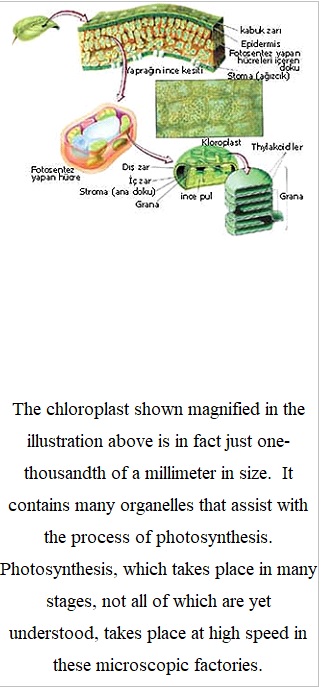
What makes a fire burn? Why is one fire a roaring inferno while another barely creeps along? Fire is a chemical reaction in which energy in the form of heat is produced. When forest fuels burn, there is a chemical combination of the oxygen in the air with woody material, pitch and other burnable elements found in the forest environment. This process in known as Combustion. Combustion is a chain reaction chemically similar to photosynthesis in reverse.
Photosynthesis requires a large amount of heat which is furnished by the sun. The Combustion process releases this heat. The tremendous amount of heat that is produced in the burning process is the major reason that the suppression of wildfires is such a difficult task and why the use of prescribed fire is a complex and exacting process requiring knowledgeable and experienced people.
The combustion process or fire is sometimes called rapid oxidation. It is similar to the formation of rust on iron or the decay of dead wood in the forest, except that the process is drastically speeded up.
Fire begins with ignition. The match is a common ignition device. Friction creates sufficient heat to ignite the phosphorus on the end of the match. Combustion occurs and the match flames.
Heat is necessary to begin the combustion process. Once started, fire produces its own heat. Wild land fires originate from such sources of heat as matches, embers from cigarettes, cigars or pipes, campfires, trash fires, exhaust sparks from railroad locomotives, sparks from brake shoes or hot-box on railroad cars. lightning, spontaneous combustion, hot ashes and arson.
The Fire Triangle
Three things are required in proper combination before ignition and combustion can take place---Heat, Oxygen and Fuel.
There must be Fuel to burn.
There must be Air to supply oxygen.
There must be Heat (ignition temperature) to start and continue the combustion process.
Fuel pre-heating
Pre-ignition
Flaming stage
Flaming & Residual Smoke Generation
Residual /Smoldering
Glowing
Heat is Energy
Sources of heat are:
Sun
Atomic
Volcanoes
Fires
The Sun is the major source of heat.
Heat from the sun drives our weather.
With a continuous supply of heat (furnished by the combustion process itself), the ignition of additional fuel will continue as long as there is enough oxygen present. Thus it is obvious that these three elements must be present and satisfactorily combined before combustion can occur and continue. For the sake of simplicity we call this the Fire Triangle.
Remove any one of the three sides or elements and the fire will cease to burn. Weaken any one, and the fire will weaken. Increase any one or more of the elements, and the fire will increase in intensity. Armed with this knowledge the fire fighter or the prescribed burner can do much to manage a fire.
Stages of combustion: flaming stages -
Pre-heating temperature of the fuel is raised to the point where gases start to volatize
Pre-ignition volatile materials in the fuel are vaporized
Flaming the ignition temperature of the fuel is reached and combustion begins
Transition fuel is partially consumed by combustion while flaming continues in portions of the fuel resulting in initiation of smoldering and smoke generation
Smoldering combustion of the fuel is essentially complete where oxygen is available and smoldering continues resulting in smoke generation
Glowing a stage of combustion where oxygen is limited
The four most important stages of combustion for prescribed burners are,
pre-ignition (fuel is about to burst into flame)
flaming active combustion
transition smoke generation begins
smoldering residual smoke production
Suppressing fire and smoke generation (segment on Suppression)
When a wildfire has started, we try to remove the oxygen side of the triangle by smothering the fire with a fire retardant, foam, dirt or water in a fine spray or fog. They will replace the oxygen around the fuel affecting one side of the fire triangle. They also absorb heat and thus also alter the heat side of the triangle. Retardants will coat the fuel and protect it from the heat even after the water has evaporated. They also inhibit the flaming combustion by chemical action. Foams also coat the fuel and last longer than water. They reduce heat as well as supply of oxygen to the fuel. They will adhere to vertical fuel and can be easily applied by ground units.
Water absorbs vast amounts of heat, especially when applied as a fog. Each droplet absorbs a large amount of heat which turns the water into a hot gas or vapor (steam). The hot steam is then dispersed by the wind into the atmosphere. However, water is heavy and it is difficult to deliver it to the fireline in inaccessible areas. There is also the possibility of running out at the most inappropriate time and losing the fire.
In forest conditions, one of the more important approaches to suppression of wildfires is removal of the third side of the triangle--Fuel. The fuel is removed by building a fireline thus separating the fuels. When the wildfire burns up to the fireline, no more fuel is available and the fire goes out. The fire line is usually constructed with a tractor-plow unit or by hand. (In the Western part of the United States, bulldozers and handcrews are used because of the steep, rocky conditions.) In some areas, helitack crews and specialized ground equipment are used.
Removing Fuel
Removing the fuel source is the most common method of attacking wildfires. This method does not extinguish the fire. The fire continues to burn until the fuel inside the fireline is consumed. Removal of fuel in the path of the fire prevents the fire from spreading. A slowly advancing fire burning sparse ground fuels may be checked by constructing a fireline down to mineral soil. A hot, fast-running fire may require several firelines, burning out the fuel between the firelines and the fire or a combination of both.
Good firefighting procedure is often a skillful combination of removing fuel, heat, and oxygen. Therefore, when you tackle a going fire, you should consider how best you can use personnel and equipment to remove one or all of the sides of the fire triangle.