Scientific Data Surah 88 · Ayah 14
And the mountains He has fixed firmly
And the mountains He has fixed firmly
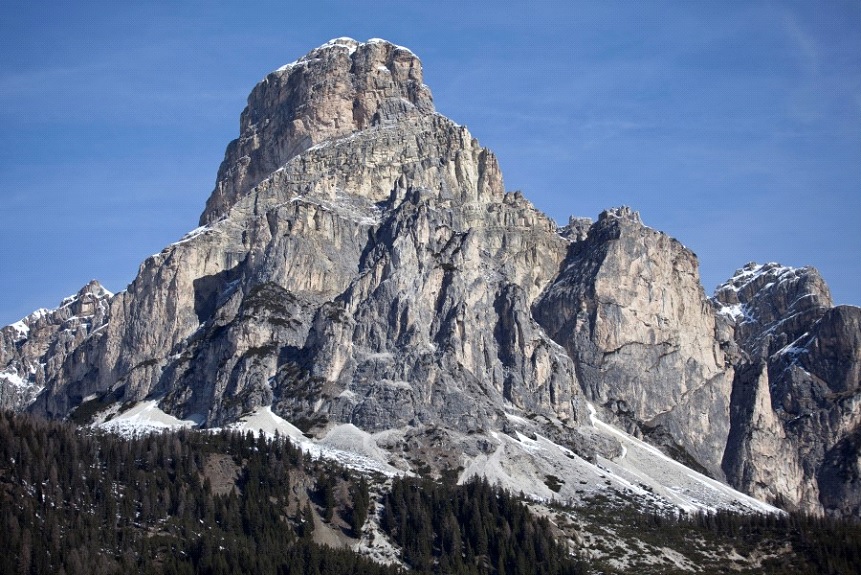
Have you ever taken the time to look at the world around you and marvel at its natural beauty? From humongous oceans and dense forests to sweeping plains and rolling hills, nature paints a vivid picture that can take your breath away.
Maybe one of the most incredible sights on Earth, though, is a majestic mountain range. From the Himalayas to the Rocky Mountains, there's just something about those tall, craggy peaks that stirs the soul.
Have you ever WONDERed how mountains got there, though? Did they fall out of the sky and land where they are? Not quite! Read on to learn more about how mountains are formed.
There are several different ways that mountains can form. One thing these methods have in common is that they all take millions of years!
Many mountains were formed as a result of Earth's tectonicplates smashing together. The Earth's crust is made up of multiple tectonic plates that still move today as a result of geologic activity below the surface.
When two tectonic plates converge, their edges can crumple kind of like an aluminum can does when you crush it. The result of these tectonic plates crumpling is huge slabs or rock being pushed up into the air. What are those called? Mountains, of course!
For example, the tectonic plates that lie underneath India and Asia crashed into each other over 25 million years ago. What happened? The Himalayas, including Mount Everest, were formed. And they're still pushing against each other. That means the Himalayas continue to grow even today!
Mountains can also form along natural fault lines. These are places in Earth's crust where tectonic plates grind against each other. Occasionally, two plates will grind together, resulting in one plate lifting up and tilting over. The result? A mountain range, like the Sierra Nevada mountain range in California.
One other way mountains form is as the result of volcanicactivity below Earth's surface. Sometimes molten rock called magma gets pushed up toward the surface. When that happens, it cools and forms hard rock. Eventually, the softer rock above it erodes to reveal a dome-shaped mountain below. If the magmaactually breaks through to the surface, you get a volcano!
Mountains can also form by way of erosion. In an area with a high plateau, rivers and streams can carve away stone in the form of deep channels. Over millions of years, what is left is a mountainbetween deep river valleys!
Reference: Reference link
Scientists confirm that the mountains are so important to our earth also they are a clear manifest that Allah is the great creator ….also scientists tell us that these mountains have many benefits such as:
The mountains contribute in fixing earth crust because its long and deep pegs, God says: (Have we not made the earth as a bed*and the mountains as pegs?)(Sûrat An-Naba’- verse 6-7).
It contributes in forming the clouds and pushing winds because of its aerodynamic shape. So, Allah made a clear link between mountains and rains, Allah says: (He has created the heavens without any pillars that you see, and has set on the earth firm mountains lest it should shake with you. And He has scattered therein moving (living) creatures of all kinds. And we send down water (rain) from the sky, and we cause (plants) of every goodly kind to grow therein.)(Sûrat Luqmân- verse 10).
Also it contributes in sterilizing and purifying the water because of its different layers, God says: (And have placed therein firm, and tall mountains, and have given you to drink sweet water) (Sûrat Al-Mursalât-verse 27).
These mountains are considered to be an important warehouse to store ice as a source of sweet water, God says: (And it is He who spread out the earth, and placed therein firm mountains and rivers) (Sûrat Ar-Ra‘d- verse 3).
For thousands of years, the man used these mountains as a place to protect him from wild animals, cold and dangers, God says: (and has made for you places of refuge in the mountains) (Sûrat an-Nahl- verse 81).
The mountains contribute in balancing the vegetation cover because its shape and its ability to store water, God says: (And the earth we have spread out, and have placed therein firm mountains, and caused to grow therein all kinds of things in due proportion.)(Sûrat A-Hijr- verse 19).
It contributes in affixing the earth ,also its shape allow valleys to formed which enable rivers to flow, God says: (And He has affixed into the earth mountains standing firm, lest it should shake with you; and rivers and roads, that you may guide yourselves.) (Sûrat an-Nahl- verse 15).
Without mountains, roads wouldn't be existed as a way of communicating people around earth as by studying the history of forming the earth through millions of years , we will see the great importance of the collision of the earth plates which formed the mountains to enable the formation of wide and paved roads which facilitates transportation and moving people through thousands of years. God says: (And we have placed on the earth firm mountains, lest it should shake with them, and we placed therein broad highways for them to pass through, that they may be guided.)(Sûrat Al-Anbiyâ’-verse 31).
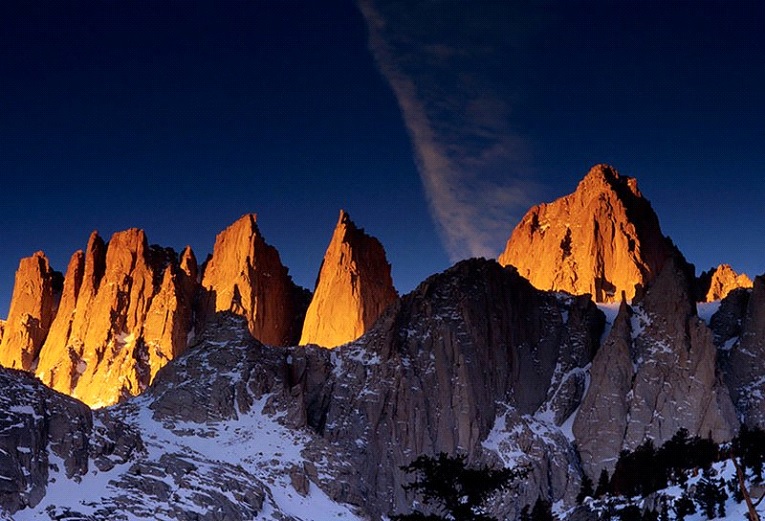
These mountains are 4418 meter of height, it lies in California in the United States of America, it was formed because the movement and collision of earth plates which caused these high mountains! Any one see the colors of these mountains should remember the divine saying: (and among the mountains are streaks white and red, of varying colors and (others) very black.)(Sûrat Fâtir-verse27).
A mountain of basalt in island of Iceland, scientists say that these pillars are identical and it were formed by the lava, also they confirms on the importance of these pillarsfor life on earth.
After all of the above we can understand the meaning of the holy verses, God says: (And after that He spread the earth *and brought forth there from its water and its pasture*and the mountains He has fixed firmly*(To be) a provision and benefit for you and your cattle.)(Sûrat An-Nâzi‘ât- verse 30-33).
Reference:
Reference Link