Scientific Data Surah 91 · Ayah 2
Phases of moon during the ten nights
Phases of moon during the ten nights
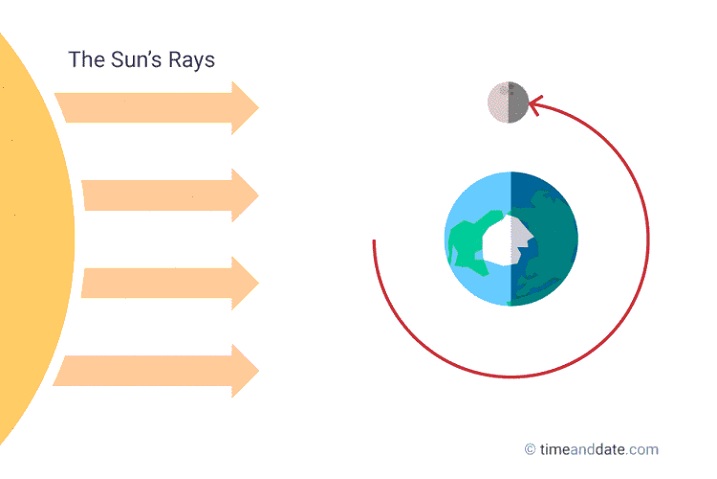
Half of the Moon’s surface is always illuminated by sunlight. However, just how much of that light we can see from our point of view on Earth varies every day and this is what we refer to as a Moon phase.
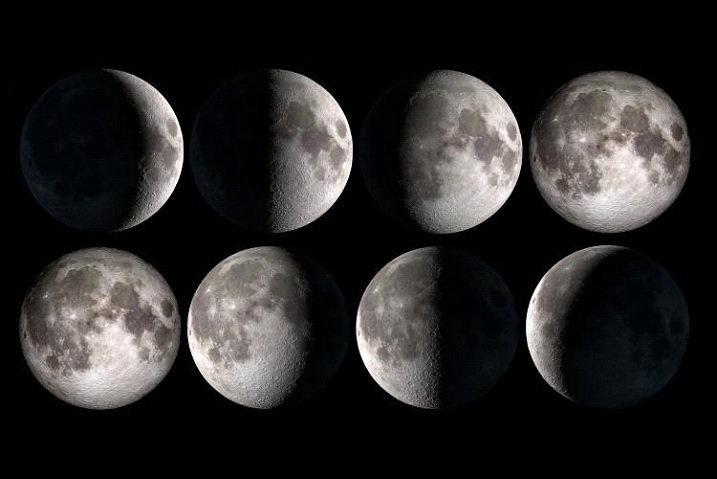 Different phases of the Moon.
Sun Lights Up the Moon
The Moon does not radiate its own light, but the Moon's surface reflects the Sun’s rays
Primary and Intermediate Phases
In Western Culture, we divide the lunar month into 4 primary and 4 intermediate Moon phases.Technically, the primary Moon phases occur at a specific moment in time, and the intermediate Moon phases take up the time in between.
New Moon
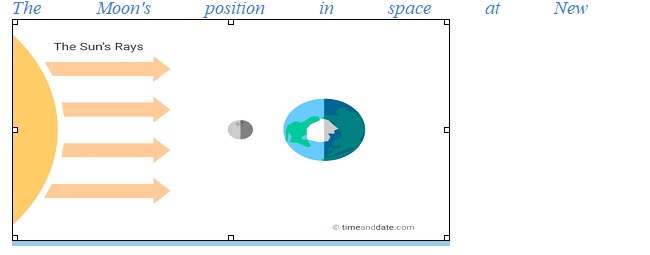
New Moon is the 1st primary phase and it occurs the moment when the Sun and Moon are aligned, with the Sun and Earth on opposite sides of the Moon.
A New Moon cannot normally be seen from Earth since only the dark side of the Moon faces our planet at this point. Sometimes, if the New Moon is close to the Lunar nodes of its path, it can cause a Solar Eclipse.
The greatest difference between high and low tide, also known as spring tides, takes place around New Moon and Full Moon.
Waxing Crescent Moon
The moment a thin sliver of the Moon becomes visible after New Moon is the beginning of the first intermediate phase, the Waxing Crescent Moon.
In the past, this used to be called New Moon while the darkest phase was called Dark Moon. This traditional definition of New Moon is still in use in some cultures, defining the beginning of the months for instance in the Islamic calendar.
The rest of the Moon is also sometimes faintly visible during most of this phase because Earth also reflects sunlight onto the Moon, a phenomenon called earthshine.
First Quarter Moon
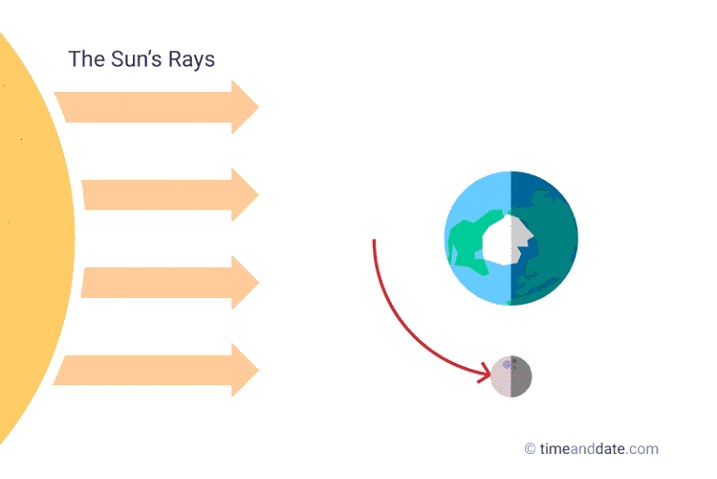 First Quarter Moon is the 2nd primary phase
First Quarter Moon is the 2nd primary Moon phase and it is defined as the moment the Moon has reached the 1st quarter of its orbit around Earth, hence the name. It is also called Half Moon as we can see exactly 50% of the Moon's surface illuminated. Whether you see the left or right half illuminated, depends on several factors, including your location. The smallest difference between high and low tide, also known as neap tides, occurs around the 2 Quarter Moons.
Waxing Gibbous Moon
The 2nd intermediate phase, the Waxing Gibbous Moon, lasts until the next primary phase. Waxing means that it is getting bigger. Gibbous refers to the shape, which is larger than the semicircle shape of the Moon at First Quarter, but smaller than a full circle.
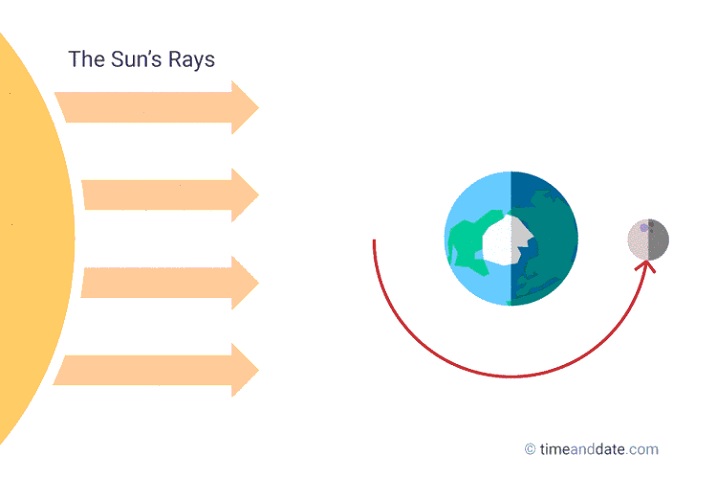
Full Moon
Full Moon is the brightest phase The Full Moon appears in the night sky when the Sun and the Moon are aligned on opposite sides of Earth.
How can Full Moon be in the daytime?
Technically, this alignment only lasts a moment. However, the Moon can appear to be full a day before or after while more than 98% of the Moon's disc is illuminated.
When a Full Moon occasionally passes through Earth's shadow, it will cause a lunar eclipse.
When the Full Moon comes close to the points of its orbit that are closest or farthest away from Earth, we call it a Supermoon or Micro Moon, respectively.
Waning Gibbous Moon
Third Quarter Moon
Third Quarter Moon is the last primary phase
The Third Quarter Moon occurs the moment the opposite half of the Moon is illuminated compared to the First Quarter Moon.
Waning Crescent Moon
The Waning Crescent Moon. The Sun illuminates less than half of the visible part of the Moon during this Moon phase and you can sometimes see earthshine on the rest of the Moon towards the end.
Reference Link
Hajj Documentary