Article Surah 108 · Ayah 3
The Prophet and the people who opposed him
The Prophet and the people who opposed him
Abdul Malik Mujahid
Bleeding from head to toe, battered and exhausted, he was faced with a choice. Should he or shouldn't he seek to destroy the people who had just humiliated him by having their children chase him out of town while throwing stones at him? And this was simply for sharing his message and seeking help for his people.
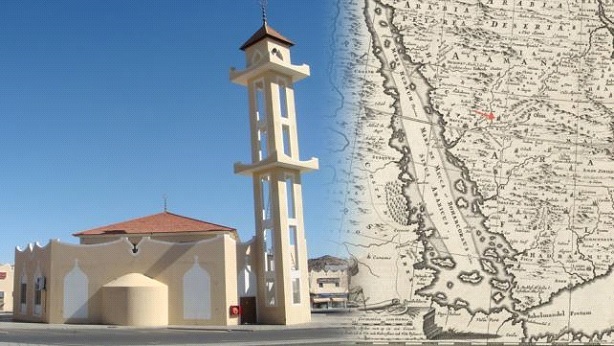
The Prophet Muhammad, peace and blessings be upon him, was in Taif, a lush town of green palm trees, fruits and vegetables, about 50 miles southeast of his arid hometown Makkah. He was hoping that perhaps the people of this town would be receptive to his message, which had been rejected by most of the Makkans for over a decade.
But the people of Taif proved just as cruel and intolerant. Not only did they scorn his message of God's Oneness, they turned their youth against the Prophet. In the face of this misery, an angel was sent and presented him with an option: have the whole town be destroyed, by God's will, for such arrogance and hatefulness.
He could have done it. He could have asked that this valley of cruel people be crushed. But he didn't.
No, he told the Angel. Don't destroy the people of Taif. Instead he prayed for their salvation.
That is just one example of how this man, who God describes as a "mercy to mankind" (Quran 21:107) dealt with those who opposed him. It's just one of many examples in the life of a person who faced constant death threats, attempts on his life, abuse and humiliation at the hands of those threatened by his simple but profound message: there is no god but God and Muhammad is His Messenger. Peace and blessings be upon him.
But the people of Taif were not the only ones who tasted of this mercy. He would pray for his enemies all the time. Two of his bitterest enemies, Abu Jahl and Omar ibn al-Khattab were also the objects of his prayers.
The Prophet made similar Duas (supplications) for his people on a regular basis: "O God! Guide my people, for they know not," he would pray, as he and his followers were tortured, humiliated, scorned and mocked.
On another occasion, some Companions came to the Prophet and said: "O Messenger of God! The tribe of Daus have committed disbelief and disobeyed (your commands). Supplicate God against them!" Contrary to the people?s expectations, the Prophet said: "O Allah! Guide Daus and let them come to us." (Bukhari).
These are just a few glimpses of how the Prophet dealt with those who opposed him. These were people who didn't just fight his message on an intellectual level. These were individuals bent on destroying him, his family, his followers and Islam itself.
Mercy after Victory
Skeptics may argue that it is easy to be merciful and forgiving when one is in a position of weakness. But in a position of power or when the opportunity presents itself, humans are known for abusing their authority and punishing their enemies brutally.
Here, too, the Prophet demonstrated exemplary behavior. The most well-known example of this is during the peaceful takeover of Mecca by the Muslims. At a time when he could have easily destroyed his worst enemies, Muhammad, peace and blessings be upon him, showed remarkable restraint. This is even more significant given the culture of vicious tribal rivalry and guilt by association practiced at the time.
Among those the Prophet forgave were Abu Sufyan, a Quraysh leader who was among those who led the opposition to Islam; Ikrimah ibn Abu Jahl, an enemy whose father was one of the Prophet's most vehement opponents; Hind, the wife of Abu Sufyan, who ripped open the corpse of the Prophet's beloved uncle Hamza after the Battle of Uhud and ripped out his heart and liver; Wahshi, the man commissioned by Hind to murder Hamza; Utbah, the son of another of the Prophet's greatest foes, Abu Lahab, who had divorced the Prophet's daughter Ruqayyah under pressure from his father. None of these individuals were harmed or punished for their crimes.
The Prophet also made sure that none of the Muslims with him at the time of the takeover acted on their understandable feelings of vengeance for those who had tortured them and driven them out of their homes. For example, the Prophet gave Sa'd ibn Ubadah the standard he was initially carrying, after which Sa?d announced as the Muslims marched by Abu Sufyan that this would be the day of the Quraysh's abasement and a day of slaughter. When the Prophet heard about this, he asked that Sa?d give the standard to his son, known for his comparatively milder temperament, for fear that Sa'd would commit violence against the Quraysh. Sa'd complied.
In terms of the rest of the Makkan population, they were granted forgiveness. It was truly a bloodless revolution based on mercy for the enemy.
Many Muslims have forgotten these lessons today
Contrast this attitude with that of some ignorant Muslims today who curse others to Hell and pray for their destruction. We don't know who is going where in the Next Life. We don't even know about ourselves. So let's keep making Dua that we stay on the right path and God guides others to it as well. We must not play God by assuming we know where others will end up.
When God tells us in the Quran about the behavior which leads to good reward and the character which takes people to the Hellfire, He is saying this so that people adopt the right behavior and avoid Hellfire by abandoning what He forbade for our own good. However, those verses are not meant to be a litmus test for us to determine where others will end up. That knowledge is only with God, the Lord of the universe.
Our Prophet was a mercy to all human beings, regardless of their religious, racial, cultural or ethnic background. We, as his followers, must live and spread this message today at a time when hatefulness and ugliness towards each other has become the norm.
SOURCE:
Reference Link
⦁ ABU JAHL
Abu Jahl means Father of Folly, whose real name was ‘Amr ibn Hisham. Abu Jahl was the mock name given to him by the Muslims (who came up with this name?). He was one of the leaders in Mecca before the city surrendered to Muhammad's army.
At the death of Muhammad's uncle, Abu Talib, Muhammad tried to persuade him to accept Islam. Abu Jahl was at his side dissuading him (Sahih Bukhari 2.442, Sahih Bukhari 5.223, Sahih Bukhari 6.197, Sahih Bukhari 6.295)
Narrated Ibn Abbas:
Abu Jahl said, "If I see Muhammad praying at the Ka'ba, I will tread on his neck." When the Prophet heard of that, he said, "If he does so, the Angels will snatch him away." (Sahih Bukhari 6.482)
Narrated Anas bin Malik:
Abu Jahl said, "O Allah! If this (Quran) is indeed the Truth from You, then rain down on us a shower of stones from the sky or bring on us a painful torment." So Allah revealed:-- "But Allah would not punish them while you were amongst them, nor He will punish them while they seek (Allah's) forgiveness..." (8.33) And why Allah should not punish them while they turn away (men) from Al-Masjid-al-Haram (the Sacred Mosque of Mecca)..." (8.33-34) (Sahih Bukhari 6.171, Sahih Bukhari 6.172)
Narrated 'Abdullah bin Mas'ud:
Once the Prophet was offering prayers at the Ka'ba. Abu Jahl was sitting with some of his companions. One of them said to the others, "Who amongst you will bring the abdominal contents (intestines, etc.) of a camel of Bani so and so and put it on the back of Muhammad, when he prostrates?" The most unfortunate of them got up and brought it. He waited till the Prophet prostrated and then placed it on his back between his shoulders. I was watching but could not do any thing. I wish I had some people with me to hold out against them. They started laughing and falling on one another. Allah's Apostle was in prostration and he did not lift his head up till Fatima (Prophet's daughter) came and threw that (camel's abdominal contents) away from his back. He raised his head and said thrice, "O Allah! Punish Quraish." So it was hard for Abu Jahl and his companions when the Prophet invoked Allah against them as they had a conviction that the prayers and invocations were accepted in this city (Mecca). The Prophet said, "O Allah! Punish Abu Jahl, 'Utba bin Rabi'a, Shaiba bin Rabi'a, Al-Walid bin 'Utba, Umaiya bin Khalaf, and 'Uqba bin Al Mu'it (and he mentioned the seventh whose name I cannot recall). By Allah in Whose Hands my life is, I saw the dead bodies of those persons who were counted by Allah's Apostle in the Qalib (one of the wells) of Badr. (Sahih Bukhari 1.241. also Sahih Bukhari 4.185, Sahih Bukhari 4.409, Sahih Bukhari 5.193)
Narrated 'Abdullah bin Mas'ud:
Sa'd bin Mu'adh came to Mecca with the intention of performing 'Umra, and stayed at the house of Umaiya bin Khalaf Abi Safwan, for Umaiya himself used to stay at Sa'd's house when he passed by Medina on his way to Sham. Umaiya said to Sad, "Will you wait till midday when the people are (at their homes), then you may go and perform the Tawaf round the Ka'ba?" So, while Sad was going around the Ka'ba, Abu Jahl came and asked, "Who is that who is performing Tawaf?" Sad replied, "I am Sad." Abu Jahl said, "Are you circumambulating the Ka'ba safely although you have given refuge to Muhammad and his companions?" Sad said, "Yes," and they started quarreling. Umaiya said to Sad, "Don't shout at Abi-l-Hakam (i.e. Abu Jahl), for he is chief of the valley (of Mecca)." Sad then said (to Abu Jahl). 'By Allah, if you prevent me from performing the Tawaf of the Ka'ba, I will spoil your trade with Sham." Umaiya kept on saying to Sad, "Don't raise your voice." and kept on taking hold of him. Sad became furious and said, (to Umaiya), "Be away from me, for I have heard Muhammad saying that he will kill you." Umaiiya said, "Will he kill me?" Sad said, "Yes." Umaiya said, "By Allah! When Muhammad says a thing, he never tells a lie." Umaiya went to his wife and said to her, "Do you know what my brother from Yathrib (i.e. Medina) has said to me?" She said, "What has he said?" He said, "He claims that he has heard Muhammad claiming that he will kill me."
She said, "By Allah! Muhammad never tells a lie." So when the infidels started to proceed for Badr (Battle) and declared war (against the Muslims), his wife said to him, "Don't you remember what your brother from Yathrib told you?" Umaiya decided not to go but Abu Jahl said to him, "You are from the nobles of the valley of Mecca), so you should accompany us for a day or two." He went with them and thus Allah got him killed. (Sahih Bukhari 4.826. also Sahih Bukhari 5.286, Sahih Bukhari 5.297)
Narrated 'Abdur-Rahman bin 'Auf:
While I was standing in the row on the day (of the battle) of Badr, I looked to my right and my left and saw two young Ansari boys, and I wished I had been stronger than they. One of them called my attention saying, "O Uncle! Do you know Abu Jahl?" I said, "Yes, What do you want from him, O my nephew?" He said, "I have been informed that he abuses Allah's Apostle. By Him in Whose Hands my life is, if I should see him, then my body will not leave his body till either of us meet his fate." I was astonished at that talk. Then the other boy called my attention saying the same as the other had said. After a while I saw Abu Jahl walking amongst the people. I said (to the boys), "Look! This is the man you asked me about." So, both of them attacked him with their swords and struck him to death and returned to Allah'S Apostle to inform him of that. Allah's Apostle asked, "Which of you has killed him?" Each of them said, "I Have killed him." Allah's Apostle asked, "Have you cleaned your swords?" They said, "No. " He then looked at their swords and said, "No doubt, you both have killed him and the spoils of the deceased will be given to Muadh bin Amr bin Al-Jamuh." The two boys were Muadh bin 'Afra and Muadh bin Amr bin Al-Jamuh. (Sahih Bukhari 4.369. see also Sahih Bukhari 5.324, Sahih Bukhari 5.298, Sahih Bukhari 5.300, Sahih Bukhari 5.301, Sahih Bukhari 5.355 )
When Ali b. Abu Talib wanted to marry Abu Jahl's daughter, Muhammad, father of Fatima, wife of Ali, was very upset and declared that Fatima and Abu Jahl's daughter cannot get together (Sahih Bukhari 4.342). Ali gave up that engagement as a result (Sahih Bukhari 5.76). This incident is also quite interesting in that Fatima was not happy with Ali taking another woman, and Muhammad relented, and praised his other son-in-law, Zaynab's husband, for being faithful. Yet, he himself had so many wives.
Source:
Reference Link
[THE CONTENT IS RELATABLE AND MIND BLOWING BUT I DOUBT THE AUTHENTICITY OF SITE]