Article Surah 90 · Ayah 6
EXTRAVAGANCE
EXTRAVAGANCE
Extravagance means Israf in Islam. Islam is strictly against wastage of anything and even more so when wastage takes place due to extravagance. It should be understood well by Muslims that Islam emphasizes a lot on social equality and a peaceful equal society; a society where no one is above another, where everyone is equally happy, where everyone is equally satisfied, where everyone is equally free and equally responsible. Some of these may vary in degrees from one instance to another, but as a basic requirement of its foundation, Islamic society stands for equality, in other words, Islamic society ensures that HAQ(Truth) prevails.
Introduction
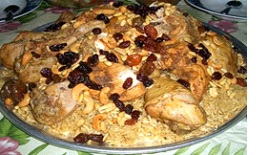
Extravagance is one thing which comes against the establishment of this equality. If a Muslim wastes some resources or provisions etc. by extravagance, he is directly wasting the haq of others, those who could have been satisfied by the wasted things. This leads to a vicious circle of wrong-doings and a big unwanted imbalance in the society, thereby, creating a hindrance in maintaining equality among all.
How can it be justified that on one hand there are people who are not able to get their daily meals, while on the other hand there are people who eat half of their plate and throw the remaining half in the trash bin? How can we defend a case where one portion of society has their wardrobes full of clothes, so big in numbers that the person may not be able to wear it once a year or once a month, whereas on the other hand there are people who live their lives depending on a dress or two and in some cases not even this? Islam takes a strong exception to this.
Quran
And those, who, when they spend, are neither extravagant nor niggardly, but hold a medium (way) between those (extremes).
Types
Extravagance is of two types.
1. Israf
Israf can be understood by an example where a person needs, let us say, two breads in order to satisfy his hunger. But he takes 3 or 4 breads for his food. Naturally, as his diet requirement is 2 or may be 2 breads and a half, he won’t be able to eat more than that, thereby wasting the remaining bread. This is a classic example of Israf. However, Israf is not limited to food only; it can be observed in other things also. Qur’an speaks in strict terms about Israf; refer to following ayath: “O Children of Adam! Take your adornment (by wearing your clean clothes) while praying and going round the Ka’bah, and eat and drink but waste not by extravagance, certainly He (Allah) likes not Al-Musrifin (those who waste by extravagance).” Quran Surah Al-A’raf, 7: 31 Allah does not like people who waste by extravagance.
This type of extravagance may take place due to either carelessness, or due to negligence, or due to arrogance, or due to foolishness. Whatever be the reason, it is not allowed in Islam. Israf can also take place due to one another reason. A person may end up doing Israf, in spite of his / her intention of doing something noble. To understand such a case, let me quote a ayath of Qur’an.“And it is He Who produces trellised and untrellised, and date palms, and crops of different shape & taste, and olives and pomegranates similar & different. Eat of their fruit when they ripen, but pay the due thereof (its Zakat) on the day of its harvest, and waste not by extravagance. Verily, He (Allah) likes not Al-Musrifin (those who waste by extravagance).”Quran Surah Al-An’am, 6:141
It was said that extravagance prohibited here refers to excessive charity beyond normal amounts. Ibn Jurayj said, “This ayath was revealed concerning Zabit bin Qays bin Shammas, who plucked the fruits of his date palms. Then he said to himself, ‘This day, every person who comes to me, I will feed him from it.’ So he kept feeding (the people) until the evening came and he ended up with no dates.” On this Allah sent down: “And waste not by extravagance. Verily, He (Allah) likes not Al-Musrifin (those who waste by extravagance).” (Ref. Tafsir by Imam Ibn Kathir).
On similar guidelines, if a person is very poor and in debts, then he/she is not supposed to do charity. That also becomes a type of Israf. Following hadith explains it clearly. Jabir (RA) narrated that the Prophet (PBUH) rejected the gift of charity (given by a poor man) before he prohibited him (for giving in charity). Malik said, “If a person is in debt and he has nothing except a slave, it is not permissible for him to manumit the slave.” Book of Quarrels, Sahih Bukhari, Vol. 3
2. Tabzir
When a person spends his money or resources for the things which he / she does not need and can easily live without it, it leads to Tabzir. For example, someone has a wardrobe full of dresses, but when he / she goes around a shopping mall, he keeps on buying dresses etc. Another example can be of a person who is a high dignitary and does an air travel. And his position demands security and that he must use a separate aircraft, but when we find such a person’s caravan being followed by two or three extra aircrafts (in the name of security), it becomes a classic example of Tabzir. Haven’t we heard of some extremely rich persons paying millions just to fetch a unique number plate for their cars? This is Tabzir. A big business conglomerate throwing a party in mid air, on a private aircraft gives us another example of Tabzir.
Let see how strictly Qur’an talks about Tabzir. The following aayaath, Allah said:“And give to the kinsman his due & to the Miskin (poor) and to the wayfarer. But spend not wastefully in the manner of a spendthrift.” “Verily, the spendthrifts are brothers of the Shayatin (devils), and the Shaitan is ever ungrateful to his Lord.” Quran Surah Al-Isra’17: 26,27
Difference between Israf and Tabzir
There is a difference between Israf and Tabzeer. To spend more than necessity in those avenues in which spending is permissible is termed as Israf. Allah says in the Qur’an: eat and drink, but be not excessive. Quran surah Araf 7:31 Eating and drinking are necessities of life and to spend in them is permissible. So spending extra in them is called Israf.
And to spend in those avenues wherein spending is not necessary is called Tabzeer. Allah says: Verily, spendthrifts are brothers of the Shayatin (devils), and the Shaitan (Devil - Satan) is ever ungrateful to his Lord. Quran Surah Isra 17:27
Concluding
Extravagance in any form is prohibited in Islam. Whatever be the reason for a person to indulge in it (foolishness, arrogance, carelessness etc.), it is to be avoided. We should understand that the wastage is not simply food or money or something being wasted by us, rather it belongs to some other people (i.e. the poor, the needy); it is their haq, which we waste by our extravagance. The practice of wastage of food is very prominent among us and gathers both pace & volume during the month of Ramadan, which is totally against the spirit of Ramadan and Saum.
Source:Reference Link
Squandering and Miserliness

Our desires and requisites
Allah ﷻ says: Lo! the squanderers were ever brothers of the devils, and the devil was ever an ingrate to his Lord. Surah Al-Isra, Ayat 27. Our beloved Prophet ﷺ forbade us from squandering. What is squandering? Squandering is to spend money or buy things unnecessarily. The needs are of two types: genuine and fake. The genuine needs are those without which the deeni or worldly work gets ceased or entailed with many difficulties. If the difficulties of the concerned work are eased, to spend money in such cases is clearly allowed for these are genuine needs and can be assessed. Now the fake needs also called as Hirs (whims and desires) cannot be assessed. Today most of our desires have entered the list of requisites. As the desires have no bounds and so is this list that will keep increasing with time and whatever is spent in the world will lead to devastation with never ending expenses because the aspirations do not end. Certainly the income is limited but not the desires that have become our needs and the result is the man will remain grieved that his expenses are not met. But yes there is a hope if spent on essential things. If the needs are indefinite when the income is fixed, then how will it suffice? One will remain only distressed. The income may not be in our control for it is not necessary that we would earn ten lakhs per month but the expenses are in our control. So utilize that which is in your control and inshaaAllah Allah ﷻ will put barakah in it.
⦁ Squandering leaves our deen in danger
When squandering in itself is sinful and will bring a definite ruin in the hereafter, the effect can also be seen in this world where families after families have collapsed. When they raised their expenses and status, they faced the outcome. Increasing the expenses with income is not wise. The wise thing is to lead a simple life peculiar to one’s style, to control his desire and to save the excess money that Allah ﷻ gave him and spend it for some other good cause. It is not wise to finish off all the money in a month or a year taking vocational trips twice a year so determined to spend all the money like planning for a European tour when the income increases. When you accustom your children with this habit and they reach your stage with their income not up to your level, then what will they do? They will try to maintain their status even if it demands haram earnings and their deen will become flat. Today the deen of how many people is in danger all concerned about the expenditure concluding how the expenses will be met if such and such ways are not adopted. How many people’s deen has been spoiled with the worry of expenses? They prolonged their expenses to such an extent that they get compelled to meet their expenses by any means irrespective of being halal or haram and there remains a constant fear about the expenses in them. It has got difficult for the man to ride a motorcycle in place of a car.
⦁ Squandering and ostentation
O honorable ones! Our beloved Prophet ﷺ led a very beautiful and comfortable life. Adopt a unique lifestyle and do not increase your expenditure. If at all you need furniture, it is not necessary to spend around 1.5 crores. Generally why do people buy expensive furniture? They want people to see and in fact they display things very cheerfully all by themselves. This is ostentation, a sin in itself which is haram. This showing off that he got the furniture from such and such place is very prominent. This style of life is very dangerous and may be this is why no other ayat of Quran is this harsh in manner when describing squandering: Inna almubaththireena kaanoo ikhwaana alshshayaateen. Lo! the squanderers were ever brothers of the devils. How harsh are these words! This sin has so enrooted that we never repented. If one steals he repents, if he loots he repents and he repents for many sins but not for squandering. This got so established that he doesn’t even realize when it is the base for many evils. Make your lifestyle in such a way that it becomes a standard for your children so when they grow up and have low income, it will become easy for them inshaaAllah to lead a life within the halal means. If the expense increases more than the income, then the doors of haram will open and the eemaan is also of not that good level that one will remain hungry instead of consuming haram. When this is the state of eemaani tarbiat (upbringing) and the doors of squandering is opened on the other side, then think what will happen? So do not squander.
⦁ Reflect and consult
Reflect and ponder on Allah’s ﷻ ayat of squandering and pay attention to two things before you spend. The first thing is to think if you do not spend money in the particular case, will there be loss or no loss. If there is no loss related to this world or akhirat, then do not spend. Today we have made all our fake needs as obligatory. People think if they do not raise and maintain the status, how their daughters will get married or establish a name in the society. These needs are indeed false and have no relation with the real needs. And in fact the praise and honor being sought is also false. If the loss is apparent when not spending the money, then consult a qualified person if spending will be against your interest or even necessary and act per his advice. If one makes judgment on his own about his spending, it might result in loss. So let him consult the one whom he trusts in all his affairs and act on his opinion. inshaaAllah his money will then be spent for Allah’s ﷻ pleasure for his own opinion falls here. Keep your lifestyle like the pious ones and do not have slightest adherence to customs and practices. First and foremost choose your house. Leaving behind all the beneficial things, remove the useless ones, sell them or donate to the poor and if you are not courageous enough to give it as nafil sadaqaat (voluntary or optional charity), then give it as zakaat. You can estimate the value of these things and deduct it from your zakaat but never keep useless things in your homes. For example, if the value is about ten lakhs rupees and your zakaat is about twenty lakhs, then deduct ten lakhs from it. If you have junk items, you would need worthless time and people for its maintenance.
Source:Reference Link
“A
llāh hates that you squander wealth and waste it…” (A brief explanation) By Shaykh Al-Fawzān

Allāh hates that you squander wealth and waste it:
Mugheerah Ibn Shu’bah (radiyallāhu ‘anhu) narrated that Allah’s Messenger (ﷺ) said, “Verily, Allah has made unlawful for you: disobedience to your mothers, burying your daughters alive, niggardly in spending and hoarding wealth. And He hates for you: to engage in gossip “this one said and that one said”, excessive asking [for wealth and unnecessary questions], and the squandering of wealth.” (Bukhāri 2408, Muslim 593)
So Allah (the Most High) hates that a person squanders his wealth. The scholars (Allah have mercy on them) have stated that spending of wealth is done in three states:
Firstly: The spending that is done in obedience to Allah. This is encouraged and is not considered as wasting or squandering wealth. Rather, that is the intent behind wealth.
Secondly: Spending wealth for that which you need. There is also no blame in this because wealth has been made to fulfil needs. So if you spend your wealth on that which you need, then there is no blame on you.
Thirdly: That it is spent in disobedience to Allah. This is to squander and waste wealth and is unlawful (harām) even if it is something small, even it be just a Dirham (a silver coin) that is spent. Allah stated: “Eat and drink but do not be excessive (i.e. do not go beyond bounds).” (Al-A’rāf: 31)
So the spending of one’s wealth [in a lawful manner] is of three levels:
One: Spending on that which is obligatory, and this is a must, such as paying Zakāh [and Hajj], spending on oneself, on one’s wife, children, parents and close relatives.
Two: Spending one’s wealth in that which is recommended (mustahabb), such as giving charity to those in need and supporting noble projects (building a mosque, digging a well for the poor, supporting orphans, etc). So this is encouraged and is not wasting wealth.
Three: Spending in that which is allowed (mubāh) — this spending is not obligatory, nor recommended but it is allowed and permissible, such as purchasing fruit and meat that a person likes to eat, or that he purchases new clothing that he likes or a vehicle that is suited to him. The scholars state that there is no harm in this. And it is said by some of the scholars that one should be moderate in the permissible matters. He should not just go out and buy whatever his soul desires and seeks. Rather he should be moderate and balanced in that. Allah (the Most High) said, “And the servants of the Most Merciful are those who, when they spend, do not do so extravagantly (excessively), nor are they miserly but they are between the two, moderate.” (Al-Furqān: 67)
So spending wealth in obedience to Allah is not a waste nor is it squandering even if it is plenty. And spending wealth in sin and disobedience to Allah is excess (and going beyond limits), even if it is one Dirham and you responsible on the day of Judgement for what you spend.
Reference:
See Tas-heelul-Ilmām of Al-Allāmah Al-Fawzān 6/184-185, (abridged).
Source:Reference Link