Surah 096 of 114

سورة العلق

Al-Alaq

19 verses · tap any ayah to deep-dive

Ayat 1

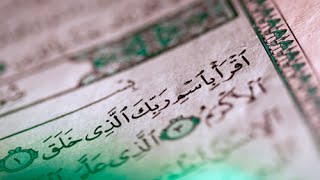
ٱقْرَأْ بِٱسْمِ رَبِّكَ ٱلَّذِى خَلَقَ.(1)

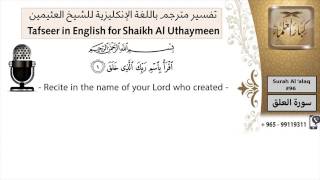
Recite in the name of your Lord who created -(1) [Al-Alaq: 1]

Back to surah / Surah 096 · Al-Alaq / Ayah 1

Section 01

Traditional understanding

Translation, tafseer from classical and modern scholars, transliteration, word-by-word grammar.

Translation Sahih International

Recite in the name of your Lord who created -(1)

Tafseer Abdullah Yusuf

object understood being Allah's Message. In worldly letters he was unversed, but with spiritual knowledge his mind and soul were filled, and now had come the time when he must stand forth to the world and declare his mission.

(6204) The declaration or proclamation was to be in the name of Allah the Creator.
It was not for any personal benefit to the Prophet: to him there was to come bitter
persecution, sorrow, and suffering. It was the call of Allah for the benefit of erring
humanity. Allah is mentioned by his tide of "thy Lord and Cherisher", to establish
a direct nexus between the source of the Message and the one addressed. The
Message was not merely an abstract proposition of philosophy, but the direct
concrete message of a personal Allah to the creatures whom He loves and
cherishes. Thy addressed to the Prophet is appropriate in two ways: (1) he was in
direct contact with the divine Messenger (Gabriel) and Him Who sent the
Messenger; (2) he represented the whole of humanity, in a fuller sense than that in
which Christ Jesus is the "Son of Man".

Tafseer Dr. Farooq Azam

Read! In the name of your Rabb Who created

Tafseer Ibn Abbas

And from his narration on the authority of Ibn 'Abbas that he said regarding the interpretation of Allah's saying (Read): '(Read) He says: Read, O Muhammad, the Qur'an; this is the first revelation that Gabriel brought down: (In the name of thy Lord) by the command of your Lord (Who createth) the created beings,

Tafseer Jalalain

Recite, bring recitation into existence, beginning with: In the Name of your Lord Who created, all creatures;

Tafseer Ma’arif Ul-Quran

Beginning of The Qur'anic Revelation
It is universally agreed that the first five verses of Surah Al-'Alaq or Iqra' mark the very beginning of Quranic revelation. [Baghawil]. Bukhari, Muslim, other authentic sources and overwhelming consensus of scholars, ancient and modern, all concur on this point. However, some scholars state that Surah Al-Muddaththir was the first Surah to be revealed, and yet others say that Surah Al-Fatihah [The Opening] was revealed first. It is possible to reconcile between these different views as follows: After the revelation of Surah Al-'Alaq or Iqra', there was a temporary break in the revelation during which the Holy Prophet used to be very sad, but after some time, the Angel Jibra'il appeared to him once again, and he faced the same situation as he faced when the first verses of Surah Iqra' were revealed to him. On this occasion, the opening verses of Surah Al-Muddaththir were conveyed to him by the angel. From this point of view, it may be said that the first Surah to be revealed after the temporary break was Surah Al-Muddaththir. Some of the Companions held the view that Surah Al-Fatihah was the first Surah to be revealed. They probably meant to say that this was the first Surah to be revealed in a complete form. Undoubtedly, some verses (of Surahs Al-'Alaq or Iqra', Al-Muzzammil and Al-Muddathths) were revealed earlier, but the rest of the verses of those Surahs were revealed at later dates. Al-Fatihah is the first Surah that was revealed to the Holy Prophet in its entirety, all seven verses at once. [Mazhari]

The Holy Prophet's First Experience of Revelation
In a lengthy narration, as recorded in the Sahihs of Bukhari and Muslim, the Mother of the Faithful, Sayyidah Aisha says that revelation to the Messenger of Allah was started by true dreams. Whatever he saw in a dream would happen in reality as clearly as the light of dawn. Then solitude became dear to him, and he used to seclude
himself for worship in the cave Hira, (a cave in the mount known today as 'Jabal-un-Nur, which is clearly visible in front of Jannat-ul-Ma'la, the famous graveyard of Makkah) and therein he devoted himself to Divine worship for several nights before he came back to his family and took provisions for his retirement; then he would return to the Mother of the Faithful, Sayyidah Khadijah and take more provisions for a similar period. (The period of his stay in the cave is mentioned differently by different reports, but the report of sahihain maintains that it was a month, the whole month of Ramadan. Authentic traditions are silent about the mode of worship he adopted during this period. Some scholars have opined that he used to worship according to the SharTah of Nuh, Ibrahim and 'Isa, but neither any authentic report supports it, nor is it likely, because he was an 'ummiyy (unlettered). It is, therefore, more likely that his worship was concentration and reflection on Allah Almighty and His omnipotence until the Truth, that is, the revelation came to him while he was in the cave of Hira'; so the angel came to him and said, 'Read'. The Holy Prophet replied, 'I am not the one who can read'. (The Holy Prophet was under the impression that he was directing him to read a written document. Since the Holy Prophet could not read or write, he replied accordingly.) Then the angel embraced him and pressed him so hard that he felt extreme pain, then he released him and said, 'Read'. The Holy Prophet replied, 'I am not the one who can read'. Then he embraced him and pressed him a second time so hard that he felt extreme pain, then he released him again and said, 'Read'. The Holy Prophet replied, 'I am not the one who can read'. Then he embraced the Holy Prophet and pressed him a third time, then he released him and said, 'Read with the Name of your Lord Who created [everything], He created man from a clot of blood. Read, and your Lord is the most gracious, who imparted knowledge by means of the Pen. He taught man what he did not know.'
The Messenger of Allah returned with this message [of five verses] while his heart trembled and he came to Sayyidah Khadijah, saying 'wrap me up, wrap me up', and she wrapped him up, until the awe left him. (It should be noted that the fear felt by the Holy Prophet was due to the great responsibility delegated to him, and due to the unusual event of seeing an angel in his original form.) Then he said to Sayyidah Khadbah while he related to her what had happened: "I feared for myself." Sayyidah Khadljah said: 'Nay, by Allah, Allah will never expose you to disgrace, because you unite the ties of kinship, and bear the burden of the weak, and earn for the destitute, and offer hospitality to the guests, and help (people) in real distress.'
Then Sayyidah Khadijah took him to her cousin, Waraqah Ibn Naufal. He was a man who had adopted Christianity (which was a true religion at that time) during the days of Ignorance, and he used to write the Hebrew script, and translate it into Arabic. He was a very old man who had turned blind. Sayyidah Khadijah said to him, O Uncle's son! Listen to your brother's son. Waraqah asked him, My brother's son! What have you seen? So the Messenger of Allah related to him what he had seen. Waraqah said to him, This is the very same confidant [angel Jibra'il] whom Allah sent to Holy Prophet Musa; would that I were a young man at this time - would that I were alive when your people would expel you! The Messenger of Allah asked in surprise, "Will they expel me?" He replied. Yes; never has a man appeared with the like of that which you have brought, but he has been held in enmity; and if your time finds me alive, I shall help you with the fullest support. After that, not much time had passed before Waraqah died, and the revelation broke off temporarily. [Bukhari and Muslim]
The temporary break of revelation, according to Suhaill, lasted for about a year and half. Other reports say that it lasted to about three years. [Mazhari]
Verse [1] (Read with the Name of your Lord, Who created [everything]) In the prepositional phrase bismi rabbika [with the name of your Lord], the addition of the word ismi is significant in two ways [1] that whenever the Qur'an is being recited, the reader should begin by reciting the formula; "With the name of Allah, the All-Merciful, the Very-Merciful". When Jibra'il Amin suddenly appeared to the Holy Prophet and said 'iqra' (read) , he tendered apology that he is unable to read or recite, because he is unlettered. The phrase b-ismi rabbika points to the fact that under present circumstances you, O Holy Prophet, may be 'ummiyy' or unlettered, but Allah has the power to grant you the highest level of knowledge, the most elegant style of oration and eloquence, so that you would surpass and subdue the most educated or literate people, as it became manifest later on. [Mazhari].

[2]Allah has many Beautiful Names, but the blessed name rabb is particularly chosen in the verse here probably because it supports and emphasizes the theme that Allah cherishes and sustains the Holy Prophet through all the different stages of his development, until he is fully consummated. He can make him read and recite, despite being unlettered. In the relative clause al-ladhi khalaqa [Who created], particularly contains the Divine attribute of takhliq [creating] presumably because the first Divine favor is wujiid or 'existence' as a result of His drawing out beings from the realm of non-existence into the realm of existence. Many other favors of His follow. The verb khalaqa [created] is transitive and it requires an object that is absent here. This indicates the verb is used absolutely, and it signifies that the Creator has created the entire universe and every existent thing it contains.

Tafseer Mufti Taqi Usmani

- Read with the name of your Lord who created (every thing),

Tafseer Shaikh Ashiq Ilahi

Sayyidah Ayshah reports that the Holy Prophet was in the cave of Hira when divine revelation came to him for the first time. TheHoly Prophet used to frequent the cave and took food along with him because he would spend many days there. One day, an angel approached him in the cave and said, "Read!" When the Holy Prophet said that he was unlettered and therefore unable to read, the angel embraced the Holy Prophet so hard that he experienced great difficulty. Thereafter, the angel repeated the command to read and the Holy Prophet gave the same reply. For the second time, the angel embraced the Holy Prophet in the same manner. When he released the Holy Prophet, he repeated the question. Again the Holy Prophet told him that he was unable to read and again the angel embraced him. Thereafter, the angel said, "Read in the name of your Lord who created,Who created man from a clot of blood. Read and your Lord is most Magnanimous, Who taught by the pen. He taught man what he did not know."

The Holy Prophet UP & repeated what the angel said and then the angel left. The Holy Prophet immediately left for home in a very frightened state. He said to his wife Sayyidah Khadija "Cover me! Cover me!" When she covered him, he lay down for a while until the fear subsided. He then recounted the incident to Sayyidah Khadija [ Bukhari v. p. 3, 4 and Muslim v. 1 p. 88]

The verses of Surah Alaq were therefore the first verses of the Qur'an
revealed. After a while, Allah revealed the verses, "O you wrapped in garments.
Stand up and warn. Announce the greatness of your Lord. Keep your clothing clean. Stay away from sin." After this, revelation began coming continuously.

Allah Ta'ala says, 'Read in the name of your Lord who created". The command
to read is general and does not refer to anything specific. This first verse of the
Surah refers to Allah's making of the entire creation. Allah's creation is the
greatest manifestation of His power by which we ought to recognise Him.

Tafseer Tafheem Ul-Quran

The traditionists have related on the strength of their respective authorities the story of the beginning of revelation from Imam Az-Zuhri, who had it from Hadrat Urwah bin Zubair, who had it from Hadrat Aishah, his aunt. She states that revelations to the Holy Prophet (upon whom be peace) began in the form of true (according to other traditions, good) visions. Whichever vision he saw it seemed as though he saw it in broad daylight. Afterwards solitude became dear to him and he would go to the Cave of Hira to engage in worship there for several days and nights (Hadrat Aishah has used the word tahannuth, which Imam Zuhri has explained as ta'abbud: devotional exercises. This was some kind of worship which he performed, for until then he had not been taught the method of performing the Prayer by Allah). He would take provisions with him and stay there for several days, then would return to Hadrat Khadijah who would again provide for him for a few more days. One day when he was in the Cave of Hira, Revelation came down to him unexpectedly and the Angel said, to him: "Read".
After this Hadrat Aishah reports the words of the Holy Prophet himself, to the effect, "I said: I cannot read! There upon the Angel took me and pressed me until I could bear it no more. Then he left me and said: Read. I said: I cannot read! He pressed me a second time until I could bear it no more. Then he left me and said: Read. I again said: I cannot read! He pressed me for the third time until I could bear it no more. Then he left me and said: Iqra bismi Rabbi kal- ladhi khalaqa: (Read in the name of your Lord Who created) till he reached ma lam ya lam (what he did not know).
Then the Holy Messenger (upon whom be peace) returned home to Hadrat Khadijah trembling with fear, and said to her: `Cover me, cover me', and he was covered. When terror left him, he said: `O Khadijah, what has happened to me?' Then he narrated to her whatever had happened, and said: `I fear for my life'. She said; `No never! Be of good cheer. By God, never will God debase you: you treat the kindred well, you speak the truth, (one tradition adds: you restore what is entrusted to you), you bear the burden of the helpless, you help the poor, you entertain the guests, and you cooperate in good works.'
Then she took him to Waraqah bin Naufal, who was her cousin. He had become a Christian in pre-Islamic days, wrote the Gospel in Arabic and Hebrew, and had become very old and blind. Hadrat Khadijah said: `Brother, listen to the son of your brother.' Waraqah said to the Holy Prophet: `What have you seen, nephew?' The Holy Prophet described what he had seen. Waraqah said; `This is the same Gabriel (the Angel of Revelation) which Allah had sent down to Moses. Would that I were a young man during your Prophethood! Would that I were alive when your tribe would expel you!' The Holy Prophet said: `Will they expel me?' Waraqah said; `Yes, never has it so happened that a person brought what you have brought and was not treated as an enemy. If I live till then I would help you with all the power at my command.' But not very long after this Waraqah died.
This narrative is explicit that even until a moment before the coming Angel the Holy Messenger of Allah (upon whom be His peace) was without any expectation that he was going to be appointed a Prophet. Nothing to say of any such wish or expectation, he did not even have any idea that he would meet with such an experience. Coming down of the Revelation and appearing of the Angel face to face was an unexpected accident for him the first effect of which on him was precisely the same as could naturally be on a person meeting with such a tremendous experience, in the absence of any preparation. That is why when he proclaimed the message of Islam, the people of Makkah raised all sorts of objections, but no one said that they were already apprehending that he would make a claim, for he had been making preparations since long to become a Prophet.
From this narrative another thing which also becomes obvious is how pure was the Holy Prophet's life and how sublime was his character before Prophethood, Hadrat Khadijah was no young lady: she was 55 years old at the time this event took place and had been the Holy Prophet's life companion for 15 years. No weakness of the husband can remain hidden from the wife. She had during this long period of married life found him to be such a generous and noble man that when he told her of his experience in the Cave of Hira', she admitted without the least hesitation that it was indeed Allah's own Angel who had come to him with Revelation. Likewise, Waraqah bin Naufal also was an old inhabitant of Makkah, who had seen the Holy Prophet grow up from childhood. Particularly, for the past 15 years because of the close relationship he was even more intimately aware of his life, his Affairs and dealings. When he also heard of his experience, he did not regard it as an evil suggestion, but immediately said that it was the same Gabriel who had descended on Moses (peace be upon him). This meant that even according to him
the Holy Prophet was such a sublime person that there was nothing surprising in his being elevated to the office of Prophethood.

Transliteration

Ayah 1

Iqra biismi rabbika allathee khalaqa

Word-by-word

Ayah 1

# Arabic Pronunciation Meaning Root
1 اقْرَأْ Iqra Read ق ر أ
2 بِاسْمِ biismi in (the) name س م و
3 رَبِّكَ rabbika (of) your Lord ر ب ب
4 الَّذِى allathee the One Who
5 خَلَقَ khalaqa created خ ل ق

Section 02

Cross-references

Similar verses elsewhere in the Qur’an and authentic ahadith narrated about this ayah.

Section 03

Articles & resources

Long-form articles, scientific commentary, and historical context linked from the legacy archive.

Section 04

Audio & video lectures

0 videos · 14 audio lectures from contemporary scholars.

References

  1. Tafseer — Abdullah Yusuf
  2. Tafseer — Dr. Farooq Azam
  3. Tafseer — Ibn Abbas
  4. Tafseer — Jalalain
  5. Tafseer — Ma’arif Ul-Quran
  6. Tafseer — Mufti Taqi Usmani
  7. Tafseer — Shaikh Ashiq Ilahi
  8. Tafseer — Tafheem Ul-Quran
  9. Translation — Sahih International
  10. Hadith collections — 16 narrations from Bukhari, Muslim, Tirmidhi, Abu Dawud and others (see Cross-references)
  11. Quranic cross-references — 6 parallel verses
  12. Linked articles — 14 long-form pieces

Ayat 2

خَلَقَ ٱلْإِنسَٰنَ مِنْ عَلَقٍ.(2)

Created man from a clinging substance.(2) [Al-Alaq: 2]

Back to surah / Surah 096 · Al-Alaq / Ayah 2

Section 01

Traditional understanding

Translation, tafseer from classical and modern scholars, transliteration, word-by-word grammar.

Translation Sahih International

Created man from a clinging substance.(2)

Tafseer Abdullah Yusuf

(6205) Cf. xxiii. I·t The lowly origin of the animal in man is contrasted with the high destiny offered to him in his intellectual, moral and spiritual nature by his "most bountiful" Creator. No knowledge is withheld from man, On the contrary, through the faculties freely given to him, he acquires it in such measure as outstrips his immediate understanding, and leads him ever to strive for newer and newer meaning.

Tafseer Dr. Farooq Azam

created man from a leechlike mass.

Tafseer Ibn Abbas

(Createth man) i.e. the son of Adam (from a clot) and the Prophet (pbuh) said: “what shall I read?” And Gabriel read to him the first four verses of this surah.

Tafseer Jalalain

created man (al-insān: the generic) from a blood-clot (‘alaq is the plural of ‘alaqa, which is a small quantity of congealing blood).

Tafseer Ma’arif Ul-Quran

Verse [2] (Created man from a clot of blood.) The previous verse referred to the creation of macrocosm, the large or entire universe in general. In this verse, the phrase is khalaqa'l-insan which refers to the creation of microcosm 'the best, noblest or most honourable creation', Man. If analysed carefully, we notice that man is the epitome of macrocosm or the large universe. He is a small scale representation, analogue, or miniature of the large and complex universe. Another reason why man has been particularly mentioned is that the purpose of Prophet-hood, messenger-hood and revelation of the Quran is the implementation of Divine ordinances, injunctions and laws and acting upon them: This is the essential peculiarity of mankind. The word 'alaq, being the plural of 'alaqatun, means 'congealed blood'. The creation of man has passed and passes through various phases. His primordial creation is from the four major elements, that is, earth, water, fire and air. His procreation is from an insignificant and humble state, the sperm which then transforms into congealed blood. This is the primary state of the embryo which happens after the conception. Then it takes the shape of a lump of flesh and then the skeletal structure is created. 'Alaqah is the middle phase in the whole process of creation. The specific mention of 'alaqah covers the initial stage and the final stage of the process of creation.

Tafseer Mufti Taqi Usmani

He created man from a clot of blood.

Tafseer Shaikh Ashiq Ilahi

Thereafter, Allah refers specifically to the creation of man when He says that He "created man from a clot of blood" Although other animals are also created in a manner similar to man, man needs to be more grateful to Allah because Allah granted him intelligence. Expressing gratitude includes obedience to Allah, engaging in Allah's remembrance (Dhikr) and verbally expressing thanks for the bounties that He has bestowed on us.

Tafseer Tafheem Ul-Quran

After making mention generally of the creation of the universe, mention has been made of man in particular, saying how Allah made him a perfect man starting his creation from an insignificant and humble state. 'Alaq is plural of 'alaqah, which means congealed blood. This is the primary state of the embryo which appears a few days after conception. Then it assumes the form of a lump of flesh, then afterwards it gradually takes human shape. (For details, see AI-Hajj: 5 and the corresponding E.N.'s 5 to 7).

Transliteration

Ayah 2

Khalaqa alinsana min AAalaqin

Word-by-word

Ayah 2

# Arabic Pronunciation Meaning Root
1 خَلَقَ Khalaqa He created خ ل ق
2 الْإِنسَانَ alinsana man أ ن س
3 مِنْ min from
4 عَلَقٍ AAalaqin a clinging substance ع ل ق

Section 02

Cross-references

Similar verses elsewhere in the Qur’an and authentic ahadith narrated about this ayah.

Section 03

Articles & resources

Long-form articles, scientific commentary, and historical context linked from the legacy archive.

Section 04

Audio & video lectures

38 videos · 12 audio lectures from contemporary scholars.

Tafseer of Qur'an - Surah At-Teen & Surah Al-Alaq (ch 95 & 96) - EP 46 - Sh Assim Al Hakeem 1. Sheikh Assim Al Hakeem Video · youtube Tafseer of Qur'an - Surah At-Teen & Surah Al-Alaq (ch 95 & 96) - EP 46 - Sh Assim Al Hakeem 1. Sheikh Assim Al Hakeem Video · youtube Why was Prophet Muhammad SAW ordered to read during the first revelation Sheikh Dr Muhammad Salah Dr.Muhammad Salah Video · youtube Why was Prophet Muhammad SAW ordered to read during the first revelation Sheikh Dr Muhammad Salah Dr.Muhammad Salah Video · youtube When Angel Jibreel Said: IQRA (read) Yasir Qadhi Video · youtube When Angel Jibreel Said: IQRA (read) Yasir Qadhi Video · youtube SHAYKH YASIR QADHI - IQRA - (Kinetic Typography) Yasir Qadhi Video · youtube SHAYKH YASIR QADHI - IQRA - (Kinetic Typography) Yasir Qadhi Video · youtube 10 - The Life of Prophet Muhammad (pbuh) - The First Revelation - Sh. Yasir Qadhi Yasir Qadhi Video · youtube 10 - The Life of Prophet Muhammad (pbuh) - The First Revelation - Sh. Yasir Qadhi Yasir Qadhi Video · youtube The First Revelation to Prophet Muhammad (PBUH) | Mufti Menk | 2016 Ismail Ibn Musa Menk Video · youtube The First Revelation to Prophet Muhammad (PBUH) | Mufti Menk | 2016 Ismail Ibn Musa Menk Video · youtube Don't Hate, Educate! - Surat Iqra / al-'Alaq #SurahADay 096 #DailyTafseer - Yahya Ibrahim Yahya Ibrahim Video · youtube Don't Hate, Educate! - Surat Iqra / al-'Alaq #SurahADay 096 #DailyTafseer - Yahya Ibrahim Yahya Ibrahim Video · youtube In Depth Analysis & Tafseer of Surah 96 Alaq by Nouman Ali Khan Nouman Ali Khan Video · youtube In Depth Analysis & Tafseer of Surah 96 Alaq by Nouman Ali Khan Nouman Ali Khan Video · youtube Lessons From Surah Alaq | Nouman Ali Khan | Illustrated Nouman Ali Khan Video · youtube Lessons From Surah Alaq | Nouman Ali Khan | Illustrated Nouman Ali Khan Video · youtube Before Revelation - Khutbah by Nouman Ali Khan. Nouman Ali Khan Video · youtube Before Revelation - Khutbah by Nouman Ali Khan. Nouman Ali Khan Video · youtube Before Revelation- Nouman Ali Khan Nouman Ali Khan Video · youtube Before Revelation- Nouman Ali Khan Nouman Ali Khan Video · youtube Surah Al-Alaq - Day 21 - Ramadan with the Quran Nouman Ali Khan Video · youtube Surah Al-Alaq - Day 21 - Ramadan with the Quran Nouman Ali Khan Video · youtube Dr Zakir Naik, The Revelation of the Quran Dr. Zakir Naik Video · youtube Dr Zakir Naik, The Revelation of the Quran Dr. Zakir Naik Video · youtube Revelation Muhammad [SAW] : The Revelation | Series: Episode 8 XTRAS Video · youtube Revelation Muhammad [SAW] : The Revelation | Series: Episode 8 XTRAS Video · youtube 03 - Muhammad [SAW] : Revelation And The Reaction EXTRAS Video · youtube 03 - Muhammad [SAW] : Revelation And The Reaction EXTRAS Video · youtube MUST WATCH | The First Revelation - Muhammad [SAW] the Prophet EXTRAS Video · youtube MUST WATCH | The First Revelation - Muhammad [SAW] the Prophet EXTRAS Video · youtube Tafseer Juz e Amma - Surat Al-Alaq by Sheikh Navaid Aziz EXTRAS Video · youtube Tafseer Juz e Amma - Surat Al-Alaq by Sheikh Navaid Aziz EXTRAS Video · youtube Tafseer of Surah Al-Alaq : Shaykh Ibn Al-Uthaymeen EXTRAS Video · youtube Tafseer of Surah Al-Alaq : Shaykh Ibn Al-Uthaymeen EXTRAS Video · youtube How Does Your Voicebox Work? | Brit Lab The Larynx Video · youtube How Does Your Voicebox Work? | Brit Lab The Larynx Video · youtube The Beginning Of Revelation A Tafsir Of Surat Al Alaq (Riyad ul Haqq) Riyad ul Haqq Audio lecture The Beginning Of Revelation A Tafsir Of Surat Al Alaq (Riyad ul Haqq) Riyad ul Haqq Audio lecture 095 Teen B 096 Alaq A (Noman Ali Khan) Noman Ali Khan Audio lecture 095 Teen B 096 Alaq A (Noman Ali Khan) Noman Ali Khan Audio lecture Tafseer Daily - 096 - al-Alaq (Yahya Ibrahim) (Yahya Ibrahim Audio lecture Tafseer Daily - 096 - al-Alaq (Yahya Ibrahim) (Yahya Ibrahim Audio lecture Juz 30 - L310C (Taymiyyah Zubair) Taymiyyah Zubair Audio lecture Juz 30 - L310C (Taymiyyah Zubair) Taymiyyah Zubair Audio lecture Tafseer Juz E Amma Surat Al Alaq (Navaid Aziz) Navaid Aziz Audio lecture Tafseer Juz E Amma Surat Al Alaq (Navaid Aziz) Navaid Aziz Audio lecture Embryology explained in the Holy Quran (Majed Mahmoud) Majed Mahmoud Audio lecture Embryology explained in the Holy Quran (Majed Mahmoud) Majed Mahmoud Audio lecture

References

  1. Tafseer — Abdullah Yusuf
  2. Tafseer — Dr. Farooq Azam
  3. Tafseer — Ibn Abbas
  4. Tafseer — Jalalain
  5. Tafseer — Ma’arif Ul-Quran
  6. Tafseer — Mufti Taqi Usmani
  7. Tafseer — Shaikh Ashiq Ilahi
  8. Tafseer — Tafheem Ul-Quran
  9. Translation — Sahih International
  10. Hadith collections — 8 narrations from Bukhari, Muslim, Tirmidhi, Abu Dawud and others (see Cross-references)
  11. Quranic cross-references — 8 parallel verses
  12. Linked articles — 24 long-form pieces
Ayat 3

ٱقْرَأْ وَرَبُّكَ ٱلْأَكْرَمُ.(3)

Recite, and your Lord is the most Generous -(3) [Al-Alaq: 3]

Back to surah / Surah 096 · Al-Alaq / Ayah 3

Section 01

Traditional understanding

Translation, tafseer from classical and modern scholars, transliteration, word-by-word grammar.

Translation Sahih International

Recite, and your Lord is the most Generous -(3)

Tafseer Abdullah Yusuf

Proclaim! And thy Lord is Most Bountiful,-

Tafseer Dr. Farooq Azam

Read! Your Rabb is the Most Gracious

Tafseer Ibn Abbas

He said to him: (Read) the Qur'an, O Muhammad: (And thy Lord is the Most Bounteous) and your Lord is Clement and forgives the ignorance of the servants,

Tafseer Jalalain

Recite: (reiterating the first one) and your Lord is the Most Generous, having no counterpart in terms of His generosity (wa-rabbuka’l-akram is a circumstantial qualifier referring to the subject [of the verb] iqra’, ‘recite’),

Tafseer Ma’arif Ul-Quran

Verse [3] (Read, and your Lord is the most gracious.) The command iqra' [Read] has been repeated in this verse for two reasons: The first command in verse [1] was for the Holy Prophet himself to read or recite. The second command in this verse is to proclaim, convey, communicate and teach or preach. It is not inconceivable that the command iqra' is repeated by deliberate design for emphasis. The Divine attribute al-Akram 'the Most Gracious' signifies that Allah did not create the world or man for any ulterior motive, for selfish motivation or for His own benefit. He has done it out of His infinite grace, generosity and magnanimity. He endowed upon the universe the great favour of existence without asking for it.

Tafseer Mufti Taqi Usmani

Read, and your Lord is the most gracious,

Tafseer Shaikh Ashiq Ilahi

Read and your Lord is most Magnanimous...

Tafseer Tafheem Ul-Quran

Read, and your Lord is Most Generous.

Transliteration

Ayah 3

Iqra warabbuka alakramu

Word-by-word

Ayah 3

# Arabic Pronunciation Meaning Root
1 اقْرَأْ Iqra Read ق ر أ
2 وَرَبُّكَ warabbuka and your Lord ر ب ب
3 الْأَكْرَمُ alakramu (is) the Most Generous ك ر م

Section 02

Cross-references

Similar verses elsewhere in the Qur’an and authentic ahadith narrated about this ayah.

Section 04

Audio & video lectures

18 videos · 14 audio lectures from contemporary scholars.

Tafseer of Qur'an - Surah At-Teen & Surah Al-Alaq (ch 95 & 96) - EP 46 - Sh Assim Al Hakeem Sheikh Assim Al Hakeem Video · youtube Tafseer of Qur'an - Surah At-Teen & Surah Al-Alaq (ch 95 & 96) - EP 46 - Sh Assim Al Hakeem Sheikh Assim Al Hakeem Video · youtube Can we say Ramadan Kareem By Assim Al Hakeem Assim Al Hakeem Video · youtube Can we say Ramadan Kareem By Assim Al Hakeem Assim Al Hakeem Video · youtube Allah's Precise Generosity - Sign Your Own Checks :: Khutbah by Sh Mohammad Elshinawy Mohammad El Shinawy Video · youtube Allah's Precise Generosity - Sign Your Own Checks :: Khutbah by Sh Mohammad Elshinawy Mohammad El Shinawy Video · youtube Explanation of Beautiful Names of Allah (Part 29) "al-Kareem, al-Akram" by Muhammad Tim Humble Muhammed Tim Humble Video · youtube Explanation of Beautiful Names of Allah (Part 29) "al-Kareem, al-Akram" by Muhammad Tim Humble Muhammed Tim Humble Video · youtube Beautiful Names of Allah (Part 14)- Al-Kareem & Al-Akram Yasir Qadhi Video · youtube Beautiful Names of Allah (Part 14)- Al-Kareem & Al-Akram Yasir Qadhi Video · youtube Don't Hate, Educate! - Surat Iqra / al-'Alaq #SurahADay 096 #DailyTafseer - Yahya Ibrahim Yahya Ibrahim Video · youtube Don't Hate, Educate! - Surat Iqra / al-'Alaq #SurahADay 096 #DailyTafseer - Yahya Ibrahim Yahya Ibrahim Video · youtube Allah’s Boundless Generosity - Amazed by the Quran w/ Nouman Ali Khan Nouman Ali Khan Video · youtube Allah’s Boundless Generosity - Amazed by the Quran w/ Nouman Ali Khan Nouman Ali Khan Video · youtube Allah Will Provide - Nouman Ali Khan - Reminder Nouman Ali Khan Video · youtube Allah Will Provide - Nouman Ali Khan - Reminder Nouman Ali Khan Video · youtube In Depth Analysis & Tafseer of Surah 96 Alaq by Nouman Ali Khan Nouman Ali Khan Video · youtube In Depth Analysis & Tafseer of Surah 96 Alaq by Nouman Ali Khan Nouman Ali Khan Video · youtube The Beginning Of Revelation A Tafsir Of Surat Al Alaq (Riyad ul Haqq) Riyad ul Haqq Audio lecture The Beginning Of Revelation A Tafsir Of Surat Al Alaq (Riyad ul Haqq) Riyad ul Haqq Audio lecture 095 Teen B 096 Alaq A (Noman Ali Khan) Noman Ali Khan Audio lecture 095 Teen B 096 Alaq A (Noman Ali Khan) Noman Ali Khan Audio lecture Tafseer Daily - 096 - al-Alaq (Yahya Ibrahim) (Yahya Ibrahim Audio lecture Tafseer Daily - 096 - al-Alaq (Yahya Ibrahim) (Yahya Ibrahim Audio lecture Juz 30 - L310C (Taymiyyah Zubair) Taymiyyah Zubair Audio lecture Juz 30 - L310C (Taymiyyah Zubair) Taymiyyah Zubair Audio lecture Tafseer Juz E Amma Surat Al Alaq (Navaid Aziz) Navaid Aziz Audio lecture Tafseer Juz E Amma Surat Al Alaq (Navaid Aziz) Navaid Aziz Audio lecture Names of Allah 4 - Al-Wahhab and Al-Kareem (Ismail Kamdar) Ismail Kamdar Audio lecture Names of Allah 4 - Al-Wahhab and Al-Kareem (Ismail Kamdar) Ismail Kamdar Audio lecture 99 Names - EP 15 - Alkareem (Ammar Shukry) Ammar Shukry Audio lecture 99 Names - EP 15 - Alkareem (Ammar Shukry) Ammar Shukry Audio lecture

References

  1. Tafseer — Abdullah Yusuf
  2. Tafseer — Dr. Farooq Azam
  3. Tafseer — Ibn Abbas
  4. Tafseer — Jalalain
  5. Tafseer — Ma’arif Ul-Quran
  6. Tafseer — Mufti Taqi Usmani
  7. Tafseer — Shaikh Ashiq Ilahi
  8. Tafseer — Tafheem Ul-Quran
  9. Translation — Sahih International
  10. Hadith collections — 16 narrations from Bukhari, Muslim, Tirmidhi, Abu Dawud and others (see Cross-references)
  11. Quranic cross-references — 6 parallel verses

Ayat 4

ٱلَّذِى عَلَّمَ بِٱلْقَلَمِ.(4)

Who taught by the pen -(4) [Al-Alaq: 4]

Back to surah / Surah 096 · Al-Alaq / Ayah 4

Section 01

Traditional understanding

Translation, tafseer from classical and modern scholars, transliteration, word-by-word grammar.

Translation Sahih International

Who taught by the pen -(4)

Tafseer Abdullah Yusuf

(6206) The Arabic words for "teach" and "knowledge" are from the same root. It is impossible to produce in a Translation the complete orchestral harmony of the words for "read", "teach", "pen" (which implies reading, writing, books, study, research), "knowledge" (including science, self knowledge, spiritual understanding), and "proclaim", an alternative meaning of the word for "to read". This proclaiming or reading implies not only the duty of blazoning forth Allah's message, as going with the prophetic office, but also the duty of promulgation and wide dissemination of the Truth by all who read and understand it. The comprehensive meaning of qara' refers not only to a particular person and occasion but also gives a universal direction. And this kind of comprehensive meaning, as we have seen, runs throughout the Qur'an—for those who will understand.

Tafseer Dr. Farooq Azam

taught man what he knew not.

Tafseer Ibn Abbas

(Who teacheth by the pen) Who teaches writing by the pen,

Tafseer Jalalain

Who taught, [the art of] script, by the pen — the first to write with it was [the prophet] Enoch (Idrīs), peace be upon him —

Tafseer Ma’arif Ul-Quran

Verse [4] $k , , $ kg (Who imparted knowledge by means of the Pen.) The preceding verse spoke of the creation of man. The current verse speaks of man's education or literacy, because knowledge, as part of education and literacy, distinguishes man from all other animals and creatures, and occupies the position of the crown of creation. There are two means, methods or media through which knowledge is imparted: [I] oral or spoken method or by word of mouth; and [2] Pen or written method. The command iqra' [read] at the beginning of SGrah refers to the oral or spoken method. However, the current verse, which speaks more explicitly about imparting knowledge, speaks of the written method of recording and transmitting knowledge from generation to generation.

Pen and Writing: The First and Most Important Means of Transmitting Knowledge
An authentic narration of Sayyidna Abu Hurairah reports that the Messenger of Allah % said:
"When Allah created the creation, He inscribed a document which is with Him above the Throne: Indeed My mercy has preceded My anger."
In another narration, the Messenger of Allah is reported to have said:
"The first thing Allah created was the pen. He told it to write, so it wrote what was to take place till Doomsday. This is with Allah on His Throne." [Qurtubi]

Three Types of Pen
Scholars have said that there are three types of pen in the world: [1] a Pen that Allah created with His own hand and instructed it to write the decree of the universe; [2] the pen of the angels who record the events that are to occur and their magnitude, they also use it to record the deeds of human beings; and [3] the pen of human beings, which they use to reduce their speech to writing. Writing, in fact, is a kind of speech [or a manifestation of it]. Humans are biologically programmed by Allah for speech , and it is thus natural, inborn and innate faculty. [Qurtubi] The leading authority on Tafsir, Mujahid, cites from Abu 'Amr that Allah created four things in the entire universe with His own Creative hand, and the rest of the creation came into being by His cosmic command of kun [be] and they became. The four things are: [1] the pen; [2] The Divine Throne; [3] the Garden of Eden; and [4] Holy Prophet 'Adam.

Who was First Trained in the Writing Skill and Art ?
Scholars have differed on this question. Some say the art and skill of writing was first imparted to the father of mankind, i.e. the prophet 'Adam and he was the first one to write. [Ka'b Ahbar]. Others say that this art was first taught to the Holy Prophet Idris and he was thus the very first scribe. [Dahhak]. Some others have observed that the art and skill of writing is the Divine knowledge given as a gift to anyone whom Allah wills.

Writing Skill and Art: A Great Divine Gift
Sayyidna Qatadah has stated that Pen is a great Divine gift. If Allah had not granted man the art and skill of writing with pen, it would not have been possible for him to preserve or protect the religion in its pristine form, nor would it have been possible for him to conduct his worldly affairs in the proper manner. Sayyidna Ali has stated that it is a great generosity that Allah has granted His servants knowledge of things they did not know. He drew them out from the darkness of ignorance and brought them into the light of knowledge. He urged them to acquire the art and skill of writing as it accrues great benefits. Only Allah is able to keep count of the benefits of writing. All sciences and philosophies are codified by means of pen. The history of the former and latter nations are compiled by means of pen. Their chronicles and monographs are preserved in writing. The Divinely revealed Books are committed to writing, and shall be preserved till the world lasts. 'The pen' is thus able to make great contribution towards the propagation and dissemination of spiritual sciences and Divine secrets revealed by the Qur'an and of physical sciences to which the study of the Qur'an imparted a great stimulus. Without the pen, all worldly and religious works will come to a standstill.

Writing Skill and Art: Attitude of Scholars in All Ages
Scholars of the former and the latter times have always realised the stupendous role pen plays in the preservation and transmission of knowledge, as a result they made a great use of it and left behind a huge legacy of books and writings. It is regretful to notice that in this age students and scholars have ignored the importance of this skill and art. As a result, scarcely a few people in a few million people have mastered the art, or developed the skill, of writing. To Allah do we direct our complaint!

Writing Skill and Art: The Reason Why the Holy Prophet was not Taught
It is really very significant that mention should have been made of 'Pen' in a Book which was revealed to a person, the Final Messenger, who himself did not know how to read and write. The reason for this is the profound Divine wisdom underlying it. Allah had willed that the dignity and status of the Final Messenger should be far above the thinking of the general populace. Allah placed the Holy Prophet in an environment which was not favourable for any spontaneous accomplishments, nor was it conducive to any achievements by natural exposure. His birth-place was the rugged and rocky mountainous terrain. The desert of Arabia had fewer plants apart from the date-palms, little water apart from the zam zam well and the weather was always dry, far away from civilisation, and completely cut off from the cradle of knowledge and wisdom. The communications system or network was inaccessible; as a result, the people of Arabia had no contact with Syria, Iraq, Egypt and other civilised areas of the world. Hence, all the Arabs were referred to as 'unlettered' who generally had no respect for knowledge, wisdom and writing. Very rarely people had the opportunity to learn knowledge or to acquire the art and skill of writing. The Holy Prophet was born in such bare region, among such illiterate tribes and in such harsh environment. He was never given the opportunity to become literate. It was inconceivable that a person born in such a surrounding will be gifted with knowledge, wisdom and high morals. He was, however, suddenly granted the cloak of Prophet-hood, together with incessant flow of knowledge and wisdom. The greatest of poets and orators of Arabia were subdued by the eloquence of the unlettered Holy Prophet. This was his open and overt miracle. Every open-minded person should be able to see with his eye of certainty that his attainments were not the result of acquisition by his own efforts or human exertion, but they were the result of the invisible generosity of Allah Who endowed him with the Prophetic gift. This is the Divine wisdom underlying the reason why the Holy Prophet was not trained in the skill and the art of writing. [Adapted from Qurtubi]

Tafseer Mufti Taqi Usmani

Revelation of the Holy Qur’an to the Holy Prophet commenced with these five verses.The Holy Prophet used to seclude himself in the cave of Hira’ for worship, even prior to his appointment as a Prophet. Once when he was in the cave, the angel Jibra’il (Gabriel) appeared to him for the first time, and after pressing his chest, said to him, ‘Read!’ Since the Holy Prophet was unlettered, he replied, ‘I do not know how to read.’Jibra’il (Gabriel) repeated the request thrice, and then conveyed these five verses.This being the first revelation to the Holy Prophet, he was told how he should read the Qur’an supposed to be revealed to him in future. The instruction given is that he should always start the recitation of the Holy Qur’an with Allah’s name. Moreover, it was an indication that preaching the true faith among staunch unbelievers was though a difficult task, he should start it with Allah’s name, placing his trust in His help. Since the Holy Prophet had a doubt how he would read while he was unlettered, verses 3 and 4 consoled him that imparting knowledge is only in Allah’s power. It is He who made the pen an instrument for writing and imparting knowledge, otherwise pen in itself has no inherent power to convey any message. Now, Allah can teach anyone whatever He wills without the mediation of pen, and He would certainly teach the Holy Prophet whatever he would need to discharge His duties.

Tafseer Shaikh Ashiq Ilahi

Allah continues, "Read and your Lord is most Magnanimous,Who taught by the pen. He taught man what he did not know." It was Allah the Creator Who taught the Holy Prophet what he knew. Knowledge is not restricted to teachers and books. A great deal of knowledge is not received from them. Allah does not require means to educate a person.Allah Ta'ala can teach a person with or without a pen, teacher or books.

Tafseer Tafheem Ul-Quran

That is, "It is a great favor of Allah that starting man's creation from a most insignificant state He made him possessor of knowledge which is the noblest attribute of creation, and He made him not only possessor of knowledge but also taught him the art of writing by the use of pen, which became the means of propagation, progress, dissemination and preservation of knowledge on a large scale. Had He not given man the knowledge of the art of pen and writing (by inspiration) his intellectual faculty would have stagnated, and it would have had no opportunity to develop, expand and become a means of transmission of knowledge from one generation to the next and make future progress.

Transliteration

Ayah 4

Allathee AAallama bialqalami

Word-by-word

Ayah 4

# Arabic Pronunciation Meaning Root
1 الَّذِى Allathee The One Who
2 عَلَّمَ AAallama taught ع ل م
3 بِالْقَلَمِ bialqalami by the pen ق ل م

Section 02

Cross-references

Similar verses elsewhere in the Qur’an and authentic ahadith narrated about this ayah.

Section 03

Articles & resources

Long-form articles, scientific commentary, and historical context linked from the legacy archive.

Section 04

Audio & video lectures

6 videos · 10 audio lectures from contemporary scholars.

References

  1. Tafseer — Abdullah Yusuf
  2. Tafseer — Dr. Farooq Azam
  3. Tafseer — Ibn Abbas
  4. Tafseer — Jalalain
  5. Tafseer — Ma’arif Ul-Quran
  6. Tafseer — Mufti Taqi Usmani
  7. Tafseer — Shaikh Ashiq Ilahi
  8. Tafseer — Tafheem Ul-Quran
  9. Translation — Sahih International
  10. Hadith collections — 14 narrations from Bukhari, Muslim, Tirmidhi, Abu Dawud and others (see Cross-references)
  11. Quranic cross-references — 2 parallel verses
  12. Linked articles — 2 long-form pieces
Ayat 5

عَلَّمَ ٱلْإِنسَٰنَ مَا لَمْ يَعْلَمْ.(5)

Taught man that which he knew not.(5) [Al-Alaq: 5]

Back to surah / Surah 096 · Al-Alaq / Ayah 5

Section 01

Traditional understanding

Translation, tafseer from classical and modern scholars, transliteration, word-by-word grammar.

Translation Sahih International

Taught man that which he knew not.(5)

Tafseer Abdullah Yusuf

: (6207) Allah teaches us new knowledge at every given moment. Individuals learn more and more day by day; nations and humanity at large learn fresh knowledge at every stage. This is even more noticeable and important in the spiritual world.

Tafseer Dr. Farooq Azam

taught man what he knew not.

Tafseer Ibn Abbas

(Teacheth man) writing with the pen (that which be knew not) before this; it is also said: He taught man the names of all things which he previously did not know.

Tafseer Jalalain

taught man (al-insān: the generic) what he did not know, before he was taught, in the way of guidance, [the art of] writing, crafts and so on.

Tafseer Ma’arif Ul-Quran

Verse [5] (Taught Man what he did not know." The preceding verse was concerned with a particular means of teaching, namely, 'pen', the written method.
Many other Means of Teaching
The present verse purports to say that the real teacher is Allah, and He has innumerable ways and means, besides pen, to impart knowledge. Therefore, the verse says that Allah taught man things with which he was unacquainted previously. The verse does not mention 'pen' or any other means of teaching. The reason for that is man is taught from the very inception of his life. First, he is gifted with intellect, the greatest means of receiving knowledge. Man, by the right use of intellect, is able to understand many things. Further, his entire environment is the manifestation of the perfect power of Allah and studded with the evidence of Divine power by witnessing which he is able to recognise his Creator. Revelation and inspiration are other means of knowledge. The knowledge of many essential things are learnt intuitively. Intuition is the God-given ability to know or understand things through feelings, rather than by considering facts or evidence. As a result, there is no need for tongue or pen. When a baby is born, it is not conscious of how its environment operates. However, it instinctively reaches out for the mother's breast, when it feels hungry and feeds itself. Who teaches it and who can teach it? Allah has taught it the 'skill' of crying since its birth. The cry of the baby is the means of satisfying all its needs. When it cries, it becomes a cause of concern for the parents to find out what is wrong. The baby's cry satisfies its hunger, thirst, heat and cold. Who teaches the new-born baby how to cry? All this is instinctive knowledge with which Allah has programmed every living organism, especially man. After the instinctive knowledge, man's knowledge continues to increase by word of mouth, and then by the supra-rational organ of intuition, called the heart. Apparently, there was no need to say (... what he did not know) because normally knowledge is imparted of things that are not known. It is explicitly stated here, probably because man may not assume that the God-given knowledge and skills are the results of his own efforts and exertion. The concluding phrase "what he did not know" has been added in order to make man realise that there was a time when he knew nothing, thus in [16:78] we came across (And Allah has brought you forth from your mothers' wombs when you knew nothing...). This shows that knowledge is not an ingrained personal excellence of man. It is the gift of the Creator and the Master. [Mazhari]. Some scholars interpret the word 'man' to be referring to the Holy Prophet 'Adam because he was the first man to whom knowledge was imparted, thus in [2:31] (And He taught 'Adam the names, all of them...). And others say the reference is to the Final Messenger whose knowledge embraces the knowledge of all the previous Prophets.

As stated earlier, these five verses of this Surah represent the very beginning of the revelation of the Qur'an. Verses [6-19] of the Surah are of much later date. We assert this on the following grounds: These verses were revealed in connection with an incident in which Abu Jahl prevented the Holy Prophet from offering salah, In the initial stages of revelation and Prophet-hood, the Holy Prophet had no enemies in Makkah. All used to call him by the title of 'al-Amin' [the honest or upright]. They respected and loved him. Abu Jahl's enmity and opposition obviously started when the Holy Prophet proclaimed his propagation openly, called the people towards Islam publicly, and performed the salah in the Sacred Mosque. Salah was prescribed on the Night of Ascent, (Mi'raj). Therefore, prevention from Salah, referred to in these verses, may not be imagined before that time.

Tafseer Mufti Taqi Usmani

Revelation of the Holy Qur’an to the Holy Prophet commenced with these five verses.The Holy Prophet used to seclude himself in the cave of Hira’ for worship, even prior to his appointment as a Prophet. Once when he was in the cave, the angel Jibrail (Gabriel) appeared to him for the first time, and after pressing his chest, said to him, ‘Read!’ Since the Holy Prophet was unlettered, he replied, ‘I do not know how to read.’Jibra’il (Gabriel) repeated the request thrice, and then conveyed these five verses.This being the first revelation to the Holy Prophet , he was told how he should read the Qur’an supposed to be revealed to him in future. The instruction given is that he should always start the recitation of the Holy Qur’an with Allah’s name. Moreover, it was an indication that preaching the true faith among staunch unbelievers was though a difficult task, he should start it with Allah’s name, placing his trust in His help. Since the Holy Prophet had a doubt how he would read while he was unlettered, verses 3 and 4 consoled him that imparting knowledge is only in Allah’s power. It is He who made the pen an instrument for writing and imparting knowledge, otherwise pen in itself has no inherent power to convey any message. Now, Allah can teach anyone whatever He wills without the mediation of pen, and He would certainly teach the Holy Prophet whatever he would need to discharge His duties.

Tafseer Shaikh Ashiq Ilahi

Allah continues,"Read and your Lord is most Magnanimous,Who taught by the pen. He taught man what he did not know." It was Allah the Creator Who taught the Holy Prophet what he knew. Knowledge is not restricted to teachers and books. A great deal of knowledge is not received from them. Allah does not require means to educate a person. AllahTa'ala can teach a person with or without a pen, teacher or books.

Tafseer Tafheem Ul-Quran

That is, Man originally was absolutely illiterate. Whatever of knowledge he obtained, he obtained it as a gift from Allah. Whatever doors of knowledge at any stage did Allah will to open for man, they went on opining up before him. This same thing has been expressed in the verse of the Throne, thus: "And the people cannot comprehend anything of His knowledge save what He Himself may please to reveal." (Al Baqarah: 255). Whatever man looks upon as his own scientific discovery was, in fact, unknown to him before. Allah gave him its knowledge whenever He willed without his realizing that Allah by His grace had blessed him with the knowledge of it.
These verses were the very first to be revealed to the Holy Prophet (upon whom be peace), as is stated in the Hadith reported by Hadrat `A'ishah. This first experience was so intense and tremendous that the Holy Prophet could not bear it any more. Therefore, at that time he was only made aware that the Being Whom he already knew and acknowledged as his Lord and Sustainer was in direct communion with him, had started sending down Revelations to him, and had appointed him as His Prophet. Then after an intermission the opening verses of Surah al-Muddaththir were revealed in which he was told what mission he had to perform after his appointment to Prophethood. (For explanation, see Introduction to Al Muddaththir)

Transliteration

Ayah 5

AAallama alinsana ma lam yaAAlam

Word-by-word

Ayah 5

# Arabic Pronunciation Meaning Root
1 عَلَّمَ AAallama Taught ع ل م
2 الْإِنسَانَ alinsana man أ ن س
3 مَا ma what
4 لَمْ lam not
5 يَعْلَمْ yaAAlam he knew ع ل م

Section 02

Cross-references

Similar verses elsewhere in the Qur’an and authentic ahadith narrated about this ayah.

Section 03

Articles & resources

Long-form articles, scientific commentary, and historical context linked from the legacy archive.

Section 04

Audio & video lectures

8 videos · 30 audio lectures from contemporary scholars.

Tafseer of Qur'an - Surah At-Teen & Surah Al-Alaq (ch 95 & 96) - EP 46 - Sh Assim Al Hakeem Sheikh Assim Al Hakeem Video · youtube Tafseer of Qur'an - Surah At-Teen & Surah Al-Alaq (ch 95 & 96) - EP 46 - Sh Assim Al Hakeem Sheikh Assim Al Hakeem Video · youtube Knowledge Belongs to God (Musa & Khadir) :: Khutbah by Sh Mohammad Elshinawy 11.17.2017 Mohammad El Shinawy Video · youtube Knowledge Belongs to God (Musa & Khadir) :: Khutbah by Sh Mohammad Elshinawy 11.17.2017 Mohammad El Shinawy Video · youtube Don't Hate, Educate! - Surat Iqra / al-'Alaq #SurahADay 096 #DailyTafseer - Yahya Ibrahim Yahya Ibrahim Video · youtube Don't Hate, Educate! - Surat Iqra / al-'Alaq #SurahADay 096 #DailyTafseer - Yahya Ibrahim Yahya Ibrahim Video · youtube In Depth Analysis & Tafseer of Surah 96 Alaq by Nouman Ali Khan Nouman Ali Khan Video · youtube In Depth Analysis & Tafseer of Surah 96 Alaq by Nouman Ali Khan Nouman Ali Khan Video · youtube The Beginning Of Revelation A Tafsir Of Surat Al Alaq (Riyad ul Haqq) Riyad ul Haqq Audio lecture The Beginning Of Revelation A Tafsir Of Surat Al Alaq (Riyad ul Haqq) Riyad ul Haqq Audio lecture 095 Teen B 096 Alaq A (Noman Ali Khan) Noman Ali Khan Audio lecture 095 Teen B 096 Alaq A (Noman Ali Khan) Noman Ali Khan Audio lecture Tafseer Daily - 096 - al-Alaq (Yahya Ibrahim) (Yahya Ibrahim Audio lecture Tafseer Daily - 096 - al-Alaq (Yahya Ibrahim) (Yahya Ibrahim Audio lecture Juz 30 - L310C (Taymiyyah Zubair) Taymiyyah Zubair Audio lecture Juz 30 - L310C (Taymiyyah Zubair) Taymiyyah Zubair Audio lecture Tafseer Juz E Amma Surat Al Alaq (Navaid Aziz) Navaid Aziz Audio lecture Tafseer Juz E Amma Surat Al Alaq (Navaid Aziz) Navaid Aziz Audio lecture Seeking Knowledge the-deen-show Audio lecture Seeking Knowledge the-deen-show Audio lecture The Sacred Knowledge Part 1 yahya-ibrahim Audio lecture The Sacred Knowledge Part 1 yahya-ibrahim Audio lecture Knowledge is Key nouman-ali-khan Audio lecture Knowledge is Key nouman-ali-khan Audio lecture Sources Of Knowledge bilal-philips Audio lecture Sources Of Knowledge bilal-philips Audio lecture Gaining Knowledge said-rageah Audio lecture Gaining Knowledge said-rageah Audio lecture The Importance of Knowledge tawfique-chowdhury Audio lecture The Importance of Knowledge tawfique-chowdhury Audio lecture Crisis Of Knowledge yasir-qadhi Audio lecture Crisis Of Knowledge yasir-qadhi Audio lecture Sacrifice Of The Scholars For Knowledge riyadul-haqq Audio lecture Sacrifice Of The Scholars For Knowledge riyadul-haqq Audio lecture Obligation Of Seeking Knowledge bilal-philips Audio lecture Obligation Of Seeking Knowledge bilal-philips Audio lecture Taking Knowledge From Authentic Sources assim-al-hakeem Audio lecture Taking Knowledge From Authentic Sources assim-al-hakeem Audio lecture

References

  1. Tafseer — Abdullah Yusuf
  2. Tafseer — Dr. Farooq Azam
  3. Tafseer — Ibn Abbas
  4. Tafseer — Jalalain
  5. Tafseer — Ma’arif Ul-Quran
  6. Tafseer — Mufti Taqi Usmani
  7. Tafseer — Shaikh Ashiq Ilahi
  8. Tafseer — Tafheem Ul-Quran
  9. Translation — Sahih International
  10. Hadith collections — 34 narrations from Bukhari, Muslim, Tirmidhi, Abu Dawud and others (see Cross-references)
  11. Linked articles — 2 long-form pieces
Ayat 6

كَلَّآ إِنَّ ٱلْإِنسَٰنَ لَيَطْغَىٰٓ.(6)

No! [But] indeed, man transgresses(6) [Al-Alaq: 6]

Back to surah / Surah 096 · Al-Alaq / Ayah 6

Section 01

Traditional understanding

Translation, tafseer from classical and modern scholars, transliteration, word-by-word grammar.

Translation Sahih International

No! [But] indeed, man transgresses(6)

Tafseer Abdullah Yusuf

(6208)All our knowledge and capacities come as gifts from Allah. But man, in his inordinate vanity and insolence, mistakes Allah's gifts for his own achievements. The gifts may be strength or beauty, wealth, position, or power, or the more subtle gifts of knowledge or talents in individuals-or Science, or Art, or Government, or Organisation for mankind in general.

Tafseer Dr. Farooq Azam

Nay! Indeed, man transgresses all bounds

Tafseer Ibn Abbas

(Nay, but verily) O Muhammad (man) i.e. the disbeliever (is rebellious) is a wanton, he moves from one position to another with regard to his food, drink, clothing and mount

Tafseer Jalalain

Nay, but verily man is [wont to be] rebellious,

Tafseer Ma’arif Ul-Quran

Verses [6-7] (The fact is that man crosses the limits, because he deems himself to be free of need.) Although the verse immediately refers to a particular person, namely, Abu Jahl who insulted the Holy Prophet, the statement is general which draws man's attention to one of his weaknesses. So long as man is in need of others, he walks straight; but when he thinks that he does not need anyone, he tends towards transgression, and develops the tendency to wrong-doing, tyranny and oppression. This is generally the behavior of the affluent people, government officials, and people with abundant children and friends or servants. They become purse-proud and intoxicated with the leadership power they exercise on their groups. Abu Jahl was a typical example of this. He was one of the well-to-do and prosperous people of Makkah. All the members of his tribe and inhabitants of the city respected and obeyed him. He became arrogant and insulted the leader of all the Prophets - the noblest of creation. The next verse warns such arrogant people about the evil consequences of their behavior.

Tafseer Mufti Taqi Usmani

: In fact, man crosses the limits,

Tafseer Shaikh Ashiq Ilahi

The Ahadith make it clear that the above verses refer to Abu Jahl, an archenemy of the Holy Prophet. He once took an oath by his idols Lat and Uzza that he would place his foot on the neck of the Holy Prophet when the Holy Prophet was in Sajdah. When he saw the Holy Prophet performing Salah in the Masjidul Haram as usual one day, Abu Jahl proceeded to fulfil his oath. However, when he drew close to the Holy Prophet, he immediately stepped back, shielding his face against something. When his companions asked him what the matter was, he replied that he had seen a trench of fire and a frightening creature with many limbs between himself and the Holy Prophet. The Holy Prophet later mentioned that if Abu Jahl had attempted to do as he had intended, the angels would have dismembered his body. It was then that Allah revealed the verses," It is a fact that man is rebellious..." up to the end of the Surah.

"It is a fact that man is rebellious..." i.e. he oversteps the parameters of his authority as a servant of Allah. He then holds a high opinion of himself and disobeys the commands of Allah.The reason for man's rebelliousness is that "he considers himself to be independent." Because man possesses wealth and good health, he thinks that he needs no one. He fails to realise that Allah gave him everything and that Allah can take everything away from him. Allah reminds man that "Verily the return shall be to your Lord." Irrespective of how wealthy a person is, he will have to leave this world to stand before Allah on the Day of Judgment. Wealth, health and children will be of no assistance in the Hereafter where one will have to stand alone.

Tafseer Tafheem Ul-Quran

That is, man should never adopt an attitude of ignorance and rebellion against the Bountiful God Who has been so generous to him

Transliteration

Ayah 6

Kalla inna alinsana layatgha

Word-by-word

Ayah 6

# Arabic Pronunciation Meaning Root
1 كَلَّآ Kalla Nay!
2 إِنَّ inna Indeed
3 الْإِنسَانَ alinsana man أ ن س
4 لَيَطْغَىٰٓ layatgha surely transgresses ط غ ي

Section 02

Cross-references

Similar verses elsewhere in the Qur’an and authentic ahadith narrated about this ayah.

Section 03

Articles & resources

Long-form articles, scientific commentary, and historical context linked from the legacy archive.

Section 04

Audio & video lectures

20 videos · 10 audio lectures from contemporary scholars.

Lying Is Injustice #HUDATV #http://www.huda.tv/chat-about-islam Sheikh Assim Al Hakeem Video · youtube Lying Is Injustice #HUDATV #http://www.huda.tv/chat-about-islam Sheikh Assim Al Hakeem Video · youtube Tafseer of Qur'an - Surah At-Teen & Surah Al-Alaq (ch 95 & 96) - EP 46 - Sh Assim Al Hakeem Sheikh Assim Al Hakeem Video · youtube Tafseer of Qur'an - Surah At-Teen & Surah Al-Alaq (ch 95 & 96) - EP 46 - Sh Assim Al Hakeem Sheikh Assim Al Hakeem Video · youtube Khutbah: Injustice & Transgression (Dhulm) of Rulers ~ Shaykh Dr Yasir Qadhi Yasir Qadhi Video · youtube Khutbah: Injustice & Transgression (Dhulm) of Rulers ~ Shaykh Dr Yasir Qadhi Yasir Qadhi Video · youtube Don't Hate, Educate! - Surat Iqra / al-'Alaq #SurahADay 096 #DailyTafseer - Yahya Ibrahim Yahya Ibrahim Video · youtube Don't Hate, Educate! - Surat Iqra / al-'Alaq #SurahADay 096 #DailyTafseer - Yahya Ibrahim Yahya Ibrahim Video · youtube In Depth Analysis & Tafseer of Surah 96 Alaq by Nouman Ali Khan Nouman Ali Khan Video · youtube In Depth Analysis & Tafseer of Surah 96 Alaq by Nouman Ali Khan Nouman Ali Khan Video · youtube Transgression - Shaykh Omar Suleiman Omar Suleiman Video · youtube Transgression - Shaykh Omar Suleiman Omar Suleiman Video · youtube Speaking out against injustice and oppression - Imam Omar Suleiman Omar Suleiman Video · youtube Speaking out against injustice and oppression - Imam Omar Suleiman Omar Suleiman Video · youtube Hadith #7 - The Ruling on Silence and Injustice | 40 Hadiths On Social Justice Omar Suleiman Video · youtube Hadith #7 - The Ruling on Silence and Injustice | 40 Hadiths On Social Justice Omar Suleiman Video · youtube This Sin may erase all your good deeds.. {CROSSING THE LIMITS OF ALLAH} Must listen XTRAS Video · youtube This Sin may erase all your good deeds.. {CROSSING THE LIMITS OF ALLAH} Must listen XTRAS Video · youtube An-Nawawi's Forty Hadiths (30 of 42) Transgressing the limits - English EXTRAS Video · youtube An-Nawawi's Forty Hadiths (30 of 42) Transgressing the limits - English EXTRAS Video · youtube The Beginning Of Revelation A Tafsir Of Surat Al Alaq (Riyad ul Haqq) Riyad ul Haqq Audio lecture The Beginning Of Revelation A Tafsir Of Surat Al Alaq (Riyad ul Haqq) Riyad ul Haqq Audio lecture 095 Teen B 096 Alaq A (Noman Ali Khan) Noman Ali Khan Audio lecture 095 Teen B 096 Alaq A (Noman Ali Khan) Noman Ali Khan Audio lecture Tafseer Daily - 096 - al-Alaq (Yahya Ibrahim) (Yahya Ibrahim Audio lecture Tafseer Daily - 096 - al-Alaq (Yahya Ibrahim) (Yahya Ibrahim Audio lecture Juz 30 - L310C (Taymiyyah Zubair) Taymiyyah Zubair Audio lecture Juz 30 - L310C (Taymiyyah Zubair) Taymiyyah Zubair Audio lecture Tafseer Juz E Amma Surat Al Alaq (Navaid Aziz) Navaid Aziz Audio lecture Tafseer Juz E Amma Surat Al Alaq (Navaid Aziz) Navaid Aziz Audio lecture

References

  1. Tafseer — Abdullah Yusuf
  2. Tafseer — Dr. Farooq Azam
  3. Tafseer — Ibn Abbas
  4. Tafseer — Jalalain
  5. Tafseer — Ma’arif Ul-Quran
  6. Tafseer — Mufti Taqi Usmani
  7. Tafseer — Shaikh Ashiq Ilahi
  8. Tafseer — Tafheem Ul-Quran
  9. Translation — Sahih International
  10. Hadith collections — 28 narrations from Bukhari, Muslim, Tirmidhi, Abu Dawud and others (see Cross-references)
  11. Linked articles — 2 long-form pieces

Ayat 7

أَن رَّءَاهُ ٱسْتَغْنَىٰٓ.(7)

Because he sees himself self-sufficient.(7) [Al-Alaq: 7]

Back to surah / Surah 096 · Al-Alaq / Ayah 7

Section 01

Traditional understanding

Translation, tafseer from classical and modern scholars, transliteration, word-by-word grammar.

Translation Sahih International

Because he sees himself self-sufficient.(7)

Tafseer Abdullah Yusuf

In that he looketh upon himself as self-sufficient.

Tafseer Dr. Farooq Azam

whenever he considers himself to be self-sufficient;

Tafseer Ibn Abbas

(That he thinketh himself independent) of Allah because of his wealth!

Tafseer Jalalain

when he sees it, that is to say, his own soul, to be self-sufficient, in terms of wealth — this was revealed regarding Abū Jahl (ra’ā, ‘sees’, means [to see] mentally; istaghnā, ‘self-sufficient’, is the second direct object; an ra’āhu, ‘when he sees it’, is an object denoting reason).

Tafseer Ma’arif Ul-Quran

Verses [6-7] (The fact is that man crosses the limits, because he deems himself to be free of need.) Although the verse immediately refers to a particular person, namely, Abu Jahl who insulted the Holy Prophet, the statement is general which draws man's attention to one of his weaknesses. So long as man is in need of others, he walks straight; but when he thinks that he does not need anyone, he tends towards transgression, and develops the tendency to wrong-doing, tyranny and oppression. This is generally the behavior of the affluent people, government officials, and people with abundant children and friends or servants. They become purse-proud and intoxicated with the leadership power they exercise on their groups. Abu Jahl was a typical example of this. He was one of the well-to-do and prosperous people of Makkah. All the members of his tribe and inhabitants of the city respected and obeyed him. He became arrogant and insulted the leader of all the Prophets - the noblest of creation. The next verse warns such arrogant people about the evil consequences of their behavior.

Tafseer Mufti Taqi Usmani

In the early days after the Holy Prophet received the first revelation, Abu ]ahl, the staunch enemy of the Holy Prophet tried to prevent him from praying, and bragged that he would trample down his neck,if he would see him praying. Verses 6 to 18 were revealed in this context. Notwithstanding the background in which these verse were revealed, the words used are general, which disclose the basic cause of such a behaviour. When a person forgets his Creator, and deems himself independent of Allah’s help, never heeding to the fact that he is watched by Allah all the times, and that to Him he has to return, he crosses all the limits in rebellion and aggression.

Tafseer Shaikh Ashiq Ilahi

"It is a fact that man is rebellious..." i.e. he oversteps the parameters of his authority as a servant of Allah. He then holds a high opinion of himself and disobeys the commands of Allah.The reason for man's rebelliousness is that "he considers himself to be independent." Because man possesses wealth and good health, he thinks that he needs no one. He fails to realise that Allah gave him everything and that Allah can take everything away from him.

Tafseer Tafheem Ul-Quran

That is, when the man has attained wealth, honor and rank and whatever else he desired to attain in the world, he becomes rebellious instead of being grateful and transgresses the boundaries of servitude to Allah.

Transliteration

Ayah 7

An raahu istaghna

Word-by-word

Ayah 7

# Arabic Pronunciation Meaning Root
1 أَن An That
2 رَّاٰهُ raahu he sees himself ر أ ي
3 اسْتَغْنَىٰٓ istaghna self-sufficient غ ن ي

Section 02

Cross-references

Similar verses elsewhere in the Qur’an and authentic ahadith narrated about this ayah.

Section 03

Articles & resources

Long-form articles, scientific commentary, and historical context linked from the legacy archive.

Section 04

Audio & video lectures

0 videos · 10 audio lectures from contemporary scholars.

References

  1. Tafseer — Abdullah Yusuf
  2. Tafseer — Dr. Farooq Azam
  3. Tafseer — Ibn Abbas
  4. Tafseer — Jalalain
  5. Tafseer — Ma’arif Ul-Quran
  6. Tafseer — Mufti Taqi Usmani
  7. Tafseer — Shaikh Ashiq Ilahi
  8. Tafseer — Tafheem Ul-Quran
  9. Translation — Sahih International
  10. Hadith collections — 4 narrations from Bukhari, Muslim, Tirmidhi, Abu Dawud and others (see Cross-references)
  11. Quranic cross-references — 2 parallel verses
  12. Linked articles — 8 long-form pieces

Ayat 8

إِنَّ إِلَىٰ رَبِّكَ ٱلرُّجْعَىٰٓ.(8)

Indeed, to your Lord is the return.(8) [Al-Alaq: 8]

Back to surah / Surah 096 · Al-Alaq / Ayah 8

Section 01

Traditional understanding

Translation, tafseer from classical and modern scholars, transliteration, word-by-word grammar.

Translation Sahih International

Indeed, to your Lord is the return.(8)

Tafseer Abdullah Yusuf

(6209) Man is not self-sufficient, either as an individual, or in his collective capacity. If he arrogates Allah's gifts to himself, he is reminded-backwards, of his lowly physical origin (from a drop of animal matter), and forwards, of his responsibility and final return to Allah.

Tafseer Dr. Farooq Azam

although, surely, towards your Rabb is his return.

Tafseer Ibn Abbas

(Lo! unto thy Lord) O Muhammad (is the return) of all created beings in the Hereafter.

Tafseer Jalalain

Surely to your Lord, O man, is the return — [meant as] a threat for him — and so He will requite the rebellious one with what he deserves.

Tafseer Ma’arif Ul-Quran

Verse [8] (Surely to your Lord is the Return.) The word ruj'a, like bushra, is the verbal noun of infinitive - meaning all will be returning to their Lord. The apparent meaning is 'returning to the Lord after death and giving account of good and bad deeds and seeing with their own eyes the evil consequences of arrogance.' The profounder meaning of the verse is that though man has been endowed with great natural powers and has been created in the best make, he errs grievously if he thinks that he can ignore Allah's help and guidance. He constantly stands in need of Divine assistance, because his capacities and capabilities - either as an individual or in his collective capacity - are at best limited. The proud and arrogant man is thus not self-sufficient. If he thinks deeply, he will find that he needs Allah for every movement and pause. If He has apparently not made any member of the human species in need of another, he is at least in need of Allah for all his needs. Thinking that human beings are not in need of one another is also a fallacy. Allah has made man a social being, and as such he cannot satisfy all his needs by himself. Allah has made the social system or network such that all human beings need one another to satisfy their needs some time or the other. Let us consider an example: A fresh morsel of food that goes into our mouth and we swallow it unreflecting, is the result of thousands of human beings and animals who worked hard for a long period of time. It is not possible for anyone to engage so many thousands of human beings in his service. The same applies to clothes and other needs which require the services of thousands of millions of humans and animals to prepare the needful things. None of them is his servant. Even if he hires them at a rate of wages to work for him, it would not be possible for him to pay them their wages or salary. This secret or mystery dawns upon man when he realizes that the system of preparing all his needs is set into motion by the consummate wisdom of the Creator of the universe. He inspired someone to become a farmer, He cast into another's mind to become a woodcutter or a carpenter, He kindled in someone else's mind to become a blacksmith, He stimulated others to be content with labouring or working for somebody else, He ignited in others the burning desire to be involved in commerce or business, trade or industry. In this way, Allah has set up a bazaar of human needs which no government, nor its legal system or an individual could ever set up. A careful thinking along this line must lead us to the natural corollary that (Surely to your Lord is the Return.), that is, we witness that ultimately all things are under Divine power and wisdom.

Tafseer Mufti Taqi Usmani

Surely to your Lord is the return.

Tafseer Shaikh Ashiq Ilahi

Allah reminds man that "Verily the return shall be to your Lord." Irrespective of how wealthy a person is, he will have to leave this world to stand before Allah on the Day of Judgment. Wealth, health and children will be of no assistance in the Hereafter where one will have to stand alone.

Tafseer Tafheem Ul-Quran

That is, "Whatever he might have attained in the world, which makes him behave arrogantly and rebelliously, in the end he has to return to your Lord. Then he will realize what fate awaits him in consequence of his such attitude and behavior."

Transliteration

Ayah 8

Inna ila rabbika alrrujAAa

Word-by-word

Ayah 8

# Arabic Pronunciation Meaning Root
1 إِنَّ Inna Indeed
2 إِلَىٰ ila to
3 رَبِّكَ rabbika your Lord ر ب ب
4 الرُّجْعَىٰٓ alrrujAAa (is) the return ر ج ع

Section 02

Cross-references

Similar verses elsewhere in the Qur’an and authentic ahadith narrated about this ayah.

Section 03

Articles & resources

Long-form articles, scientific commentary, and historical context linked from the legacy archive.

Section 04

Audio & video lectures

28 videos · 12 audio lectures from contemporary scholars.

Tafseer of Qur'an - Surah At-Teen & Surah Al-Alaq (ch 95 & 96) - EP 46 - Sh Assim Al Hakeem Sheikh Assim Al Hakeem Video · youtube Tafseer of Qur'an - Surah At-Teen & Surah Al-Alaq (ch 95 & 96) - EP 46 - Sh Assim Al Hakeem Sheikh Assim Al Hakeem Video · youtube Turn to Allah Before we return to Allah | Sheikh Muhammad Salah | Al Manar Centre Dubai Programme Dr.Muhammad Salah Video · youtube Turn to Allah Before we return to Allah | Sheikh Muhammad Salah | Al Manar Centre Dubai Programme Dr.Muhammad Salah Video · youtube Why was Prophet Muhammad SAW ordered to read during the first revelation Sheikh Dr Muhammad Salah Dr.Muhammad Salah Video · youtube Why was Prophet Muhammad SAW ordered to read during the first revelation Sheikh Dr Muhammad Salah Dr.Muhammad Salah Video · youtube Start Practicing Islam Before it's Too Late - Sh. Dr. Haitham al-Haddad Haitham Al Haddad Video · youtube Start Practicing Islam Before it's Too Late - Sh. Dr. Haitham al-Haddad Haitham Al Haddad Video · youtube The Journey To Allah, by Abdur Raheem Green Abdur Raheem Green Video · youtube The Journey To Allah, by Abdur Raheem Green Abdur Raheem Green Video · youtube We Shall All Be Returned To Allah | Mufti Menk | Sierra Leone 2017 Ismail Ibn Musa Menk Video · youtube We Shall All Be Returned To Allah | Mufti Menk | Sierra Leone 2017 Ismail Ibn Musa Menk Video · youtube Return to Allah || Mufti Menk Ismail Ibn Musa Menk Video · youtube Return to Allah || Mufti Menk Ismail Ibn Musa Menk Video · youtube The First Revelation to Prophet Muhammad (PBUH) | Mufti Menk | 2016 Mufti Men Video · youtube The First Revelation to Prophet Muhammad (PBUH) | Mufti Menk | 2016 Mufti Men Video · youtube Don't Hate, Educate! - Surat Iqra / al-'Alaq #SurahADay 096 #DailyTafseer - Yahya Ibrahim Yahya Ibrahim Video · youtube Don't Hate, Educate! - Surat Iqra / al-'Alaq #SurahADay 096 #DailyTafseer - Yahya Ibrahim Yahya Ibrahim Video · youtube We came from Allah and to Allah all of us will return (By Sheikh Hussain Yee) (VIDEO) Hussain Yee Video · youtube We came from Allah and to Allah all of us will return (By Sheikh Hussain Yee) (VIDEO) Hussain Yee Video · youtube A Day Every Muslim Should Know About ᴴᴰ ┇ Amazing Reminder ┇ by Ustadh Majed Mahmoud ┇ TDR ┇ Majed Mehmood Video · youtube A Day Every Muslim Should Know About ᴴᴰ ┇ Amazing Reminder ┇ by Ustadh Majed Mahmoud ┇ TDR ┇ Majed Mehmood Video · youtube In Depth Analysis & Tafseer of Surah 96 Alaq by Nouman Ali Khan Nouman Ali Khan Video · youtube In Depth Analysis & Tafseer of Surah 96 Alaq by Nouman Ali Khan Nouman Ali Khan Video · youtube To Him We Shall Return | Naveed Ahmed | Spoken Word XTRAS Video · youtube To Him We Shall Return | Naveed Ahmed | Spoken Word XTRAS Video · youtube To Allah We Shall Return - Emotional True Story XTRAS Video · youtube To Allah We Shall Return - Emotional True Story XTRAS Video · youtube The Beginning Of Revelation A Tafsir Of Surat Al Alaq (Riyad ul Haqq) Riyad ul Haqq Audio lecture The Beginning Of Revelation A Tafsir Of Surat Al Alaq (Riyad ul Haqq) Riyad ul Haqq Audio lecture 095 Teen B 096 Alaq A (Noman Ali Khan) Noman Ali Khan Audio lecture 095 Teen B 096 Alaq A (Noman Ali Khan) Noman Ali Khan Audio lecture Tafseer Daily - 096 - al-Alaq (Yahya Ibrahim) (Yahya Ibrahim Audio lecture Tafseer Daily - 096 - al-Alaq (Yahya Ibrahim) (Yahya Ibrahim Audio lecture Juz 30 - L310C (Taymiyyah Zubair) Taymiyyah Zubair Audio lecture Juz 30 - L310C (Taymiyyah Zubair) Taymiyyah Zubair Audio lecture Tafseer Juz E Amma Surat Al Alaq (Navaid Aziz) Navaid Aziz Audio lecture Tafseer Juz E Amma Surat Al Alaq (Navaid Aziz) Navaid Aziz Audio lecture Returning To Allah (Hasan Ali) Hasan Ali Audio lecture Returning To Allah (Hasan Ali) Hasan Ali Audio lecture

References

  1. Tafseer — Abdullah Yusuf
  2. Tafseer — Dr. Farooq Azam
  3. Tafseer — Ibn Abbas
  4. Tafseer — Jalalain
  5. Tafseer — Ma’arif Ul-Quran
  6. Tafseer — Mufti Taqi Usmani
  7. Tafseer — Shaikh Ashiq Ilahi
  8. Tafseer — Tafheem Ul-Quran
  9. Translation — Sahih International
  10. Hadith collections — 6 narrations from Bukhari, Muslim, Tirmidhi, Abu Dawud and others (see Cross-references)
  11. Linked articles — 2 long-form pieces
Ayat 9

أَرَءَيْتَ ٱلَّذِى يَنْهَىٰ.(9)

Have you seen the one who forbids(9) [Al-Alaq: 9]

Back to surah / Surah 096 · Al-Alaq / Ayah 9

Section 01

Traditional understanding

Translation, tafseer from classical and modern scholars, transliteration, word-by-word grammar.

Translation Sahih International

Have you seen the one who forbids(9)

Tafseer Abdullah Yusuf

Seest thou one who forbids-

Tafseer Dr. Farooq Azam

Have you seen the one (Abu Jahl) who forbids

Tafseer Ibn Abbas

: Then it was revealed about Abu Jahl Ibn Hisham when he wanted to step on the neck of the Prophet (pbuh) while he was in prayer: (Hast thou seen him) O Muhammad (who dissuadeth

Tafseer Jalalain

Have you seen (a-ra’ayta in all three instances [here and below] is an exclamation of wonder) him, namely, Abū Jahl, who forbids

Tafseer Ma’arif Ul-Quran

Verses [9-10] (Have you seen him who forbids a slave of Allah when he prays?) From here to the end of the Surah, the verses allude to an incident. When the Holy Prophet was enjoined to perform the salah, he started performing it at first privately, later in public in the Sacred Mosque. Abu Jahl stopped him from performing salah and threatened him that if he were to perform salah and prostrate, he would [God forbid] trample his neck.

Tafseer Mufti Taqi Usmani

Have you seen him who forbids

Tafseer Shaikh Ashiq Ilahi

Referring specifically to Abu Jahl and also to all such disbelievers as well, Allah Ta'ala says, "Tell Me about the one who prevents a slave (of Allah) when he performs Salah. (Is this behaviour not appalling?) Tell Me, what if the slave is upon guidance or enjoins (others to carry out acts of) piety (Is it then not wicked to prevent him from his Salah)? Tell Me, what if he (the one who prevents another from Salah) denies and turns away? (What will be his plight?)"
Addressing every sensible person in the above verses, Allah thrice asks, "Tell me" Allah Ta'ala prompts the reader of the Qur'an to ponder about the miserable plight that a person will suffer for preventing someone from Salah who follows Allah's guidance and who enjoins others to carry out acts of piety. In addition to preventing Allah's slave from the most noble act of Salah, the person denies the truth and is averse to it. One can well imagine that such a person will certainly be doomed. Alluding to this person's punishment, Allah asks,"Does he not know that Allah is watching?" Allah watches everything that this person does and will punish him for his heinous deeds.

Tafseer Tafheem Ul-Quran

Have you seen the one who forbids

Transliteration

Ayah 9

Araayta allathee yanha

Word-by-word

Ayah 9

# Arabic Pronunciation Meaning Root
1 أَرَأَيْتَ Araayta Have you seen? ر أ ي
2 الَّذِى allathee the one who
3 يَنْهَىٰ yanha forbids ن ه ي

Section 02

Cross-references

Similar verses elsewhere in the Qur’an and authentic ahadith narrated about this ayah.

Section 03

Articles & resources

Long-form articles, scientific commentary, and historical context linked from the legacy archive.

Section 04

Audio & video lectures

6 videos · 10 audio lectures from contemporary scholars.

References

  1. Tafseer — Abdullah Yusuf
  2. Tafseer — Dr. Farooq Azam
  3. Tafseer — Ibn Abbas
  4. Tafseer — Jalalain
  5. Tafseer — Ma’arif Ul-Quran
  6. Tafseer — Mufti Taqi Usmani
  7. Tafseer — Shaikh Ashiq Ilahi
  8. Tafseer — Tafheem Ul-Quran
  9. Translation — Sahih International
  10. Hadith collections — 4 narrations from Bukhari, Muslim, Tirmidhi, Abu Dawud and others (see Cross-references)
  11. Quranic cross-references — 2 parallel verses
  12. Linked articles — 2 long-form pieces
Ayat 10

عَبْدًا إِذَا صَلَّىٰٓ.(10)

A servant when he prays?(10) [Al-Alaq: 10]

Back to surah / Surah 096 · Al-Alaq / Ayah 10

Section 01

Traditional understanding

Translation, tafseer from classical and modern scholars, transliteration, word-by-word grammar.

Translation Sahih International

A servant when he prays?(10)

Tafseer Abdullah Yusuf

A votary when he (turns) to pray?

Tafseer Dr. Farooq Azam

a servant (Muhammad) from offering Salah (prayer)?

Tafseer Ibn Abbas

A slave) i.e. Muhammad (pbuh) (when he prayeth) to Allah?

Tafseer Jalalain

a servant, namely, Muhammad (s), when he prays?

Tafseer Ma’arif Ul-Quran

Verses [9-10] (Have you seen him who forbids a slave of Allah when he prays?) From here to the end of the Surah, the verses allude to an incident. When the Holy Prophet was enjoined to perform the salah, he started performing it at first privately, later in public in the Sacred Mosque. Abu Jahl stopped him from performing salah and threatened him that if he were to perform salah and prostrate, he would [God forbid] trample his neck.

Tafseer Mufti Taqi Usmani

a servant of Allah when he prays?

Tafseer Shaikh Ashiq Ilahi

Addressing every sensible person in the above verses, Allah thrice asks, "Tell me"Allah Ta'ala prompts the reader of the Qur'an to ponder about the miserable plight that a person will suffer for preventing someone from Salah who follows Allah's guidance and who enjoins others to carry out acts of piety. In addition to preventing Allah's slave from the most noble act of Salah, the person denies the truth and is averse to it. One can well imagine that such a person will certainly be doomed. Alluding to this person's punishment, Allah asks, "Does he not know that Allah is watching?" Allah watches everything that this person does and will punish him for his heinous deeds.

Tafseer Tafheem Ul-Quran

"A Servant" : the Holy Messenger of Allah himself. The Holy Prophet has been mentioned by this epithet at several places in the Qur'an. For example, "Glory be to Him Who transported His servant one night from the Masjid al Haram to the distant Temple." (Bani Isra'il: 1); "All praise is for Allah Who has sent down this Book to His servant." (AI-Kahf: 1); "And that when the servant of Allah stood up to pray, the people got ready to assault him." (Al-Jinn: 19). This shows that it is a special style of love by which Allah makes mention of His Messenger Muhammad (upon whom be His peace and blessings) in His Book. Besides, it also shows that Allah after appointing His Messenger to Prophethood had taught him the method of performing the Prayer. There is no mention of this method anywhere in the Qur'an, saying: "O Prophet, perform the Prayer in this and this way." Hence, this is another proof that the Revelation sent down to the Holy Prophet did not only consist of what has been recorded in the Qur'an, but besides this, other things also were taught to him by revelation, which are not recorded in the Qur'an.

Transliteration

Ayah 10

AAabdan itha salla

Word-by-word

Ayah 10

# Arabic Pronunciation Meaning Root
1 عَبْدًا AAabdan A slave ع ب د
2 إِذَا itha when
3 صَلَّىٰ salla he prays ص ل و

Section 02

Cross-references

Similar verses elsewhere in the Qur’an and authentic ahadith narrated about this ayah.

Section 03

Articles & resources

Long-form articles, scientific commentary, and historical context linked from the legacy archive.

Misconceptions

Section 04

Audio & video lectures

26 videos · 10 audio lectures from contemporary scholars.

closed fist or open fist While getting up from Sujood Sheikh Assim Al Hakeem Video · youtube closed fist or open fist While getting up from Sujood Sheikh Assim Al Hakeem Video · youtube Tafseer of Qur'an - Surah At-Teen & Surah Al-Alaq (ch 95 & 96) - EP 46 - Sh Assim Al Hakeem Sh Assim Al Hakeem Video · youtube Tafseer of Qur'an - Surah At-Teen & Surah Al-Alaq (ch 95 & 96) - EP 46 - Sh Assim Al Hakeem Sh Assim Al Hakeem Video · youtube The Prophet's Prayer - According to the Authentic Quran & Sunnah Dr.Muhammad Salah Video · youtube The Prophet's Prayer - According to the Authentic Quran & Sunnah Dr.Muhammad Salah Video · youtube The Prophet's Prayer according to the Authentic Sunnah - by Dr Muhammad Salah -- FULL Dr.Muhammad Salah Video · youtube The Prophet's Prayer according to the Authentic Sunnah - by Dr Muhammad Salah -- FULL Dr.Muhammad Salah Video · youtube Salah Inside and Out "The Prophet’s Prayer Illustrated" By: Mohammad Elshinawy Mohammad El Shinawy Video · youtube Salah Inside and Out "The Prophet’s Prayer Illustrated" By: Mohammad Elshinawy Mohammad El Shinawy Video · youtube Don't Hate, Educate! - Surat Iqra / al-'Alaq #SurahADay 096 #DailyTafseer - Yahya Ibrahim Yahya Ibrahim Video · youtube Don't Hate, Educate! - Surat Iqra / al-'Alaq #SurahADay 096 #DailyTafseer - Yahya Ibrahim Yahya Ibrahim Video · youtube Where Should you Put your hand in prayer (Salah) By Dr Zakir Naik Dr. Zakir Naik Video · youtube Where Should you Put your hand in prayer (Salah) By Dr Zakir Naik Dr. Zakir Naik Video · youtube Only one Method of salah by Dr Zakir Naik Dr Zakir Naik Video · youtube Only one Method of salah by Dr Zakir Naik Dr Zakir Naik Video · youtube Is Lifting Your Hands In Prayer Sunnah or Bid'ah? EXTRAS Video · youtube Is Lifting Your Hands In Prayer Sunnah or Bid'ah? EXTRAS Video · youtube The issue of Rafa yadain [constantly raising hands in salah] EXTRAS Video · youtube The issue of Rafa yadain [constantly raising hands in salah] EXTRAS Video · youtube How to Pray like the Prophet Muhammad Salat's Arabic EXTRAS Video · youtube How to Pray like the Prophet Muhammad Salat's Arabic EXTRAS Video · youtube How to Pray like Prophet Muhammad (ﷺ) - A Simple Beginner's Guide to Pray in Islam EXTRAS Video · youtube How to Pray like Prophet Muhammad (ﷺ) - A Simple Beginner's Guide to Pray in Islam EXTRAS Video · youtube How to Pray like the Prophet Muhammad Salat's EXTRAS Video · youtube How to Pray like the Prophet Muhammad Salat's EXTRAS Video · youtube The Beginning Of Revelation A Tafsir Of Surat Al Alaq (Riyad ul Haqq) Riyad ul Haqq Audio lecture The Beginning Of Revelation A Tafsir Of Surat Al Alaq (Riyad ul Haqq) Riyad ul Haqq Audio lecture 095 Teen B 096 Alaq A (Noman Ali Khan) Noman Ali Khan Audio lecture 095 Teen B 096 Alaq A (Noman Ali Khan) Noman Ali Khan Audio lecture Tafseer Daily - 096 - al-Alaq (Yahya Ibrahim) (Yahya Ibrahim Audio lecture Tafseer Daily - 096 - al-Alaq (Yahya Ibrahim) (Yahya Ibrahim Audio lecture Juz 30 - L310C (Taymiyyah Zubair) Taymiyyah Zubair Audio lecture Juz 30 - L310C (Taymiyyah Zubair) Taymiyyah Zubair Audio lecture Tafseer Juz E Amma Surat Al Alaq (Navaid Aziz) Navaid Aziz Audio lecture Tafseer Juz E Amma Surat Al Alaq (Navaid Aziz) Navaid Aziz Audio lecture

References

  1. Tafseer — Abdullah Yusuf
  2. Tafseer — Dr. Farooq Azam
  3. Tafseer — Ibn Abbas
  4. Tafseer — Jalalain
  5. Tafseer — Ma’arif Ul-Quran
  6. Tafseer — Mufti Taqi Usmani
  7. Tafseer — Shaikh Ashiq Ilahi
  8. Tafseer — Tafheem Ul-Quran
  9. Translation — Sahih International
  10. Hadith collections — 56 narrations from Bukhari, Muslim, Tirmidhi, Abu Dawud and others (see Cross-references)
  11. Linked articles — 62 long-form pieces
Ayat 11

أَرَءَيْتَ إِن كَانَ عَلَى ٱلْهُدَىٰٓ.(11)

Have you seen if he is upon guidance(11) [Al-Alaq: 11]

Back to surah / Surah 096 · Al-Alaq / Ayah 11

Section 01

Traditional understanding

Translation, tafseer from classical and modern scholars, transliteration, word-by-word grammar.

Translation Sahih International

Have you seen if he is upon guidance(11)

Tafseer Abdullah Yusuf

(6211) Man's insolence leads to two results: (1) self-destruction through self misleading; (2) a false example or false guidance to others. The righteous man must therefore test human example or human guidance by the question, "Is there Allah's guidance behind it?" And visible light would be thrown on it by the question, "Does it lead to righteousness?" A flouting of Allah and Allah's truth answers the first question in the negative, and conduct which turns back from the eternal principles of Right answers the second.

Tafseer Dr. Farooq Azam

Have you considered if he was on the right guidance,

Tafseer Ibn Abbas

(Hast thou seen if he (relieth) on the guidance (of Allah)) i.e. Muhammad (pbuh) is following the guidance: prophethood and Islam

Tafseer Jalalain

Have you considered what if he, the one forbidden, should be upon [a path of] guidance,

Tafseer Ma’arif Ul-Quran

Verses [9-10] (Have you seen him who forbids a slave of Allah when he prays?) From here to the end of the Surah, the verses allude to an incident. When the Holy Prophet was enjoined to perform the salah, he started performing it at first privately, later in public in the Sacred Mosque. Abu Jahl stopped him from performing salah and threatened him that if he were to perform salah and prostrate, he would [God forbid] trample his neck.

Tafseer Mufti Taqi Usmani

Tell me, if he is on the right path,

Tafseer Shaikh Ashiq Ilahi

Addressing every sensible person in the above verses, Allah thrice asks, "Tell me"Allah Ta'ala prompts the reader of the Qur'an to ponder about the miserable plight that a person will suffer for preventing someone from Salah who follows Allah's guidance and who enjoins others to carry out acts of piety. In addition to preventing Allah's slave from the most noble act of Salah, the person denies the truth and is averse to it. One can well imagine that such a person will certainly be doomed. Alluding to this person's punishment, Allah asks, "Does he not know that Allah is watching?" Allah watches everything that this person does and will punish him for his heinous deeds.

Tafseer Tafheem Ul-Quran

: What do you think: if (the Servant) be on the right path, or be exhorting to piety?

Transliteration

Ayah 11

Araayta in kana AAala alhuda

Word-by-word

Ayah 11

# Arabic Pronunciation Meaning Root
1 أَرَأَيْتَ Araayta Have you seen? ر أ ي
2 إِن in if
3 كَانَ kana he is ك و ن
4 عَلَى AAala upon
5 الْهُدَىٰٓ alhuda [the] guidance ه د ي

Section 02

Cross-references

Similar verses elsewhere in the Qur’an and authentic ahadith narrated about this ayah.

Section 03

Articles & resources

Long-form articles, scientific commentary, and historical context linked from the legacy archive.

Section 04

Audio & video lectures

6 videos · 10 audio lectures from contemporary scholars.

References

  1. Tafseer — Abdullah Yusuf
  2. Tafseer — Dr. Farooq Azam
  3. Tafseer — Ibn Abbas
  4. Tafseer — Jalalain
  5. Tafseer — Ma’arif Ul-Quran
  6. Tafseer — Mufti Taqi Usmani
  7. Tafseer — Shaikh Ashiq Ilahi
  8. Tafseer — Tafheem Ul-Quran
  9. Translation — Sahih International
  10. Hadith collections — 4 narrations from Bukhari, Muslim, Tirmidhi, Abu Dawud and others (see Cross-references)
  11. Quranic cross-references — 6 parallel verses
  12. Linked articles — 4 long-form pieces
Ayat 12

أَوْ أَمَرَ بِٱلتَّقْوَىٰٓ.(12)

Or enjoins righteousness?(12) [Al-Alaq: 12]

Back to surah / Surah 096 · Al-Alaq / Ayah 12

Section 01

Traditional understanding

Translation, tafseer from classical and modern scholars, transliteration, word-by-word grammar.

Translation Sahih International

Or enjoins righteousness?(12)

Tafseer Abdullah Yusuf

(6212) The usual trick of the ungodly is to refuse to face Truth. If they are placed in a corner, they deny what is obvious to reasonable men, and turn their backs.

Tafseer Dr. Farooq Azam

or was enjoining true piety, why he would forbid someone from prayer?

Tafseer Ibn Abbas

(Or enjoineth piety) and enjoins belief in Allah's divine Oneness?

Tafseer Jalalain

or (aw is for division) be bidding [others] to fear of God?

Tafseer Ma’arif Ul-Quran

or bids to piety, (would the former still forbid him?)

Tafseer Mufti Taqi Usmani

or bids piety, (would the former still forbid him?)

Tafseer Shaikh Ashiq Ilahi

Addressing every sensible person in the above verses, Allah thrice asks, "Tell me"Allah Ta'ala prompts the reader of the Qur'an to ponder about the miserable plight that a person will suffer for preventing someone from Salah who follows Allah's guidance and who enjoins others to carry out acts of piety. In addition to preventing Allah's slave from the most noble act of Salah, the person denies the truth and is averse to it. One can well imagine that such a person will certainly be doomed. Alluding to this person's punishment, Allah asks, "Does he not know that Allah is watching?" Allah watches everything that this person does and will punish him for his heinous deeds.

Tafseer Tafheem Ul-Quran

What do you think, if the one forbidding be belying (the Truth) and turning away?

Transliteration

Ayah 12

Aw amara bialttaqwa

Word-by-word

Ayah 12

# Arabic Pronunciation Meaning Root
1 أَوْ Aw Or
2 أَمَرَ amara he enjoins أ م ر
3 بِالتَّقْوَى bialttaqwa [of the] righteousness و ق ي

Section 02

Cross-references

Similar verses elsewhere in the Qur’an and authentic ahadith narrated about this ayah.

Section 04

Audio & video lectures

6 videos · 10 audio lectures from contemporary scholars.

References

  1. Tafseer — Abdullah Yusuf
  2. Tafseer — Dr. Farooq Azam
  3. Tafseer — Ibn Abbas
  4. Tafseer — Jalalain
  5. Tafseer — Ma’arif Ul-Quran
  6. Tafseer — Mufti Taqi Usmani
  7. Tafseer — Shaikh Ashiq Ilahi
  8. Tafseer — Tafheem Ul-Quran
  9. Translation — Sahih International
  10. Hadith collections — 4 narrations from Bukhari, Muslim, Tirmidhi, Abu Dawud and others (see Cross-references)

Ayat 13

أَرَءَيْتَ إِن كَذَّبَ وَتَوَلَّىٰٓ.(13)

Have you seen if he denies and turns away -(13) [Al-Alaq: 13]

Back to surah / Surah 096 · Al-Alaq / Ayah 13

Section 01

Traditional understanding

Translation, tafseer from classical and modern scholars, transliteration, word-by-word grammar.

Translation Sahih International

Have you seen if he denies and turns away -(13)

Tafseer Abdullah Yusuf

Seest thou if he denies (Truth) and turns away?

Tafseer Dr. Farooq Azam

Have you considered if he (Abu Jahl) denies the truth and turns away, what will happen?

Tafseer Ibn Abbas

(Hast thou seen if he denieth (Allah's guidance)) and Abu Jahl disbelieved in Allah's divine Oneness (and is froward) and turned away from faith?

Tafseer Jalalain

Have you considered what if he, the one forbidding the Prophet, should be denying [God’s guidance] and turning away?, from faith.

Tafseer Ma’arif Ul-Quran

Tell me, if he rejects (the true faith) and turns away,

Tafseer Mufti Taqi Usmani

Tell me, if he rejects (the true faith) and turns away,

Tafseer Shaikh Ashiq Ilahi

Addressing every sensible person in the above verses, Allah thrice asks, "Tell me"Allah Ta'ala prompts the reader of the Qur'an to ponder about the miserable plight that a person will suffer for preventing someone from Salah who follows Allah's guidance and who enjoins others to carry out acts of piety. In addition to preventing Allah's slave from the most noble act of Salah, the person denies the truth and is averse to it. One can well imagine that such a person will certainly be doomed. Alluding to this person's punishment, Allah asks, "Does he not know that Allah is watching?" Allah watches everything that this person does and will punish him for his heinous deeds.

Tafseer Tafheem Ul-Quran

What do you think, if the one forbidding be belying (the Truth) and turning away?

Transliteration

Ayah 13

Araayta in kaththaba watawalla

Word-by-word

Ayah 13

# Arabic Pronunciation Meaning Root
1 أَرَأَيْتَ Araayta Have you seen? ر أ ي
2 إِن in if
3 كَذَّبَ kaththaba he denies ك ذ ب
4 وَتَوَلَّىٰٓ watawalla and turns away و ل ي

Section 02

Cross-references

Similar verses elsewhere in the Qur’an and authentic ahadith narrated about this ayah.

Section 03

Articles & resources

Long-form articles, scientific commentary, and historical context linked from the legacy archive.

Section 04

Audio & video lectures

6 videos · 10 audio lectures from contemporary scholars.

References

  1. Tafseer — Abdullah Yusuf
  2. Tafseer — Dr. Farooq Azam
  3. Tafseer — Ibn Abbas
  4. Tafseer — Jalalain
  5. Tafseer — Ma’arif Ul-Quran
  6. Tafseer — Mufti Taqi Usmani
  7. Tafseer — Shaikh Ashiq Ilahi
  8. Tafseer — Tafheem Ul-Quran
  9. Translation — Sahih International
  10. Hadith collections — 4 narrations from Bukhari, Muslim, Tirmidhi, Abu Dawud and others (see Cross-references)
  11. Linked articles — 2 long-form pieces

Ayat 14

أَلَمْ يَعْلَم بِأَنَّ ٱللَّهَ يَرَىٰ.(14)

Does he not know that Allah sees?(14) [Al-Alaq: 14]

Back to surah / Surah 096 · Al-Alaq / Ayah 14

Section 01

Traditional understanding

Translation, tafseer from classical and modern scholars, transliteration, word-by-word grammar.

Translation Sahih International

Does he not know that Allah sees?(14)

Tafseer Abdullah Yusuf

Knoweth he not that Allah doth see?

Tafseer Dr. Farooq Azam

Does he not know that Allah is observing all things?

Tafseer Ibn Abbas

(Is he) Abu Jahl (then unaware that Allah seeth) what he did to the Prophet (pbuh)?

Tafseer Jalalain

Is he not aware that God sees?, what has issued from him, that is to say, He does [indeed] know it and will requite him for it. In other words, ‘Marvel, O you being addressed, at the way in which he forbids prayer, and at the fact that the one being forbidden is actually the one upon guidance, bidding to fear of God, while the one forbidding is a denier, disregarding faith’.

Tafseer Ma’arif Ul-Quran

Verse [14] (Does he not know that Allah is watching?) is in response to the threat made by Abu Jahl, and the verse does not mention whom He is watching. It is of general application - He is watching the pious personality who is performing the salah, as well as the wretched, miserable person who is obstructing the performance of the salah. Here the statement merely asserts that Allah is watching everything and everyone. It does not specify what will happen at Resurrection, because the horrible, terrible and dreadful scenes of that are unimaginable.

Tafseer Mufti Taqi Usmani

does he not know that Allah is watching (him)?

Tafseer Shaikh Ashiq Ilahi

Addressing every sensible person in the above verses, Allah thrice asks, "Tell me"Allah Ta'ala prompts the reader of the Qur'an to ponder about the miserable plight that a person will suffer for preventing someone from Salah who follows Allah's guidance and who enjoins others to carry out acts of piety. In addition to preventing Allah's slave from the most noble act of Salah, the person denies the truth and is averse to it. One can well imagine that such a person will certainly be doomed. Alluding to this person's punishment, Allah asks, "Does he not know that Allah is watching?" Allah watches everything that this person does and will punish him for his heinous deeds.

Tafseer Tafheem Ul-Quran

The audience here apparently is every just man, who is being asked: Have you watched the act of the person who prevents a Servant from God's worship? What do you think: if the Servant be rightly guided, or warning the people to fear God and refrain from evil, and this forbidden be denying the Truth and turning away from it, what will his act be like? Could this man adopt such an attitude had he known that Allah is watching the man who is exhorting others to piety as well as him who is denying the truth and turning away from it? Allah's watching the oppressor and his wrongdoing and the oppressed and his misery by itself implies that He will punish the oppressor and redress the grievances of the wronged and down-trodden person.

Transliteration

Ayah 14

Alam yaAAlam bianna Allaha yara

Word-by-word

Ayah 14

# Arabic Pronunciation Meaning Root
1 أَلَمْ Alam Does not?
2 يَعْلَم yaAAlam he know ع ل م
3 بِأَنَّ bianna that
4 اللهَ Allaha Allah أ ل ه
5 يَرَىٰ yara sees ر أ ي

Section 02

Cross-references

Similar verses elsewhere in the Qur’an and authentic ahadith narrated about this ayah.

Section 03

Articles & resources

Long-form articles, scientific commentary, and historical context linked from the legacy archive.

Section 04

Audio & video lectures

4 videos · 10 audio lectures from contemporary scholars.

References

  1. Tafseer — Abdullah Yusuf
  2. Tafseer — Dr. Farooq Azam
  3. Tafseer — Ibn Abbas
  4. Tafseer — Jalalain
  5. Tafseer — Ma’arif Ul-Quran
  6. Tafseer — Mufti Taqi Usmani
  7. Tafseer — Shaikh Ashiq Ilahi
  8. Tafseer — Tafheem Ul-Quran
  9. Translation — Sahih International
  10. Hadith collections — 6 narrations from Bukhari, Muslim, Tirmidhi, Abu Dawud and others (see Cross-references)
  11. Quranic cross-references — 8 parallel verses
  12. Linked articles — 6 long-form pieces

Ayat 15

كَلَّا لَئِن لَّمْ يَنتَهِ لَنَسْفَعًۢا بِٱلنَّاصِيَةِ.(15)

No! If he does not desist, We will surely drag him by the forelock -(15) [Al-Alaq: 15]

Back to surah / Surah 096 · Al-Alaq / Ayah 15

Section 01

Traditional understanding

Translation, tafseer from classical and modern scholars, transliteration, word-by-word grammar.

Translation Sahih International

No! If he does not desist, We will surely drag him by the forelock -(15)

Tafseer Abdullah Yusuf

(6213) Cf. 11:56, and n. 1551. The forelock is on the forehead, and is thus symbolical of the summit and crown of the man's power or dignity. To be dragged by it is to suffer the lowest dregs of humiliation. Nasfa'an is a syncopated form of the emphatic first person plural.

Tafseer Dr. Farooq Azam

Nay! Let him know that if he does not stop, We will drag him by the forelock,

Tafseer Ibn Abbas

(Nay) truly, O Muhammad, (but if he cease not) if Abu Jahl does not repent of harming the Prophet (pbuh). (We will seize him by the forelock

Tafseer Jalalain

a repudiation of him — Assuredly if (la-in: the lām is for oaths) he does not desist, from the disbelief that he is upon, We shall seize him by the forelock, We shall drag him to the Fire by his forelock,

Tafseer Ma’arif Ul-Quran

Verse [15 - concluding part] (...We will certainly drag [him] by forelock.) The nasfa'an is derived from the infinitive safuun which means 'to seize and drag' and the word nasiyah means 'forelock', that is, the front part of a person's hair that falls forward over the forehead. When a person's forelock is seized , he becomes helpless in the hands of the seizer.

Tafseer Mufti Taqi Usmani

No! If he does not desist, We will certainly drag (him) by forelock,

Tafseer Shaikh Ashiq Ilahi

It once occurred that Abu Jahl tried to prevent the Holy Prophet from performing Salah. When the Holy Prophet rebuked him for this, Abu Jahl said that he would fill the entire valley with troops and horses against the Holy Prophet. Allah Ta'ala then revealed the verses, "If he does not desist,We shall definitely drag him by the forelocks; his lying, sinning forelocks. Then let him call his company. We shall call the angels of punishment." The verse refers to the angels of Hell, about whom Allah says in Surah Tahrim that they are "Harsh and strong angels" who "never disobey what Allah commands them and who carry out exactly what they have been instructed." [Surah 66, verse 7]

Tafseer Tafheem Ul-Quran

That is, the person who threatens that he would trample the neck of Muhammad (upon whom be Allah's peace and blessings) down when he performed the Prayer, would never be able to do so.

Transliteration

Ayah 15

Kalla lain lam yantahi lanasfaAAan bialnnasiyati

Word-by-word

Ayah 15

# Arabic Pronunciation Meaning Root
1 كَلَّا Kalla Nay!
2 لَئِن lain If
3 لَّمْ lam not
4 يَنتَهِ yantahi he desists ن ه ي
5 لَنَسْفَعًا lanasfaAAan surely We will drag him س ف ع
6 بِالنَّاصِيَةِ bialnnasiyati by the forelock ن ص ي

Section 02

Cross-references

Similar verses elsewhere in the Qur’an and authentic ahadith narrated about this ayah.

Section 03

Articles & resources

Long-form articles, scientific commentary, and historical context linked from the legacy archive.

Section 04

Audio & video lectures

0 videos · 10 audio lectures from contemporary scholars.

References

  1. Tafseer — Abdullah Yusuf
  2. Tafseer — Dr. Farooq Azam
  3. Tafseer — Ibn Abbas
  4. Tafseer — Jalalain
  5. Tafseer — Ma’arif Ul-Quran
  6. Tafseer — Mufti Taqi Usmani
  7. Tafseer — Shaikh Ashiq Ilahi
  8. Tafseer — Tafheem Ul-Quran
  9. Translation — Sahih International
  10. Hadith collections — 8 narrations from Bukhari, Muslim, Tirmidhi, Abu Dawud and others (see Cross-references)
  11. Quranic cross-references — 4 parallel verses
  12. Linked articles — 12 long-form pieces
Ayat 16

نَاصِيَةٍۢ كَٰذِبَةٍ خَاطِئَةٍۢ.(16)

A lying, sinning forelock.(16) [Al-Alaq: 16]

Back to surah / Surah 096 · Al-Alaq / Ayah 16

Section 01

Traditional understanding

Translation, tafseer from classical and modern scholars, transliteration, word-by-word grammar.

Translation Sahih International

A lying, sinning forelock.(16)

Tafseer Abdullah Yusuf

A lying, sinful forelock

Tafseer Dr. Farooq Azam

a lying, sinful forelock.

Tafseer Ibn Abbas

The lying) about Allah, (sinful forelock) that ascribes partners to Allah

Tafseer Jalalain

: a lying, iniquitous forelock! (nāsiyatin: an indefinite noun substituting for a definite) — the description of this [forelock] in such terms is meant figuratively, and what is actually meant is that individual.

Tafseer Ma’arif Ul-Quran

a lying, sinful forelock.

Tafseer Mufti Taqi Usmani

a lying, sinful forelock.

Tafseer Shaikh Ashiq Ilahi

Salah. When the Holy Prophet rebuked him for this, Abu Jahl said that he would fill the entire valley with troops and horses against the Holy Prophet. Allah Ta'ala then revealed the verses, "If he does not desist,We shall definitely drag him by the forelocks; his lying, sinning forelocks. Then let him call his company. We shall call the angels of punishment." The verse refers to the angels of Hell, about whom Allah says in Surah Tahrim that they are "Harsh and strong angels" who "never disobey what Allah commands them and who carry out exactly what they have been instructed." [Surah 66, verse 7]

Tafseer Tafheem Ul-Quran

The forelock" here implies the person with the forelock

Transliteration

Ayah 16

Nasiyatin kathibatin khatiatin

Word-by-word

Ayah 16

# Arabic Pronunciation Meaning Root
1 نَاصِيَةٍ Nasiyatin A forelock ن ص ي
2 كَاذِبَةٍ kathibatin lying ك ذ ب
3 خَاطِئَةٍ khatiatin sinful خ ط أ

Section 02

Cross-references

Similar verses elsewhere in the Qur’an and authentic ahadith narrated about this ayah.

Section 03

Articles & resources

Long-form articles, scientific commentary, and historical context linked from the legacy archive.

Section 04

Audio & video lectures

6 videos · 10 audio lectures from contemporary scholars.

References

  1. Tafseer — Abdullah Yusuf
  2. Tafseer — Dr. Farooq Azam
  3. Tafseer — Ibn Abbas
  4. Tafseer — Jalalain
  5. Tafseer — Ma’arif Ul-Quran
  6. Tafseer — Mufti Taqi Usmani
  7. Tafseer — Shaikh Ashiq Ilahi
  8. Tafseer — Tafheem Ul-Quran
  9. Translation — Sahih International
  10. Hadith collections — 10 narrations from Bukhari, Muslim, Tirmidhi, Abu Dawud and others (see Cross-references)
  11. Quranic cross-references — 4 parallel verses
  12. Linked articles — 6 long-form pieces

Ayat 17

فَلْيَدْعُ نَادِيَهُۥ.(17)

Then let him call his associates;(17) [Al-Alaq: 17]

Back to surah / Surah 096 · Al-Alaq / Ayah 17

Section 01

Traditional understanding

Translation, tafseer from classical and modern scholars, transliteration, word-by-word grammar.

Translation Sahih International

Then let him call his associates;(17)

Tafseer Abdullah Yusuf

(6214) The Pagan Quraysh, who formed an oppressive junta or council to manage the Ka'bah were in sympathy with Abu Jahl, though they did not go to the unbridled lengths to which Abu Jahl went. But they could not, all combined, resist the

Tafseer Dr. Farooq Azam

So let him call his supporters for help.

Tafseer Ibn Abbas

(Then let him call upon his henchmen) his folk and companions!

Tafseer Jalalain

: Let him, then, call upon [the henchmen of] his council, the members of his council (nādin) — a place of assembly where people gather to talk. He [Abū Jahl] had said to the Prophet (s) in reproof, having forbidden him from prayer, ‘You are well aware that there is none in this [town] who has [recourse to] as large a council [of men] as I do. Verily, I shall fill this [entire] valley with mature steeds and young men [in battle] against you if you so wish!’

Tafseer Ma’arif Ul-Quran

So let him call the men of his council,

Tafseer Mufti Taqi Usmani

So let him call the men of his council,

Tafseer Shaikh Ashiq Ilahi

It once occurred that Abu Jahl tried to prevent the Holy Prophet from performing Salah. When the Holy Prophet rebuked him for this, Abu Jahl said that he would fill the entire valley with troops and horses against the Holy Prophet. Allah Ta'ala then revealed the verses, "If he does not desist,We shall definitely drag him by the forelocks; his lying, sinning forelocks. Then let him call his company. We shall call the angels of punishment." The verse refers to the angels of Hell, about whom Allah says in Surah Tahrim that they are "Harsh and strong angels" who "never disobey what Allah commands them and who carry out exactly what they have been instructed." [Surah 66, verse 7]

Tafseer Tafheem Ul-Quran

As we have explained in the Introduction, when the Holy Prophet (upon whom be peace) rebuked Abu Jahl on his foolish behavior, he had retorted: "O Muhammad, on what strength do you threaten me? By God, my supporters in this valley far exceed yours in number." At this it is being said: "Let him call his band of supporters.

Transliteration

Ayah 17

FalyadAAu nadiyahu

Word-by-word

Ayah 17

# Arabic Pronunciation Meaning Root
1 فَلْيَدْعُ FalyadAAu Then let him call د ع و
2 نَادِيَهۥ nadiyahu his associates ن د و

Section 02

Cross-references

Similar verses elsewhere in the Qur’an and authentic ahadith narrated about this ayah.

Section 04

Audio & video lectures

6 videos · 10 audio lectures from contemporary scholars.

References

  1. Tafseer — Abdullah Yusuf
  2. Tafseer — Dr. Farooq Azam
  3. Tafseer — Ibn Abbas
  4. Tafseer — Jalalain
  5. Tafseer — Ma’arif Ul-Quran
  6. Tafseer — Mufti Taqi Usmani
  7. Tafseer — Shaikh Ashiq Ilahi
  8. Tafseer — Tafheem Ul-Quran
  9. Translation — Sahih International
  10. Hadith collections — 4 narrations from Bukhari, Muslim, Tirmidhi, Abu Dawud and others (see Cross-references)
  11. Quranic cross-references — 4 parallel verses

Ayat 18

سَنَدْعُ ٱلزَّبَانِيَةَ.(18)

We will call the angels of Hell.(18) [Al-Alaq: 18]

Back to surah / Surah 096 · Al-Alaq / Ayah 18

Section 01

Traditional understanding

Translation, tafseer from classical and modern scholars, transliteration, word-by-word grammar.

Translation Sahih International

We will call the angels of Hell.(18)

Tafseer Abdullah Yusuf

(6215) All the combined forces of evil, though they may have worldly appearances in their favour, and though they may seem to be successful for a time, cannot stand against Allah. He has but to command His forces of punishment to exert themselves, and they will subdue evil, protect Allah's votaries and justify the faith for which the votaries suffer.

Tafseer Dr. Farooq Azam

We too shall call the guards of hell to deal with him.

Tafseer Ibn Abbas

(We will call the guards of hell) i.e. the keepers of hell.

Tafseer Jalalain

We shall call the Zabāniya, the grim stern angels to destroy him, as [stated] in the hadīth, ‘Had he called his council [of henchmen] together, the Zabāniya would have seized him right before his own eyes!’.

Tafseer Ma’arif Ul-Quran

We will call the soldiers of the Hell.

Tafseer Mufti Taqi Usmani

When preventing the Holy Prophet from praying, once Abu Jahl had threatened him that he would call the men of his council to support him.This verse is an answer to his threat.

Tafseer Shaikh Ashiq Ilahi

: Sayyidina Abdullah bin Abbas states that if Abu Jahl and his company tried to assault the Holy Prophet the "Zabaniya" ("angels of punishment") would have seized them instantly. The word "Zabaniya" is derived from the root word "zabn” which means "to push”. These angels are named such because they will push people into Hell without showing mercy

Tafseer Tafheem Ul-Quran

According to the explanation given by Qatadah, the word zabaniyah in the original, is used for the police in Arabic idiom, and zaban actually means to push away. The kings too kept armed attendants who would push out the one with whom the king was annoyed and angry. Therefore, what Allah means is: "Let him call his supporters; We too shall summon Our Police, i.e. the angels of torment, to deal with him and his supporters."

Transliteration

Ayah 18

SanadAAu alzzabaniyata

Word-by-word

Ayah 18

# Arabic Pronunciation Meaning Root
1 سَنَدْعُ SanadAAu We will call د ع و
2 الزَّبَانِيَةَ alzzabaniyata the Angels of Hell ز ب ن

Section 02

Cross-references

Similar verses elsewhere in the Qur’an and authentic ahadith narrated about this ayah.

Section 04

Audio & video lectures

6 videos · 10 audio lectures from contemporary scholars.

References

  1. Tafseer — Abdullah Yusuf
  2. Tafseer — Dr. Farooq Azam
  3. Tafseer — Ibn Abbas
  4. Tafseer — Jalalain
  5. Tafseer — Ma’arif Ul-Quran
  6. Tafseer — Mufti Taqi Usmani
  7. Tafseer — Shaikh Ashiq Ilahi
  8. Tafseer — Tafheem Ul-Quran
  9. Translation — Sahih International
  10. Hadith collections — 8 narrations from Bukhari, Muslim, Tirmidhi, Abu Dawud and others (see Cross-references)
  11. Quranic cross-references — 4 parallel verses

Ayat 19

كَلَّا لَا تُطِعْهُ وَٱسْجُدْ وَٱقْتَرِب ۩.(19)

No! Do not obey him. But prostrate and draw near [to Allah].(19) [Al-Alaq: 19]

Back to surah / Surah 096 · Al-Alaq / Ayah 19

Section 01

Traditional understanding

Translation, tafseer from classical and modern scholars, transliteration, word-by-word grammar.

Translation Sahih International

No! Do not obey him. But prostrate and draw near [to Allah].(19)

Tafseer Abdullah Yusuf

(6216) The righteous man has no fear. He can disregard all the forces of evil that are brought against him. But he must learn humility: that is his defence. He will bow down in adoration to Allah. He must have the will to bring himself closer to Allah. For Allah is always close to him,-closer to him than his life blood in the jugular vein, (50:16). Man's humility and adoration remove him from being an insolent rebel on the one hand and, on the other, prepare his will to realise his nearness to Allah.

Tafseer Dr. Farooq Azam

Nay! Do not obey him! Prostrate yourself and bring yourself closer to your Rabb.

Tafseer Ibn Abbas

(Nay) truly, O Muhammad! (Obey not thou him) i.e. obey not Abu Jahl when he wants you not to pray to your Lord. (But prostrate thyself) to your Lord, (and draw near (unto Allah)) through prostration.

Tafseer Jalalain

No indeed! — a repudiation of him — Do not obey him, O Muhammad (s) and abandon prayer, and prostrate yourself, perform prayer to God, and draw near, to Him through obedience to Him.

Tafseer Ma’arif Ul-Quran

Verse [19] (No! never obey him, and bow down in sajdah {prostration), and come closer.) The Holy Prophet is advised to ignore and disobey Abu Jahl when he stops him from praying. He is asked to be steadfast in prayer and prostration.
Acceptability of Supplication in the Posture of Prostration
It is recorded in Abu Dawud on the authority of Sayyidna Abu Hurairah & that the Messenger of Allah said: (The closest that a servant can be to his Lord is when he is in prostration. Therefore, make abundant supplications [while prostrating]) Another authentic Tradition states: (...because it is fitting and proper that supplications be accepted in the state of prostration.)
Ruling
It is valid to supplicate in the supererogatory (nafl) salah while prostrating. In certain narrations, special words of the supplications are recorded from the Holy Prophet. It is better to recite those transmitted prayers of the Holy Prophet. There is no proof or evidence of such supplications in the prostration of obligatory salah, because the obligatory salah needs to be short.
Ruling
A prostration is compulsory for one who recites this verse and listens to it. A narration of Sayyidna Abu Hurairah & states that the Messenger of Allah used to prostrate when he recited this verse. Allah knows best!

Tafseer Mufti Taqi Usmani

Sajdah" (prostration) here implies the Prayer, so as to say: "O Prophet, continue to perform your Prayer fearlessly as you have been in the past, and seek your Lord's presence through it." In the Sahih of Muslim and other books of Hadith there is a tradition from Hadrat Abu Huraira to the effect: "The servant is nearest to his Lord when he is in the state of prostration", and in Muslim there is also a tradition from Hadrat Abu Hurairah that when the Holy Prophet recited this verse, he performed a sajdah of recital.

Tafseer Shaikh Ashiq Ilahi

Allah asserts, "Never!" i.e. such as person's deeds cannot be condoned. Addressing the Holy Prophet further, Allah states, "You should never obey him (i.e. the one who prevents you from performing Salah)! Continue performing Salah and drawing closer (to Allah).” Although this verse literally instructs the Holy Prophet to prostrate in Sajdah (prostration), it has been translated as "Continue performing Salah" because the verse implies performing Salah in which many Sajdahs (prostrations) are made.

Sayyidina Abu Hurayra narrates that the Holy Prophet said "A slave is closest to Allah while performing Sajdah ( prostration). Therefore, engage in a lot of supplication." [Muslim v.1 p. 191]

Sayyidina Rabi'ah bin Ka'b narrates that he used to spend the nights with the Holy Prophet. Once, when he brought water for the Holy Prophet to make wudhu for Tahajjud Salah (Salah said after midnight), The Holy Prophet told him to ask 'whatever he wanted. He submitted that he wanted to be in the Holy Prophet's company in Heaven. When the Holy Prophet asked him if there were further requests he wanted to make, he said that this was all.The Holy Prophet then told him, "It shall be granted,but assist me against your Nafs by performing Sajdah (prostration) in abundance." [Muslim v.1 p.193]

This hadith warns us that one's Nafs (carnal self) will not allow one to do any good deed and some effort is required to progress spiritually. One may not rely only on the supplication of others but one should make an effort by carrying out as many good deeds as possible. Among good deeds, one of the greatest is making Sajdah (prostration). There is no act that more effectively expresses one's humility and subservience to Allah than placing the most honoured part of the one's body (the head) on the ground in front of Allah. For this reason, Scholars mention that Sajdah (prostration) is the most important part of Salah. Therefore, while other postures like Ruku (kneeling) and Qiyam [being stand (in prayer)] take place only once during every Rakah, Sajdah (prostration) has to be performed twice.

Allah Ta'ala says about the accursed Abu Jahl that "We shall definitely drag him by the forelocks. This denotes that he will be disgraced even in this world before reaching the humiliation of the Hereafter. Consequently, he was killed in the Battle of Badr while parading pompously through his lines. In fact, he was killed after being incapacitated by two Ansar youngsters."Ruhul Ma'ani" reports that after Sayyidina Abdullah bin Mas'ud beheaded Abu Jahl, he was unable to carry his head to the Holy Prophet. Therefore, he had to thread a string through the ears and drag it along.

Whereas the verse applies to this humiliation in this world, it also applies to the humiliation he will suffer in the Hereafter, when he will be dragged to Hell. Allah Ta'ala says in Surah Mu'minun, "They shall soon come to know when yokes will be placed around their necks, as well as chains. They will be dragged into the boiling water, after which they will be cast as fuel for the Fire." Verse 41 of Surah Rahman (Surah 55) reads: "The criminals will be recognised by their traits and will be seized by their forelocks and feet."

The phrase "his lying, sinning forelocks" describes the entire person. In fact, the expression means that his lies and sins are so profound that they have


permeated his entire body. Therefore, the effects of these evils had tainted even his forelocks.

In the above verses, Allah Ta'ala thrice mentions the word "kalla" (translated above as "It is a fact" in verse 6, "Not at all" in verse 14 and "Never" in verse 19). The word either denotes emphasis (in which case it will be translated as "It is a fact" or "Verily","Certainly",etc) or it may serve to rebuke someone for doing something (in which case it is translated as "Never!", "No!", etc).

Note: The verse "Tell Me about the one who prevents a slave when he performs Salah" makes it clear that a Muslim does not prevent people from Salah. It is only a disbeliever such as Abu Jahl who would do such a thing. It is therefore sad to note that many so called Muslims prevent their children from performing Salah by involving them in such occupations and insisting that they take employment at such institutions that do not allow Muslims to perform their Obligatory Salah. In fact, when such children complain about this, their parents even ridicule them. Little do they realise that failure to perform Salah will lead their children to Hell, where all their wealth will be of no avail.
In fact, many Muslim managers and directors of large companies fail to perform Salah and do not even allow their employees to perform Salah. When concerned employees request time off to perform Salah, these employers brush off the request saying that taking time off for Salah will cause the company a loss and that the employees should perform Qadha [Salah, said after its due time] at home. It is Haram (unlawful) to accept employment at a company that does not allow one to perform one's Obligatory Salah and it is also not permissible to assume a managerial post at such a company. It is unfortunate that such people look only at their worldly benefit and fail to show concern for the detriment they stand to face in the Hereafter.
Believer parents have to enjoin their children to do good and prevent them from committing sins. When some people resign from their jobs after being told that their earnings are Haram (unlawful), their parents and relatives make absurd statements that they seem to be suffering from diarrhoea of Taqwa (Piety). They tell them that it is impossible to earn Halal (lawful) wealth and that none can avoid Haram (unlawful) wealth. May Allah save us all from making such foolish statements. Amin.

NOTE: A hadith of Muslim (v.1 p.215) makes it clear that one has to make a Sajdah Tilawah (prostration become due after reciting it) after reciting Surah Alaq.

Tafseer Tafheem Ul-Quran

"Sajdah" (prostration) here implies the Prayer, so as to say: "O Prophet, continue to perform your Prayer fearlessly as you have been in the past, and seek your Lord's presence through it." In the Sahih of Muslim and other books of Hadith there is a tradition from Hadrat Abu Huraira to the effect: "The servant is nearest to his Lord when he is in the state of prostration", and in Muslim there is also a tradition from Hadrat Abu Hurairah that when the Holy Prophet recited this verse, he performed a sajdah of recital.

Transliteration

Ayah 19

Kalla la tutiAAhu waosjud waiqtarib

Word-by-word

Ayah 19

# Arabic Pronunciation Meaning Root
1 كَلَّا Kalla Nay!
2 لَا la (Do) not
3 تُطِعْهُ tutiAAhu obey him ط و ع
4 وَاسْجُدْ waosjud But prostrate س ج د
5 وَاقْتَرِبْ waiqtarib and draw near (to Allah) ق ر ب

Section 02

Cross-references

Similar verses elsewhere in the Qur’an and authentic ahadith narrated about this ayah.

Section 03

Articles & resources

Long-form articles, scientific commentary, and historical context linked from the legacy archive.

Section 04

Audio & video lectures

24 videos · 12 audio lectures from contemporary scholars.

Tafseer of Qur'an - Surah At-Teen & Surah Al-Alaq (ch 95 & 96) - EP 46 - Sh Assim Al Hakeem Sheikh Assim Al Hakeem Video · youtube Tafseer of Qur'an - Surah At-Teen & Surah Al-Alaq (ch 95 & 96) - EP 46 - Sh Assim Al Hakeem Sheikh Assim Al Hakeem Video · youtube Prostration of recitation (Sujood at Tilawah) - Sheikh Assim Al Hakeem Sheikh Assim Al Hakeem Video · youtube Prostration of recitation (Sujood at Tilawah) - Sheikh Assim Al Hakeem Sheikh Assim Al Hakeem Video · youtube Ruling on verses of Sajdah in the quran Sheikh Assim Al Hakeem Video · youtube Ruling on verses of Sajdah in the quran Sheikh Assim Al Hakeem Video · youtube Sujūd at-Tilâwah, Prostration for Recitation in Salah - Sheikh Assim Al Hakeem heikh Assim Al Hakeem Video · youtube Sujūd at-Tilâwah, Prostration for Recitation in Salah - Sheikh Assim Al Hakeem heikh Assim Al Hakeem Video · youtube Sajdah at tilawah, how is it done Sheikh Dr Muhammad Salah Dr.Muhammad Salah Video · youtube Sajdah at tilawah, how is it done Sheikh Dr Muhammad Salah Dr.Muhammad Salah Video · youtube 25.When to do sujood al tilaawat?_Ask Huda-Dr Muhammed Salah Dr Muhammed Salah Video · youtube 25.When to do sujood al tilaawat?_Ask Huda-Dr Muhammed Salah Dr Muhammed Salah Video · youtube Prostration during recitation quran #HUDATV Dr Muhammed Salah Video · youtube Prostration during recitation quran #HUDATV Dr Muhammed Salah Video · youtube Don't Hate, Educate! - Surat Iqra / al-'Alaq #SurahADay 096 #DailyTafseer - Yahya Ibrahim Yahya Ibrahim Video · youtube Don't Hate, Educate! - Surat Iqra / al-'Alaq #SurahADay 096 #DailyTafseer - Yahya Ibrahim Yahya Ibrahim Video · youtube In Depth Analysis & Tafseer of Surah 96 Alaq by Nouman Ali Khan Nouman Ali Khan Video · youtube In Depth Analysis & Tafseer of Surah 96 Alaq by Nouman Ali Khan Nouman Ali Khan Video · youtube How Could You Offer Sajdah Tilawah When Memorizing? (Learn the Qur'an) XTRAS: Video · youtube How Could You Offer Sajdah Tilawah When Memorizing? (Learn the Qur'an) XTRAS: Video · youtube Verses of Sajda EXTRAS Video · youtube Verses of Sajda EXTRAS Video · youtube is Hijab required for prostration of recitation Sajda at Tilawah - Sheikh Othman AlKamees EXTRAS Video · youtube is Hijab required for prostration of recitation Sajda at Tilawah - Sheikh Othman AlKamees EXTRAS Video · youtube How Do I Perform Sajdah Tilawa When Memorizing? faith-iq Audio lecture How Do I Perform Sajdah Tilawa When Memorizing? faith-iq Audio lecture The Beginning Of Revelation A Tafsir Of Surat Al Alaq (Riyad ul Haqq) Riyad ul Haqq Audio lecture The Beginning Of Revelation A Tafsir Of Surat Al Alaq (Riyad ul Haqq) Riyad ul Haqq Audio lecture 095 Teen B 096 Alaq A (Noman Ali Khan) Noman Ali Khan Audio lecture 095 Teen B 096 Alaq A (Noman Ali Khan) Noman Ali Khan Audio lecture Tafseer Daily - 096 - al-Alaq (Yahya Ibrahim) (Yahya Ibrahim Audio lecture Tafseer Daily - 096 - al-Alaq (Yahya Ibrahim) (Yahya Ibrahim Audio lecture Juz 30 - L310C (Taymiyyah Zubair) Taymiyyah Zubair Audio lecture Juz 30 - L310C (Taymiyyah Zubair) Taymiyyah Zubair Audio lecture Tafseer Juz E Amma Surat Al Alaq (Navaid Aziz) Navaid Aziz Audio lecture Tafseer Juz E Amma Surat Al Alaq (Navaid Aziz) Navaid Aziz Audio lecture

References

  1. Tafseer — Abdullah Yusuf
  2. Tafseer — Dr. Farooq Azam
  3. Tafseer — Ibn Abbas
  4. Tafseer — Jalalain
  5. Tafseer — Ma’arif Ul-Quran
  6. Tafseer — Mufti Taqi Usmani
  7. Tafseer — Shaikh Ashiq Ilahi
  8. Tafseer — Tafheem Ul-Quran
  9. Translation — Sahih International
  10. Hadith collections — 8 narrations from Bukhari, Muslim, Tirmidhi, Abu Dawud and others (see Cross-references)
  11. Linked articles — 10 long-form pieces
Now Playing Ayah